Posts

Tokyo Olympics 2020

How The Coronavirus May Impact The 2020 Tokyo Olympics

The 2020 Tokyo Summer Olympics are nearly five months away, and growing concerns over the worldwide coronavirus outbreak has fans, athletes, and authority figures scrambling to ensure the safety of everyone in Tokyo within the coming months. As of right now, the Games are still going to be held as scheduled from July 24th to August 9th.

According to the most recent reports from the World Health Organization, there have been a total of 28 confirmed cases of the Wuhan Coronavirus, now being classified as COVID-19, in Japan, however, Wuhan, China still holds a majority of the coronavirus patients; 99% of more than 45,000 cases. In the United States there has been a total of 15 confirmed cases, and one death.

Additionally, there are also 175 confirmed cases of the virus on the Diamond Princess cruise ship which is docked and quarantined off the coast of Yokohama, Japan (about 45 minutes away from Tokyo). In response, Tokyo 2020’s organizing committee announced that they’re working on countermeasures for any and all possibilities they can imagine regarding the coronavirus. 

Embed from Getty Images

“Tokyo 2020 will continue to collaborate with all relevant organizations which carefully monitor any incidence of infectious diseases and we will review any countermeasures that may be necessary with all relevant organizations. As you can imagine in circumstances like this, people’s imaginations run wild and they tend to go to the worst possible scenario without getting good facts,” Doug Arnot, who has been on the executive management teams of six Olympics, said

Luckily, when it comes to an event as tightly scheduled and monumental as the Olympics, individuals working behind the scenes are always planning for every worst case scenario imaginable; health wise and beyond. Because of this, the International Olympic Committee and Officials in Japan have made it clear that they have no intention of postponing or cancelling the games despite worldwide “panic,” which as Arnot stated, isn’t fully based on facts.

Embed from Getty Images

Craig Spence, a spokesperson for the International Paralympic Committee, said that “fear is spreading quicker than the virus, and it is important that we quell that fear,” to The Associated Press. While large crowds and heavy travelling is inevitable for the 2020 games, that doesn’t mean that everyone is going to be exposed and turn ill in the middle of the events. Misinformation and fear mongering tactics are making the coronavirus seem like a new plague, when the reality is it’s pretty much just as bad as the standard flu. 

“I’d like to make it clear that there have been no talks or plans [to cancel/postpone] being considered between organizers and the International Olympic Committee since the World Health Organization declared an emergency. The IOC has been in contact with the WHO and its own medical experts and we have full confidence that the relevant authorities will take all the necessary measures to address the situation,” Shinzo Abe, Japanese Prime Minister, told legislators/media outlets, according to The Japan Times.

There are over 11,000 athletes from over 200 countries predicted to be competing in the Games this year. Additionally, over 600,000 overseas visitors/tourists are expected to be travelling to Japan within the two month summer Olympic period. Such a large crowd compacted into a relatively small area poses an obvious risk for airborne disease to spread. The Olympics themselves are still months away, so it’s too early to tell what kind of additional health and safety precautions will be taken to protect the well-being of all Olympic athletes and attendees. 

Olympic Stadium

Olympic Stadium Unveiled In Tokyo, Japan

The new national stadium in Tokyo, Japan was unveiled this past Sunday, December 15th, finally revealing to the world where certain events for the 2020 Summer Olympic games will be held. Japanese Prime Minister Shinzo Abe and the extremely talented architect behind the huge project, Kengo Kuma, unveiled the stadium at the official ceremony. 

According to reports, the stadium cost about $1.4 billion and is large enough to hold 68,000 individuals. Obviously the stadium will be hosting the opening and closing ceremonies for both the Olympics and Paralympics. Additionally, the actual turf/field areas of the stadium will be used to hold various soccer matches and track-and-field events during the Games this summer.  

“The Olympics always becomes a symbol for the era, so with the 2020 Olympics, we wanted to create something that captures the people’s thoughts on the environment or the Earth at the time. So, we thought that the best material for this era would be wood,” Kuma told CNN in an interview. 

Embed from Getty Images

The use of wood materials also comes from Kuma’s own personal style as an architect. Kuma is generally known for his use of natural materials in his designs, no matter how industrialized or modern they are. So when taking on this specific monumental project, Kuma wanted to take that personal style, and mend it with traditional Japanese architectural elements. Part of that meant looking at the natural world/environment for inspiration, which could explain why observers have made so many comparisons to bird nests with the new national stadium’s lattice design. 

Kuma also expressed how the design for the stadium was partially inspired by Tokyo’s Edo-Period temples.  These temples have become iconic in association with Japanese culture and are instantly recognizable to most, so it makes sense that Kuma wanted to apply that same cultural value to his design.

“All over the world, architecture in the 20th century that uses concrete and steel feels cold and stiff. I want to make it softer, kinder, warmer. I think that’s the kind of architecture that humans need, during this stressful era,” said Kuma. 

Embed from Getty Images

The stadium itself is located in the Meijijingu Gain park. Kuma stated that he believes this park is the “greenest place in Tokyo,” and knew it would be perfect for the stadium, since it’s inspired heavily by the natural world. 

Reports state that the final design of the stadium features large roof eaves, which is the part of a roof that overhangs on the side typically to help rain water flow onto the ground, however, in this case the eaves are meant to encourage air circulation in the stadium. Air circulation will be extremely important when it comes time for the actual Olympic games, as one of the biggest concerns with holding the games in Tokyo was how brutally hot summers can be. The eaves in the roof will allow air to circulate throughout the lattice design and create a breeze within the stadium on hot summer days. 

Kuma also stated that he wanted the community to be a major focus when it comes to the stadium so he designated parts of the stadium, inside and out, where individuals can go and enjoy a walk on a nice day. When thinking of how to highlight traditional Japanese values within his design, Kuma knew that community values had to be at the center of it. 

“Of course, we would like both athletes and spectators to enjoy the stadium, but at the same time we thought of something we can contribute to the community,” Kuma said.

Rock Climbing

Rock Climbing Grows in Popularity

Over the past several years, the unique sport of rock climbing has experienced a surge in popularity; according to the Climbing Business Journal, the commercial climbing industry grew at a rate of 6.9 percent in 2016, 10 percent in 2017, and 11.8 percent in 2018. This growth in popularity has inspired the opening of a number of indoor rock climbing gyms, where practitioners of the sport can climb bouldering walls, which they climb laterally a short enough distance above the ground that they don’t need to wear a safety harness, and top-roping walls, which extend several feet above the ground and require the use of a harness and a belayer to manage the safety rope. Rock climbing is an intense and exciting activity, and its recent surge in popularity is reflected in the decision to add the sport to the 2020 Olympics in Tokyo.

Embed from Getty Images

The sport’s burgeoning popularity can be attributed to a number of factors. For one, the sport is a full-body exercise that builds both cardiovascular endurance and muscle mass; as such, frequent visits to the rock climbing gym can replace ordinary, less exciting workouts while maintaining the physical benefits of strength training and other forms of cardio. For people who have a fear of heights, taking up rock climbing is an excellent way to get over that fear, and the activity is sure to build confidence and courage in the face of danger. Furthermore, rock climbing is a mental activity as well as a physical one, as the process of determining how best to scale a rock wall can be compared to solving a three-dimensional puzzle in your head. Additionally, indoor rock climbing, particularly when climbing top-roping walls, is an activity that requires people to partner up, as one person needs to manage the safety equipment while the other climbs. As a result, the social pressure of knowing that your partner is relying on you to make it to the gym is useful in promoting commitment to a lasting gym routine. 

There’s no question, however, that rock climbing can be a dangerous activity.

Visiting a rock climbing gym, for this reason, is more of a social activity than visiting ordinary gyms, and relying on another person to ensure your safety when climbing provides for a bonding experience, which is particularly attractive at a time when people are feeling increasingly disconnected from one another. The shared experience of the activity and the fact that climbers take turns between scaling walls and belaying on the ground makes it easy to connect with strangers at rock climbing gyms. Also, rock climbing is a sport that can be enjoyed by people of various degrees of fitness and experience, as rock climbing gyms offer routes of varying levels of difficulty, and experts can even graduate to climbing rocks outdoors. With proper supervision, kids as young as 5 years old can enjoy the activity, as children are natural climbers. There are even people who are so dedicated to the sport that they climb mountains without using safety equipment, as documented in the critically-acclaimed “Free Solo.”

Embed from Getty Images

There’s no question, however, that rock climbing can be a dangerous activity. For this reason, understanding how to properly use safety equipment is of paramount significance, as falls sustained while rock climbing can be deadly. Most, if not all, rock climbing gyms will require first-time climbers to undergo a lengthy training course, during which they learn how to properly use the belaying device, which secures the climber and prevents falls, how to tie secure knots, and how to perform safety checks before climbing. Rock climbing gyms also generally require members to sign waivers preventing the gym from being held liable in the event of an injury. However, as long as climbers understand the importance of safety and how to use equipment properly, the risk of falling or sustaining injury can be all but eliminated.

If you’re interested in pursuing the sport, all you need is a partner and access to a rock climbing gym, which can be found easily via an Internet search and are popping up in cities and towns around the world. Many rock climbing gyms also provide free weights and other exercise equipment as a perk. Generally, a membership to a rock climbing gym is more expensive than memberships to traditional gyms, but memberships generally include shoe rentals for members as well as access to all other necessary equipment. Many gyms also tend to offer lower introductory prices to entice prospective climbers to sign up. If you’re brave enough to learn how to scale walls several feet into the air, rock climbing is an endlessly rewarding and fun activity that makes a great way to destress after work or school.

Tokyo Olympics

Toyota Bringing Self-Driving Taxi’s To Tokyo For 2020 Olympic Games

Toyota is taking over the 2020 Tokyo Olympics with their newest and most innovative car technology yet. Self-driving cars have been an image of the future ever since Tesla’s got mainstreamed into the realm of vehicles; now Toyota, the largest automobile maker, will be introducing their first ever self-driving cars as cabs for individuals in Japan who will be travelling all throughout Tokyo for the 2020 Olympic games. 

The vehicles are known as “SAE Level-4 automated vehicles,” the SAE stands for Society of Automobile Engineers, and “Level 4” references this specific groups ranking for a vehicle’s advancement. Level 4 assumes that the vehicle can “perform all driving tasks under any specific set of conditions such as weather or geography,” according to The Verge. While these automobiles may have that advanced classification, Japanese law states that an individual must always be present behind the wheel of any moving vehicle, regardless of its technological capabilities. So if you’re attending the 2020 Tokyo games, don’t expect an empty car to arrive to take you to and from the games. Toyota is ensuring that while the cars will be driving themselves for the entirety of the automobiles residency in Japan, there will always be someone behind the wheel who will be ready to take control of the vehicle should it become necessary. 

Embed from Getty Images

self-driving taxi trial on a test track 

“Toyota is only offering rides in its cars for a small window of time: July to September. The cars will be geofenced, meaning they will be restricted to a specific geographic area within Tokyo’s busy Odaiba district. Odaiba’s complex environment of pedestrians, vehicle traffic, diverse road infrastructure and tall glass buildings provide a challenging setting in which to demonstrate the capabilities of Toyota’s automated driving technology,” Toyota said in their official press release regarding their Level-4 vehicles.  

The Toyota Research Institute, based in Silicon Valley, has been testing these vehicles for this specific event for a few years now, (Verge). For the tests the group traveled to Ottawa Lake, Michigan in order to have a large enough space to prepare. In Michigan, engineers and researchers created a closed-course facility that exactly replicated Odaiba districts most challenging driving characteristics and common driving scenarios. They spent their time in Michigan specifically ensuring that these Level 4 vehicles were equipped and prepared to handle a multitude of conditions once actually in Japan. 

Embed from Getty Images

The specific technology from Toyota is known as their “Chauffeur” software, which executives described in the press release as “focused on full autonomy, where the human is essentially removed from the driving equation, either completely in all environments, or within a restricted driving domain.” The “premiere” of these vehicles to the public being specifically for the Olympics, which are being held in the homeland base of Toyota, is also meant to put a spotlight on the companies new long lasting and advanced batteries for their electric vehicles. 

Toyota also said it will be providing “3,700 mobility products and/or vehicles for the Olympics, 90 percent of which will be ‘electrified.’ That can mean either battery-electric, hydrogen-powered, or even gas-electric hybrids. Of the 3,700 vehicles, 850 will be battery-electric and 500 will be fuel-cell electric.”

Finally, Toyota reminded crowds that last year they made a massive business deal with the company Uber. Toyota agreed to invest $500 million in a joint self-driving project with Uber. The two companies are now working together to make self driving cab cars the new wave of the future, why buy an expensive self driving car when you can just order it for the day? 

Olympics

Want to Attend the 2020 Olympic Games? Here’s What You Should Know

Next year, the Olympics are scheduled to be held in Tokyo, the first time the Olympics will be held in this city since 1964. Like all Olympic events, the 2020 Olympics are expected to be a massive tourism and economic opportunity for its host city, and over 11,000 athletes from 206 nations plan on participating. Millions of people from around the world have entered a lottery, hoping for the opportunity to buy tickets to the two-week event. The massive event, preparations for which are already well underway, is funded by a 400 billion Japanese yen fund set aside by the Tokyo Metropolitan Government, which is paying for the construction of massive venues and infrastructure, including a temporary “Olympic Village” where athletes live during the duration of the event.

The opening ceremony for the 2020 Olympics will take place in Tokyo, on July 24th, and preliminary soccer and softball matches begin July 22nd. A record 339 events in 50 sports will be held throughout the 2020 Olympics, with the sports of karate, climbing, surfing, and skateboarding appearing for the first time. Additionally, baseball and softball will make their debut in the 2020 Olympics, which is appropriate considering the massive popularity of these sports in Japan. Though most of the events will be held in Tokyo, a number of events will also be held in surrounding areas, including the Sapporo Dome on the island of Hokkaido and the Fukushima Azuma Baseball Stadium.

Embed from Getty Images

A total of 7.8 million tickets will be sold, and even this number is insufficient to meet demand, as tickets have been sold via a lottery system, with most tickets being reserved for local fans. As such, it is difficult, yet still possible, to purchase tickets to the 2020 Olympics. Though all available tickets have already been sold, additional rounds of ticketing will occur throughout next year. Additionally, the Tokyo Olympics organizing committee will allow customers to resell their tickets, with the maximum ticket price being the original face value, to prevent scalping. If you miss out on getting tickets to the Olympics, there are other ways to enjoy the Olympics in and around Tokyo by attending so-called “Live Site” venues, where televised sports broadcasts will be featured and other programs will take place. 

Overall, travelling to Tokyo for the Olympics is sure to be an expensive, complex, and crowded operation, ideal for die-hard fans of Olympic sports but perhaps not for casual sports fans.

Owing to its massive size, security at the event will be strict. Drones are banned from flying over the events, and police have implemented facial recognition technology and other advanced surveillance technologies to combat the threat of terrorism and violence. Tokyo, fortunately, is considered one of the safest cities in the world, and has been relatively unaffected by violent extremism; however, the tremendous scale of the undertaking has raised concerns about cyberattacks and other threats to safety, including the possibility of a natural disaster, resulting in the implementation of security measures on an unprecedented scale. 

Additionally, the Olympic Committee has instituted a controversial policy of disallowing audio and video recordings made at the event from being posted to social media, and organizers are expected to rapidly issue takedown notices on social media networks for any violations. Photos, however, are allowed to be posted, but the intellectual property rights of photos taken at the event will be transferred to the Committee.

Embed from Getty Images

Tokyo’s public transit system is sprawling and complex, a necessity to handle the city’s densely-packed population. This system will be put to the test during the Olympics, as the number of expected visitors far exceeds the system’s ordinary capacity. As such, Tokyo is making a tremendous investment in its public transportation infrastructure to handle the influx of tourists, but the system is complex enough that visitors are advised to perform extensive research about how best to navigate the city, using online tools like Hyperdia

Perhaps one of the greatest challenges for tourists, however, is affordable lodging. Prices for hotel rooms have skyrocketed, and the tiny “capsule” hotel rooms for which the city is well-known have quintupled in price during the Olympic season. Making matters worse, Japanese hotel rooms are small compared to those throughout most of the world, and under Japanese law, hotels charge per-person, not per-room. Other options include AirBnBs, which are gaining popularity in the country but nonetheless remain expensive, and cruise ships, which are set to function as “floating hotels” during the Olympic games.

Overall, travelling to Tokyo for the Olympics is sure to be an expensive, complex, and crowded operation, ideal for die-hard fans of Olympic sports but perhaps not for casual sports fans. For these people, attending local events where the Olympic games are rebroadcast and other activities are held can be a cheaper and less stressful way to enjoy this upcoming historic event.

Typhoon

Typhoon Hagibis Leaves Japan Devastated With One of The Biggest Storms They’ve Ever Seen

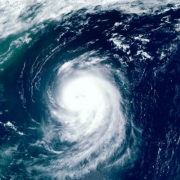
The tropical storm known as ‘Typhoon Hagibis’ touched down in Japan this past Saturday, and left behind a path of total destruction. The death toll has reached 72 so far, and thousands are still left without any heat, power, or running water. According to CNN, the storm is one of the strongest the country has seen in years, so much so that over 110,000 individuals from the fire department, police, military, etc. have been sent to Japan strictly for search and rescue purposes.

Videos from the horrific scenes near Tokyo, where the Typhoon first hit land, have been shared all around social media showing the devastation. One video shows a family of four clinging to each other while being swept away in a flash flood, another of a massive bridge collapsing, killing many. Typhoons in general aren’t completely uncommon for Japan, however, ones of this magnitude are, hence the name Typhoon Hagibis; Hagibis translates to speed. 

Embed from Getty Images

230,000 individuals were originally evacuated before the Typhoon hit, 5,500 of those people currently still remain in storm shelters, and may have to be there indefinitely. CNN reported almost 10,000 homes were completely flooded, 133,000 were left without running clean water and 34,000 homes currently remain without power. That number is extremely low compared to the original 520,000 households that lost power this past weekend. Government officials made a statement claiming citizens should expect to remain without power for at least a week as search and rescue efforts continue to take priority, but restoring power, water, and heat to homes that can handle it and hold multiple people is also high up on the list. 

The intense rains caused over 45 rivers to burst from their structures, inducing over 130 landslides to wipe out hundreds of homes, killing four. According to Prime Minister Shinzo Abe’s office who spoke to CNN, “the typhoon brought record-setting heavy rains and windstorms. Hakone, southwest of Tokyo, received almost 1 meter (3.3 feet) of rain within 24 hours. Many areas received up to 40% of their annual rainfall over two days.” 

Embed from Getty Images

“Typhoon Hagibis is on course to be one of the costliest natural disasters to have hit Japan, with insured losses of more than $9 billion. On Tuesday, at a session of the Upper House Budget Committee the government stated they were planning to designate Hagibis a ‘severe natural disaster,’ in order to make municipalities in affected regions eligible for increased state subsidies for reconstruction work,” according to analysts from investment firm Keefe, Bruyette & Woods quoted by industry publication Reinsurance News.

Many industries and businesses are already suffering from the extensive and expensive damage Hagibis has inflicted on the archipelago. The typhoon has blocked or destroyed almost all means of public transportation, which sets back thousands of businesses, all which are already closed anyway due to the damage. About a third of bullet trains, one of the biggest means of transportation throughout Japan, are submerged in flood waters, (CNN). 

When past typhoons have caused billions in damage to Japan, insurance luckily normally covers half to three quarters of all projected costs. The people of Japan are hoping that’s the case this time around as well. Three Rugby world championship matches have been cancelled, making all aspects of life and culture in Japan hit a full stand still.

Olympics

The Tokyo 2020 Olympic Games Are Going To Be A Hot One…Literally

As the world prepares itself for the 2020 Summer Olympics in Tokyo, the city is already taking extra precautions due to a growing concern for the high temperatures Japan is known for in the summer.