Posts

build

Sales Of Newly Built Homes Surged To Three-Year High After Builders Boost Incentives 

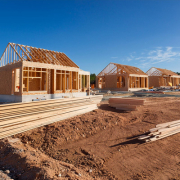
Newly built homes have had a new surge in sales, peaking at a three-year high in August as homebuilders have been boosting their buyer incentives and cutting prices, according to reports from Realtor.com

Embed from Getty Images

The U.S. Census Bureau and Department of Housing and Urban Development reported that signed contracts for new single-family homes were at a seasonally adjusted annual rate of 800,000 last month. This marks a 21% increase from July and a 15% increase when compared to last year’s figures. 

These figures from August are the highest they’ve been since January 2022, and surpass what economists were expecting to come out of the summer this year. This could indicate a major comeback for homebuilders, who like a lot of figures in the real estate industry have been struggling from the lack of property demand in the US and consistently increasing interest rates. 

Data shows that sales in August rose 72% in the Northeast, 13% in the Midwest, 25% in the South, and 5.6% in the West when compared to July’s numbers. 

Prices actually also increased last month with the average sales price for new homes reaching $413,500. This is a 1.9% increase from July and 4.7% increase when compared to last year. 

According to Freddie Mac, the increase in August sales actually occurred before mortgage rates dropped under 6.4% in recent weeks with 30-year fixed rates averaging 6.59% last month. 

Embed from Getty Images

To combat the constant trend of weak demand from buyers in the US, builders are purchasing down mortgage rates and offering incentives. Additionally, new home pricing is falling, which makes newly built homes even more desirable for buyers who are trying to save money. 

According to the National Association of Home Builders (NAHB)/Wells Fargo Housing Market Index, 39% of builders reported that they were cutting prices this month, a 2% increase from the previous month, and the highest percentage in over five years. 

Realtor.com® Senior Economist Anthony Smith stated: “Builders remain more willing than individual sellers to adjust prices, but even with these concessions, the market is still gauging how much demand can be coaxed back.” 

“Another reason the New Home sector got a bump could be the trend toward the construction of smaller homes. With more people wanting to downsize, smaller homes are becoming more attractive,” said BrightMLS Chief Economist Lisa Sturtevant.

490,000 new houses were for sale at the end of August on a seasonally adjusted basis, according to Realtor data.

“The supply of new homes tightened notably as buyers stepped back into the market.  [The market for new homes is] still a well-supplied market, but less so than earlier in the summer,” said Smith.

inspection

45% Of Homeowners In The US Have Regrets About Buying Their Home

Right now in America, it’s harder than ever to buy a home. For those who are able to make a purchase, they often have regrets about it. According to a recent survey from Bankrate, around 45% of homeowners have regrets about their current home. So what is the reason for so much regret in what is meant to be a milestone moment for Americans?

The survey cited that one of the most common complaints among individuals who regret their home purchases is frustration over the price of maintenance costs and hidden fees. 

Embed from Getty Images

According to Bankrate’s June 2024 Hidden Cost of Homeownership Survey, the average American homeowner spends over $18,000 on non-mortgage home expenses annually. They also estimated that in some states like California, the fees can reach up to $29,000 a year. 

When someone’s purchasing a property, things like internet bills and routine maintenance costs aren’t at the front of their minds. It’s important to place expected costs into one’s budget when shopping for a home. 

“It’s important to factor ongoing homeownership costs into your budget, as well as any offer you make on a property, lest you ‘get out over your skis,’” says senior economic analyst at Bankrate Mark Hamrick.

“Without a significant financial buffer, you could end up with surprise costs that force you to forego necessary home upgrades or repairs, or even cause you to fall into debt,” he stated. 

Popular real estate platform Zillow recommends that prospective home buyers should be diligent about their research when it comes to properties they’re looking at, specifically getting a thorough accounting of the home’s potential defects, and looking into past maintenance done.

Embed from Getty Images

“At the very least, completing a home inspection will help you enter homeownership with a more complete understanding of what work your home may need. Your inspector may find small, non-deal breaker repairs like plumbing drips or loose handrails, but it’s also possible that they uncover bigger issues like foundation cracks. In that case, you’ll likely need a second inspection from a specialist,” Zillow says.

The company says that paying extra for inspections also gives buyers the power to negotiate repairs within the sale price which could in turn save them money down the line. 

Upkeep and maintenance costs to your home is inevitable, and while some may think that it’s best to wait until things are truly broken to get repairs, getting more regular maintenance on your home is more cost effective, Zillow says. 

“We live in a highly competitive society and economy, and I think all too often people are being overly severe with their judgements about themselves,” Hamrick stated

“They should give themselves some grace and time if the time currently isn’t optimal for buying a home.”

real estate

Homebuyers And Sellers Say Real Estate Agent Fees Are Too High 

Homebuyers and sellers throughout the US have been grappling with increasing home prices and mortgage rates, and now are taking issue with increasing real estate agent and brokers fees that are increasing in parallel with seemingly everything else in the real estate industry.

Embed from Getty Images

According to NPR, especially after the lawsuit that the National Association of Realtors settled last summer that implemented new policies regarding agent compensation, buyers and sellers began to pay closer attention to every fee included in their transactions. 

With this new commission structure and policy, agents have to inform buyers and sellers that their fees are negotiable. 

Buyers must also sign an agreement with their agent to establish how that agent will be paid. This will also involve the buyer agreeing to pay the agent if the seller’s agent refuses to do so. 

Agent compensation offers are also no longer prohibited to appear on multiple listing services, MLS, which are online databases used to list homes. 

These new rules in the industry have opened up a lot of conversations among buyers and sellers and the ways in which they proceed with their transactions. They also have opened the door for brokerages to begin charging flat fees. 

Embed from Getty Images

“Home buyers and sellers almost feel like they’re trapped into using agents, rather than they’re hiring agents at a reasonable fee,” says Rob Luecke, CEO of ShopProp Realty, a flat-fee brokerage that operates in nine states.

Luecke says his “goal is to eliminate commissions — or at least get them a lot lower, and put the power back into the home buyer and sellers’ spot where it really needs to be.”

Traditional commission-based real estate agents are making the “you get what you pay for” argument that their higher fee will always be worth it. These agencies pride themselves in a higher level of service that flat-fee brokerages can’t offer. 

Leanne Liang, an agent with Redfin in the East Bay area outside San Francisco, says: “If you move half a mile away, it’s a totally different market. So I think buyers can really benefit from agents who are experienced in that location.”

Liang suggests that buyers and sellers should do diligent research and interview different agents and brokerages to make the best decision for themselves and their goals. 

“It’s not just putting a house on the MLS and then just waiting for the offers to come in. In a challenging market, I think we as agents really work for our paychecks.”

rent

Young Adults Are Avoiding Homeownership In Favor Of Renting Due To Economic Recession Concerns

A large amount of young adults in the US are avoiding homeownership in favor of renting properties, according to new economic data reported by Forbes. Affordability for homes across the country has been consistently increasing, beyond that, the flexibility of renting makes young residents resilient to economic downturns. 

From the 1980s to the 2010s, the average age of first-time homebuyers was late twenties to early thirties. Now, according to the National Association of Realtors, the average age of first time homebuyers in 2024 was 38, an all-time high. NAR also reported that 33% of 27-year-olds owned their home in 2024, compared to 40% of baby boomers when they were 27.  

Embed from Getty Images

First-time home buyers are currently facing high home prices and high mortgage rates. Even though housing affordability slightly improved last year, the supply of available homes continued to increase, showing a lack of transactions. 

Buyers can, and have, utilized the high supply of homes to negotiate lower pricing, however, the general trend is clear; young adults are embracing rentals and avoiding buying.

According to Forbes, lot of young adults opt for renting because they feel it gives them the flexibility they may need in the event of a potential recession. The Census Bureau reported that people who move to metropolitan areas for work tend to find more success than those who remain where they are while looking for a new job. 

The job market is particularly hard to break into in multiple sectors. Many renters are ready and willing to move in order to find the most well-paying job, and by renting instead of buying, they have the flexibility to continue to move should they need to change occupations again. 

The pandemic also caused a massive influx in remote working, which allows many renters to work for jobs that may be based outside of their city. Initially, this trend in working from home actually increased the amount of people who were buying homes, especially considering prices for homes dropped in many areas around the US during the pandemic as well. 

Embed from Getty Images

However, now that we’re no longer living in quarantine, 30-year fixed mortgage rates have more than doubled what they were in 2021, according to reports

Young people are also paying great attention to climate change and the devastating impact it has on the economy. Due to the fact that young adults will experience more consequences of climate change than older people, they’re hesitant to make any housing investments due to the financial impact climate change will have in the future. 

The US also experienced a massive increase in the development of multi-family homes that remain vacant. This influx in available properties is actually causing landlords to avoid rental increases as a means of maintaining their tenants. 

“Household growth is slowing, which could mean less demand and lower prices for homes in the future. However, the uncertainty in the economy could continue to make the flexibility of renting more appealing than the commitment of homeownership,” Daryl Fairweather, a real estate contributor for Forbes, wrote

“When every election is the most critical election so far, and every year the nature of work shifts with the culture, and every year there’s a record breaking natural disaster, it’s hard to imagine young adults wanting to anchor themselves in place with homeownership.”

inspection

Why Are So Many Real Estate Deals Falling Through At The Last Minute In The US?

Potential homebuyers in the US are backing out of their home purchase deals at a record rate. Real estate agents and experts throughout the country are stating that these deals are also falling through based on minor reasons, according to Yahoo! news.

“We’re seeing nightmare scenarios where deals are getting canceled at the last minute for the most minute reasons,” said Rafael Corrales, a premier agent for Redfin in Miami. Miami recently saw 2,500 home purchases get canceled in the month of June. 

Embed from Getty Images

“Buyers often back out during the inspection period because they find something they don’t like, but affordability is really the underlying issue,” Corrales stated. 

Redfin recently released a report that showed 56,000 home purchases were canceled last June, which is about 15% of the homes in the US that went under contract, which is the highest percentage of any June on record.

“Buyers are getting more and more selective,” said Julie Zubiate, a Redfin Premier real estate agent in the San Francisco Bay Area.

“They’re backing out due to minor issues because the monthly costs associated with buying a home today are just too high to rationalize not getting everything on their must-have list,” she added. 

Embed from Getty Images

The average home price in America right now has increased by 4% when compared to last year, with an average price of $442,525 in June with an average mortgage rate of 6.92% 

Some potential buyers are also waiting out the market and hoping that in the autumn/September time period rates could fall lower. 

“With fewer takers, properties are languishing longer on the market, with the number of active listings climbing nearly 13% since last year,” according to Redfin.

“We’re seeing a slow shift from a seller’s market to a buyer’s market,” said National Association of Realtors chief economist Lawrence Yun in a recent press release.

“Homes are sitting on the market a bit longer, and sellers are receiving fewer offers. More buyers are insisting on home inspections and appraisals, and inventory is definitively rising on a national basis.”

US Homebuyers Investing In Florida Real Estate 

The amount of homebuyers in Miami have tripled over the past couple of years. According to a new analysis by Redfin, in July the net inflow of Redfin users moving to Miami rose to 7,610 from 2,216 last year. 

Milagros Alvarez, a Miami real estate agent at Redfin, said that “the pandemic has brought even more out-of-towners to the area because so many people can now work wherever they want.”

Embed from Getty Images

“Homebuyers are moving here from all over the map—Atlanta, Cincinnati, New York, Columbia, Mexico City, Pittsburgh and Philly, to name a few. The beaches, warm weather and low taxes are the major draws. Florida has also been much less shut down than other states during the pandemic, which some house hunters see as a positive,” said Alvarez. 

Alvarez also warned that the warm weather in Florida may seem like a main selling factor, but it also comes with its downsides. Miami is one of the most vulnerable cities when it comes to natural disasters or damages caused by weather-related events. 59% of Miami properties face some level of flood risk. 

Sea levels in Miami-Dade County are projected to rise by two feet by 2060, which would displace thousands of residents. The region also faces extreme heat risk, however, Alvarez explained that climate change hasn’t deterred Americans from flocking to the Sunshine state. 

“The homebuyers I talk to rarely mention climate change. Most of them aren’t concerned. A lot of people seem to have this idea that it won’t impact them in their lifetime, so it doesn’t need to be a consideration when buying a home.”

Embed from Getty Images

Daryl Fairweather, chief economist at Redfin, warned that “the recent UN climate report shows that places like Miami will see the impacts of climate change within the next thirty years. Miami homebuyers should think about how they can make their homes more resilient to climate change and how their finances would be impacted if their homes lost value,” he said.

Sacramento, Phoenix, Las Vegas, Austin, and Atlanta have also been experiencing exponential rises in real estate investments, according to Redfin. The report also claimed that US citizens were mainly moving away from New York, San Francisco, Los Angeles, and Washington DC.

“Big, expensive cities normally lose the most residents, and that trend accelerated during the pandemic as remote work gave people the flexibility to leave expensive job centers for relatively affordable places.”

“Yet, a handful of the metros that experienced the largest outflows in July saw fewer people leaving than a year earlier—likely because many of the pandemic restrictions that made those places unattractive places to live have now been lifted,” the report said.

Hidden Costs That All US Homebuyers Should Be On The Look Out For This Year

According to market reports, almost half of all US homes on the market are currently selling within a week of being listed, and prices are continuing to climb in almost every part of the country. 

Many buyers, especially first-time buyers, need to be aware, however, of the multitude of costs that can build up during the final discussions of finalizing a home purchase. Experts claim that all prospective homebuyers should have a separate fund on hand specifically for closing costs. 

These costs typically include things like appraisal fees, property taxes, real estate agent commissions, homeowner’s insurance, title insurance, and more. Jessica Menton, a personal finance and markets reporter, recently discussed the best ways homeowners can plan for their future when it comes to looking for a home. 

Embed from Getty Images

“Generally financial planners say that you should expect to pay somewhere between 3% and 5% of what your mortgage account is, give or take. So for a $300,000 mortgage that means setting aside $9000 to $15,000 for closing costs.”

Bill Gassett, a real estate agent in Massachusetts, stated that when you take out a mortgage, your lender will provide a document that details all of the closing costs involved in the property you’re interested in. Gassett recommends reading this document very carefully, because in some cases a buyer can ask the seller to cover some of the items listed. 

Menton claimed that usually most sellers will pay about 5% of the total sale price in real estate agent fees, commissions, and other expenses, and with most homes now selling well over their asking price, it’s likely more sellers will be less willing to budge on these listed fees. 

“I do sometimes recommend buyers hire an independent inspector, even though sellers will hire one to look for major issues, it can give buyers that extra security.” 

Embed from Getty Images

“When making an offer, buyers typically submit 1% to 5% of the home’s value in earnest so the seller feels comfortable pulling the home off the market. That fee is usually held in escrow and applied to closing costs,” Menton says.

Gassett also warned that if you’re buying a home that’s a part of any sort of association, you need to get details in the beginning about special assessments that will appear down the line of owning the property. 

“Most people know that there’s a condo fee or an HOA fee, but they may not notice a special assessment coming up, where all of the sudden there’s a big extra expense. As part of closing, lenders get the home’s value appraised, because home prices are rising so fast, the difference between asking price and appraised value can now reach into the tens of thousands.That difference can put ardent buyers in a conundrum,” Gassett explained.

“The bank’s not going to do the loan unless the buyer puts more money down, so a lot of buyers are being forced to actually bring more money to the table than they thought they needed.”

Menton also suggests buyers hire a lawyer to get them through the closing period if they’re really nervous about additional costs. Don’t be afraid to pay an expert for their services so that you know the place you’re going to be living won’t end up costing thousands of more dollars than you expected.