Posts

booking

Live Event Promoters, Hotels, And Rental Sites Need To Disclose Extra Fees Up Front, FTC Says 

This week, the Federal Trade Commission  stated that it will be requiring hotels, vacation rental platforms, and live event promoters to disclose any extra fees up front when they list prices online for their services, according to reports from AP.

Embed from Getty Images

In their announcement, the FTC stated that consumers of these industries often see one price in advertisements and listings, but are then hit with extra hidden fees such as “resort fees, cleaning fees, processing fees and other extra charges,” that make their total price significantly higher than initially expected. 

“People deserve to know up front what they’re being asked to pay without worrying that they’ll later be saddled with mysterious fees that they haven’t budgeted for and can’t avoid,” FTC Chair Lina Khan said.

This new requirement is scheduled to go into effect in about 120 days. 

In a statement of support for the new rule, Ticketmaster stated that they have “long advocated for all-in pricing as a nationwide industry standard, and we’re pleased to see the FTC mandate the necessary changes to make ticket-buying more transparent for fans.”

Embed from Getty Images

Four out of five FTC commissioners voted in favor of the rule. 

The FTC will now require hospitality and ticketing businesses to very clearly disclose the total cost of their pricing to customers, including all mandatory fees. For certain businesses that exclude taxes or shipping fees from their advertised prices, they must disclose those fees before customers enter their payment information, according to AP.

Reports state that the FTC is estimating this new requirement will save US consumers 53 million hours per year of time spent searching for the total price of their hospitality and/or events. 

Back in 2022, the FTC began the process of creating and implementing this rule by asking the public for their input as to whether or not a full fee-disclosure agreement would help their process and if they believed it would eliminate unfair pricing overall. More than 12,000 people commented. 

insulin

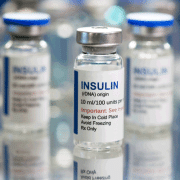
FTC Suing Pharmacy Benefit Managers Over High Insulin Costs For Patients 

Millions of individuals living with diabetes need insulin in order to survive. In America, the cost of the essential drug has forced patients to pay extreme prices, despite the fact that it’s not that expensive to actually make. To combat this ongoing issue, the federal government is going after a major part of the pharmaceutical industry that is involved in the high insulin pricing. 

In a lawsuit that was filed last Friday, the Federal Trade Commission (FTC) is bringing action against pharmacy benefit managers (PBMs). Specifically, the FTC is going after some of the nation’s top PBMs: CVS Health’s Caremark Rx, Cigna’s Express Scripts, and United Health Group’s OptumRx. 

According to reports from NPR, the FTC is stating that these companies created and implemented a “perverse drug rebate system” that works to inflate the cost of insulin artificially. The goal from the FTC is to win the trial which would lead to the cost of insulin to decrease. The FTC posted a press release on Friday regarding the suit and the purpose behind it. 

Embed from Getty Images

“Even when lower list price insulins became available that could have been more affordable for vulnerable patients, the PBMs systemically excluded them in favor of high list price, highly rebated insulin products.”

PBMs are described as the “middlemen” between drug manufacturers and insurance providers. Their job is to essentially reduce drug prices, however, many critics, and now the FTC, is stating that they’re driving up prices for patients. 

In their release, the FTC stated that the revenue PBM earns is attached to “rebates and fees,” which are determined by the drug’s price. Meaning, in this case specifically, when insulin costs more, it generates more rebates and fees, and therefore more revenue for the PGMs. 

The three PBMs that the FTC has named in their suit make up around 80% of the market. According to the lawsuit, “the PBMs collected billions of dollars in rebates and fees while insulin became increasingly unaffordable.”

Within the past 20 years, the cost of insulin has increased by 600%. Many Americans living with diabetes have turned to rationing their medicine in order to avoid putting their lives and health at risk. According to the FTC, in 2019 around 25% of insulin patients were not able to afford their medication.  

“Caremark, ESI, and Optum—as medication gatekeepers—have extracted millions of dollars off the backs of patients who need life-saving medications,” said Rahul Rao, Deputy Director of the FTC’s Bureau of Competition. 

Embed from Getty Images

“Millions of Americans with diabetes need insulin to survive, yet for many of these vulnerable patients, their insulin drug costs have skyrocketed over the past decade thanks in part to powerful PBMs and their greed.”

“The FTC’s administrative action seeks to put an end to the Big Three PBMs’ exploitative conduct and marks an important step in fixing a broken system—a fix that could ripple beyond the insulin market and restore healthy competition to drive down drug prices for consumers,” Rao said. 

Representatives from all three PBMs named in the suit all denied the claims made in the FTC’s suit. 

“[The FTC suit] demonstrates a profound misunderstanding of how drug pricing works,” a United Health OptumRx spokesperson said. 

A CVS Caremark spokesperson said “the company is committed to protecting its clients from rising prescription drug prices and this is now a solved problem.”

Around 20 states in the US have passed laws, or created programs. to limit the pricing of insulin. In 2022, Congress passed the Inflation Reduction Act. The act capped out-of-pocket insulin costs for patients on Medicare. 

“[The investigation into PBMs] shed light on the concerning and active role that the three manufacturers have played in causing insulin to be unaffordable for many people with diabetes. The three companies further inflated their list price of their insulin products in response to the PBMs’ demand for higher rebates,” Rao said.