Elon Musk Downplays Hitler’s Role in the Holocaust, Blames Public Workers Instead
Early Friday morning, Elon Musk briefly shared and then quickly deleted a controversial post on X, which falsely argued that dictators like Joseph Stalin, Adolf Hitler, and Mao Zedong were not directly responsible for millions of deaths, shifting the blame instead to their government employees.
The contentious post stated, “Stalin, Hitler, and Mao didn’t murder millions of people. Their public sector workers did.” Musk provided no commentary when sharing the message but swiftly removed it following widespread criticism from other users, who condemned it as historically inaccurate, antisemitic, and dismissive of atrocities.
Historians overwhelmingly agree that Stalin’s regime in the Soviet Union, Hitler’s Nazi government in Germany, and Mao’s rule in China were directly accountable for mass casualties, including the Holocaust, Stalin’s purges, and the devastation of Mao’s Cultural Revolution.
This incident is not the first time Musk has attracted controversy with his social media posts. Since acquiring X, formerly known as Twitter, Musk has dramatically loosened policies governing hate speech and misinformation, reinstating numerous previously banned accounts—including that of former President Trump.
In 2023, Musk shared another antisemitic post on X, which he claimed represented “the actual truth” about Jewish people, leading to significant backlash and advertiser departures. The first part of the post read, “Jewish communities have been pushing the exact kind of dialectical hatred against whites that they claim to want people to stop using against them.”
Following an assassination attempt on former President Trump last year, Musk also posted—and quickly deleted—a provocative remark questioning why no similar attempts had occurred against President Biden or Vice President Harris.
Musk, who frequently leverages his platform to broadcast politically charged statements to over 219 million followers, has increasingly aligned himself with right-wing figures worldwide. He has publicly supported leaders such as Jair Bolsonaro of Brazil, Javier Milei of Argentina, and India’s Narendra Modi—countries where Musk maintains significant business interests.
Most recently, Musk minimized the severity and legacy of the Holocaust during an online event supporting Germany’s far-right Alternative für Deutschland (AfD), a party linked to neo-Nazi affiliations, by asserting, “Children should not feel guilty for the sins of their parents—or even their great-grandparents.”
His repeated flirtations with Nazi symbolism and historical revisionism remain puzzling, especially considering his public visit to Israel and the Auschwitz-Birkenau concentration camp just over a year ago. Holocaust survivor Gidon Lev, who accompanied Musk on that visit, later expressed disappointment, noting Musk’s apparent lack of genuine engagement and describing his participation as merely a “photo op.”
“I was not impressed because he didn’t make the least attempt to make any personal connections. So, you know, like, ‘Where were you, Gidon? What happened to your father?’ There was nothing. I was there as a decoration. It was the AJE, the Jewish Association, who wanted a Holocaust survivor to be photographed together with Elon Musk. So, I went along. I was sort of a prop, but it was freezing cold, and it was hard. And he was not connected.”
Musk’s involvement with public sector employees has intensified lately as part of his advisory role to President Trump on government efficiency and spending reforms. He’s openly criticized federal workers, accusing them of hiding fraud and urging them to resign. Musk’s comments triggered immediate outrage among public-sector worker unions and advocates.
Lee Saunders, president of the American Federation of State, County and Municipal Employees (AFSCME), the largest trade union for public sector employees in the U.S., strongly denounced Musk’s post in a statement.
“America’s public service workers – our nurses, teachers, firefighters, librarians – chose making our communities safe, healthy and strong over getting rich. They are not, as the world’s richest man implies, genocidal murderers. Elon Musk and the billionaires in this administration have no idea what real people go through every day. That’s why he’s so willing to take a chainsaw to people’s jobs, Medicaid, Social Security and Medicare.”
Despite deleting the controversial post, Musk continued responding to critics on X throughout Friday, defending himself against antisemitism allegations and suggesting that his critics were the actual fascists.
“Look at what they did to President @realDonaldTrump. He was loved by Democrats until he ran for president. Now they call him Hitler, Mussolini, Stalin, etc. and try to kill him.”
Musk’s attempts to distance himself from accusations of supporting Nazi ideologies have been met with skepticism. In January, Musk attracted additional controversy after being seen making a gesture similar to the Roman salute onstage, famously associated with Nazi Germany.
During a recent podcast interview with Joe Rogan, Musk argued that one can’t be labeled a Nazi without actively “committing genocide” or “invading Poland”—an oversimplification that overlooks contemporary neo-Nazis who openly adopt Nazi beliefs without perpetrating such acts.
Comments such as these have intensified criticism against Musk and sparked boycott campaigns targeting his company, Tesla. Activists, who refer to Tesla vehicles as “swasticars,” have held peaceful protests outside dealerships. However, some dealerships have faced more aggressive actions, including vandalism and suspected arson incidents, with swastikas spray-painted on cars and property.
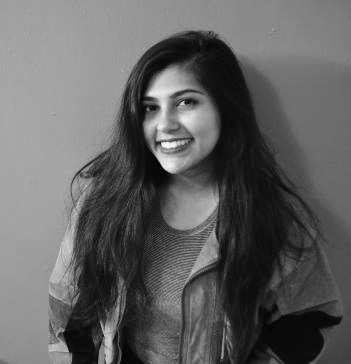
Moumita Basuroychowdhury is a Contributing Reporter at The National Digest. After earning an economics degree at Cornell University, she moved to NYC to pursue her MFA in creative writing. She enjoys reporting on science, business and culture news. You can reach her at moumita.b@thenationaldigest.com.