Posts

glp1

People Who Stop Taking Weight Loss Shots Regain The Weight In Under Two Years, New Study Says 

According to a new study led by academics at the University of Oxford and published in the British Medical Journal, people who stop taking weight loss shots regain all the weight they originally lost in under two years. This is significantly faster than those on any other weight loss plan. 

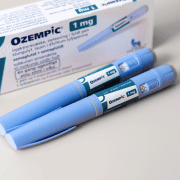
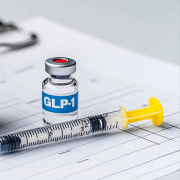
Weight loss medications, commonly referred to as GLP-1 agonists, were initially developed as a treatment for diabetes and work by imitating the glucagon-like peptide (GLP) 1 hormone which helps people feel fuller. 

Embed from Getty Images

The study included a review of 37 existing studies that looked at weight loss medication, all of which involved 9,341 participants. The average duration of weight loss treatment was 39 weeks with an average follow up period of 32 weeks. 

On average, weight was regained at a rate of .88 pounds per month for people who stopped taking the medication. Participants returned to their original weight within about 1.7 years. 

People on any kind of weight loss medication lost an average of about 18 pounds during treatment, but regained around 10 pounds within the first year, according to reports

The rate in which weight was regained after stopping medication was almost four times faster when compared to other programs that focus on diet and exercise. 

Dr Sam West, of the Nuffield Department of Primary Care Health Sciences at the University of Oxford, said “the rapid weight gain seen after stopping weight loss drugs was not due to the medication itself,” according to the Guardian

“These medicines are transforming obesity treatment and can achieve important weight loss. However, our research shows that people tend to regain weight rapidly after stopping – faster than we see with behavioural programs.”

“This isn’t a failure of the medicines – it reflects the nature of obesity as a chronic, relapsing condition. It sounds a cautionary note for short-term use without a more comprehensive approach to long-term weight management, and highlights the importance of primary prevention,” he stated. 

Embed from Getty Images

Other studies have suggested that people on weight loss drugs regain all the weight that they lost within a year, however, this marks the first study that shows a rate of weight regain. 

“Weight loss drugs can be effective tools for managing weight and type 2 diabetes risk – but this research reinforces that they are not a quick fix,” according to Dr Faye Riley, the research communications lead at Diabetes UK.

“They need to be prescribed appropriately, with tailored wraparound support alongside them, to ensure people can fully benefit and maintain weight loss for as long as possible when they stop taking the medication.”

Katharine Jenner, the executive director of the Obesity Health Alliance, said: “regaining weight after stopping treatment was not a failure of individuals, but rather reflects the reality of living in a food environment that continually pushes people towards unhealthy options.”

“These drugs can create a window of opportunity to improve the food environment at scale and pace – from junk food marketing to the affordability and availability of healthier food – otherwise many people will struggle to sustain the health benefits of weight loss drugs over the long term,” Jenner said.

An NHS spokesperson stated

“While these new treatments are an important new tool for supporting weight loss, they’re not a magic fix and must be paired with behavioural and lifestyle wraparound support including advice on healthier diets and physical activity to keep the weight off in the long term.

“The NHS continues to implement innovative ways to support people to lose weight safely and sustainably as well as offering a range of weight management services, including the NHS digital weight management programme, which will be expanded to 125,000 more people per year as part of the 10-year health plan.”

novo

Novo Nordisk Stock Falls After Alzheimer’s Drug Trials Fail to Show Benefit

Novo Nordisk’s long-shot attempt to expand its blockbuster semaglutide franchise into Alzheimer’s treatment ended in disappointment this week, triggering a sharp slide in the drugmaker’s stock.

On Monday, the company announced that two major studies of Rybelsus, an older oral formulation of semaglutide, failed to show any slowing of cognitive decline in people with early-stage Alzheimer’s.

The results extinguish what the company itself had framed as a speculative but potentially transformative pivot. Last fall, Ludovic Helfgott, Novo’s executive vice president for product and portfolio strategy, famously described the trials as a “lottery ticket,” a nod to the uncertainty of whether GLP-1 drugs could make any dent in a disease that affects more than 55 million people worldwide. That ticket did not pay out.

The EVOKE and EVOKE+ trials enrolled a total of 3,808 participants aged 55 to 85. Over two years, researchers tracked changes in memory, daily function, and cognition, aiming for at least a 20% slowing of decline. The studies had a planned third-year extension, but Novo cut them short.

Erik Berg-Johnsen of Storebrand Asset Management, which holds Novo shares, called the failure “a nail in the coffin” for the use of semaglutide in Alzheimer’s.

Embed from Getty Images

“The fact that the study was discontinued after two years, despite a planned third-year extension, suggests that semaglutide offers virtually no benefit in slowing Alzheimer’s progression.”

Chief Scientific Officer Martin Holst Lange echoed the verdict but emphasized semaglutide’s existing strengths.

“While semaglutide did not demonstrate efficacy in slowing the progression of Alzheimer’s disease, the extensive body of evidence supporting semaglutide continues to provide benefits for individuals with type 2 diabetes, obesity, and related comorbidities.”

For Novo’s incoming CEO, Mike Doustdar, the timing couldn’t be worse. The drugmaker is already navigating slowing sales growth for Ozempic and Wegovy, intensifying competition from U.S. rival Eli Lilly, and a sagging share price that contributed to leadership changes and layoffs earlier this year.

Analysts had warned from the start that the Alzheimer’s program was high-risk; UBS had predicted only a 10% chance of success.

“Based on the significant unmet need in Alzheimer’s disease as well as a number of indicative data points, we felt we had a responsibility to explore semaglutide’s potential, despite a low likelihood of success,” said Lange in a statement on Monday that thanked trial participants.

Embed from Getty Images

Even so, Monday’s market reaction was harsh. A roughly 10% decline in Novo’s share price, Jyske Bank analyst Henrik Hallengreen Laustsen argued, looked like an “overreaction.” Sydbank analyst Soren Lontoft Hansen suggested the results were unsurprising.

“The share’s reaction is probably more due to the bad sentiment around the Novo Nordisk shares and the negative news flow over the past year – perhaps there was hope for a little tailwind from this study.”

The failure had immediate implications for other drugmakers. Shares of Biogen rose about 5% in premarket trading after the announcement. Biogen and Eisai’s Leqembi, along with Eli Lilly’s Kisunla, remain the only approved Alzheimer’s treatments in the U.S. and are both administered by infusion or injection and are both associated with serious side effects.

“There was some fear that Ozempic might reduce the opportunity for Leqembi and other Alzheimer’s drugs by preventing progression of disease. So these data lift a potential competitive overhang,” noted Cantor analyst Eric Schmidt.

The Rybelsus studies were being scrutinized not only for scientific merit but for their commercial implications. GLP-1 drugs like semaglutide are already used by millions for diabetes and weight loss. If they had shown a meaningful impact on cognitive decline, the market potential would have been enormous.

Instead, the setback reinforces the view that Alzheimer’s is unlikely to become a new frontier for this drug class. For now, Novo’s dominance remains rooted in metabolic disease, while the Alzheimer’s field moves on without a new contender from the GLP-1 powerhouse.

Can Ozempic Treat Alcohol Use Disorder? Early Research Says Yes

For years, individuals using Ozempic and similar medications aimed at managing diabetes and shedding pounds have observed side benefits. These drugs not only diminish their appetite but, for some, also seem to reduce their desire to drink alcohol. Now, a new study confirms that drugs that target the hormone GLP-1 may help in the treatment of alcohol use disorder.