Posts

tesla

Tesla’s Value Declines By $60 Billion After Investors Were Left Underwhelmed By Company’s ‘Cybercab’

Last week, Tesla shares fell by about 9%, $60 billion from the company’s value, after the company unveiled their much anticipated “robotaxi,” which failed to peak investors interests. 

The shares dropped to $217 following the announcement event in Hollywood where chief executive Elon Musk revealed his highly anticipated driverless taxi vehicle. According to reports, the stock price is down about 12% year-to-date. 

At the event, Musk stated that Tesla will officially begin building their “Cybercab” by 2026 and will have a price of less than $30,000. He claimed that the vehicle will be able to transport up to 20 people around town independently and its technology would reshape cities.

All transport will be fully autonomous within 50 years,” Musk tweeted.

Tech analysts and experts stated that the event, however, lacked a lot of detail and didn’t go over any specifics regarding other Tesla products and projects. Critics also stated that Musk is known for making major proclamations regarding future Tesla endeavors and the timeline in which they’re supposed to come out. Sometimes the products don’t come out at all.  

Embed from Getty Images

“Investors we spoke to at the event thought the event was light of real numbers and timelines,” Tom Narayan, an analyst at Royal Bank of Canada, said to investors according to the Guardian. He also emphasized how the event lacked detail. 

“These typically come at Tesla events. This one seemed focused on branding and marketing Tesla’s vision, rather than giving concrete numbers for us to model out. As such, we would expect shares to trade lower.”

Narayan also said that “some investors were hoping for a teaser about a lower-priced vehicle, with pedals and steering wheel, that would launch next year. However, none was forthcoming.”

Garrett Nelson, an analyst at investment research firm CFRA, said he was “disappointed by the Cybercab reveal and a lack of detail about a cheaper vehicle.”

“The event raised a lot of questions, was surprisingly brief, and was more of a controlled demonstration than a presentation. 

We were disappointed by the lack of detail regarding [Tesla’s] near-term product roadmap, eg, the more affordable model and Roadster, both of which Musk said would achieve first production in 2025 on his last conference call.”

homes

The Netherlands Introduces Restrictions On Investors, Making Homeownership More Accessible 

Some of the Netherlands largest cities have introduced restrictions on investors from renting out the real estate they buy as certain neighborhood populations change, increasing rent while house prices remain the same. 

As a means of making homeownership more accessible for middle-income households, the “Opkoopbescherming” (purchase protection) law strongly discourages investors from buying real estate, and states that any property with a value below a cap set by municipalities can’t be leased for four years after its purchase. 

Embed from Getty Images

More than a year after this policy started, housing prices have yet to drop while rent prices are increasing with a smaller supply available. 

One of the main reasons the law was passed in the first place is because concerns were growing about investors driving up the real estate market by out-pricing home-buyers, and decreasing the livability in neighborhoods because tenants are more likely to stay for shorter periods of time.

According to Statistics Netherlands, house prices in the Netherlands have been regularly increasing, and prices of Dutch real estate grew by 13.4% in 2022, adding to a 15% growth from 2021. 

While the policy was drawn up at a national level, it’s up to municipalities to decide whether to implement the law. All Dutch cities with more than 200,000 residents introduced the investment-restriction policy in 2022. 

Embed from Getty Images

The study regarding this law overall found that residents in the Netherlands would have a higher chance of buying homes in areas where real estate investors were not included. Nationwide, around 2,000 homes were sold to buyers, which otherwise would have been sold to investors. 

The research on the new law also showed, however, the absence of real estate investors hasn’t impacted rising home prices, meaning their investments may not contribute to price rises. 

According to Newsendip, Matthijs Korevaar, Assistant Professor at the Erasmus School of Economics, said that “investors usually have a more solid financial background – larger borrowing capacity, no resolutive conditions, etc. – which can give them an advantage in front of sellers compared to household buyers who need a high mortgage. Investors would pay similar prices but have better chances of buying a house thanks to their finances.”

The study also suggested that the ban on investors in certain areas has more so impacted the populations of a given neighborhood, as renters are normally younger, and homebuyers in the area are more often older and wealthier. 

Uruguay

Why Real Estate Shoppers Are Investing In Uruguay During The Pandemic 

With the current state of the world in relation to the Covid-19 pandemic, many real estate shoppers are looking for properties to invest in that promote social distancing. Meaning spaces that aren’t in densely-packed districts and more so on large plots of land that isolate one from more crowded areas. 

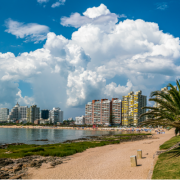
Uruguay is a South American nation with 3.5 million residents. While Uruguay isn’t exactly close for investors living anywhere but South America, it checks a lot of the boxes that investors are looking for currently. One of the biggest luxury real estate trends of 2020 amid the pandemic is individuals looking for properties that allow them to live in close contact with nature with wide-open surroundings. For foreign buyers especially, these types of properties seem like the most secure investment to make. 

Embed from Getty Images

Uruguay has also been an extremely popular location for Brazilian and Argentinian investors within the past few years, and North American/European investors have begun investing in the country more and more throughout the past year as well. The country offers a wide variety of properties such as beachfront apartments, ranch houses, country estates, and private communities all at a cheaper price when compared to major metropolitan areas in the world. 

The country is also known for being economically, socially, and politically stable, and welcomes all real estate investors to be a part of Uruguay’s vast culture. One of the most popular property options includes residential ranch lot developments that are perfectly placed near beaches, natural forests and more. 

One example of these residential developments includes Las Carcavas, which features two dozen ranch lots that are 2.5 acres each. These lots have space for up to 16 bungalows and range in price from $580,000 to $3 million when translated to US currency. The lot also includes ready-to-move-in bungalows that are priced at $1 million. 

Embed from Getty Images

These spaces in particular, and many other lots just like it in the country, spread across 128 acres of land that are within close walking distance to exclusive beachfronts. There’s a wide-array of amenities included with the purchasing of these properties such as membership to a lagoon beach club, natural grass tennis court access, grill areas, fire pits, swimming pools, etc. 

Fernanda Prece is the commercial director for Las Carvas and recently spoke with Forbes magazine about sustainability trends in real estate that Uruguay has especially put a major focus on in their properties. 

“Sustainability and environmental impact are two concepts getting more attention nowadays, generating lots of interest from investors.”

Prece went on to explain her properties, along with others like it throughout the country, have established architectural guidelines to preserve the natural landscapes when building the ranches. Uruguay overall has a real estate market that is constantly growing and staying “on trend” in terms of what clients generally want; especially foreign investors. Sustainability being integrated into luxury private spaces that are distanced from the rest of the world is exactly what investors are looking at during a pandemic, hence the extreme increase in popularity.

Economy Stock Market

Despite Booming Economy, Experts Worry

Unemployment rates are the lowest they’ve been in 50 years, wages are increasing, and the economy’s expansion is the longest-running on record. So it may come as a surprise that journalists are reporting that the overall mood at last weekend’s annual meeting of economic forecasters was one of concern and pessimism. Instead of praising President Trump’s economic policies for the impact on the economy as the Trump administration would surely prefer, experts at the conference warned that a few economic indicators signal that trouble may come for the economy soon. Though by traditional standards the economy has been healthy and strong for the duration of Trump’s presidency, government budget deficits and the weakness of central banks among other factors concern experts who fear that the when the current expansion ends, as it inevitably will, the negative consequences could be drastic and painful.

Embed from Getty Images

This sentiment is mirrored by the “Global Economic Prospects” report released on Wednesday by economists at the World Bank, who described the global expansion as “fragile” and built upon a shaky foundation. Though this report predicts a continuation of economic growth throughout 2020, it also warns of a potential economic downturn posed by the ever-present risk of trade wars between the Trump administration and other countries as well as changing markets in countries like China and India. While trade-related tensions between the United States and China appear to be lessening for the time being, it’s hard to know whether Trump will sign a trade deal with the foreign country as expected given how unpredictable his behavior has become, particularly in the aftermath of impeachment and a potential war with Iran.

In European nations, technology companies that are largely based in the United States face new taxes, which Trump has responded to by threatening tariffs on French imports, posing a threat to the global economy. And according to research published by the American Economic Association, the economic fight between China and the United States has resulted in lower wages for workers in both countries. While the economy is predicted to continue to grow, the rate of growth is forecasted to slow to 1.8 percent this year and 1.7 percent next year, according to the World Bank. And the combination of the tax cuts passed in 2017 and increased spending have ballooned the national deficit to almost $1 trillion a year, a figure that worries economists around the world. 

Embed from Getty Images

Interest rates in advanced economies have been dropping as a result of trends like the aging of the population, meaning central banks have less power than they would otherwise to grow the economy in the event of a recession. These low rates are expected to continue for the foreseeable future, causing economists grief. Economists like Valerie A. Ramey of the University of California have called on Congress to pass bills increasing spending on infrastructure and research and development in order to stimulate the economy. Though Trump campaigned on plans to improve the nation’s infrastructure, such plans have not materialized, meaning the potential economic gains caused by infrastructure spending have not been realized. Overall, economists say that policymakers will have to act strongly in order to combat the effects of an upcoming recession, the immediacy of which grows more likely by the day.

Global Warming

Climate Change’s Present and Future Impact on Real Estate

Already, climate change is having a serious impact on global political and economic systems, and as temperatures continue to rise, this impact will only become more severe. Climate change touches nearly all aspects of human life, as governments around the world grapple with the logistics of dealing with the problem, and powerful industries such as oil and gas struggle to adapt to changing attitudes and environments. Perhaps a less-expected area affected by climate change is real estate; as the sea level rises and weather patterns shift, some properties, particularly ones close to coastlines and beaches, are experiencing a decrease in valuation as their long-term viability is called into question, whereas properties in once-undesirable locations are becoming more popular. The reality of climate change has already taken hold in the real estate industry, as investors, landlords, and homeowners attempt to prepare for the often-unpredictable effects of the phenomenon.

Investors are wise to recognize that the problem of climate change is not going away; in fact, recent studies have revealed that the impact of climate change is likely to be even more significant than previously feared, with polar ice caps melting at an alarming rate and sea level rises now expected to displace 150 million people worldwide. Moreover, the increase in the frequency and intensity of extreme weather events brought about by higher global temperatures poses a threat to the integrity of real estate fixtures, and buildings constructed in vulnerable areas, without appropriate fortification, are at risk of collapse. Low- and moderate-income communities are at particular risk, as residents in these places are less likely to be able to afford dealing with the impacts of climate change, which at best causes property destruction and at worst can kill. 

Certainly, one of the factors in the real estate industry’s slow reaction to climate change is denial; oftentimes, the position that trends in the industry will continue as they always have is far more palatable than grappling with an unpredictable, substantial destructive force.

The Federal Reserve Board of San Fransisco recently published a collection of reports detailing the intersection of climate change and real estate. The organization warns that climate change could cause home values to fall significantly, could disincentivize banks from lending to affected communities, and towns and cities may not have the necessary resources to build sea walls and other infrastructure to protect against climate change. However, the reports also detail economic opportunities that could arise from climate change. Despite the breadth of scientific data available about climate change, the real estate industry has been slow to react, meaning plenty of investors could be caught off-guard by climate-related devaluations in their properties, whereas shrewd investors can take advantage of their understanding of climate change by investing in properties that will become popular as people relocate away from the coasts and areas where extreme weather events will be most prevalent.

A number of factors complicate the real estate industry’s response to climate change. One such factor is the nature of how flood insurance is calculated; despite the presence of more up-to-date data, calculations for the probability of floods occurring in particular locations are based on outdated maps and figures and don’t take into account rising sea levels. Additionally, the federal government subsidizes flood insurance programs, incentivizing developers to invest in coastal properties even though they are at increasingly-greater risk of destruction. Certainly, one of the factors in the real estate industry’s slow reaction to climate change is denial; oftentimes, the position that trends in the industry will continue as they always have is far more palatable than grappling with an unpredictable, substantial destructive force. As such, experts in the field are advising business leaders and other high-impact decision makers to adapt to a “new abnormal,” which involves taking a radically different and unprecedented approach to making real-estate choices, even when they may seem counter-intuitive to those who fail to consider the extent of climate change and its impacts.

Featured image credit: https://www.flickr.com/photos/thecvf/23054259530

Scooter

Is the Urban Millennial Lifestyle Sustainable?

If you walk into any major urban center in America, you’re bound to find young people glued to their smartphones. But they’re not always just texting or checking up on social media they’re also taking advantage of a wide range of lifestyle apps, which offer everything from ride-sharing services to online shopping to rewards for engaging with local businesses. Most of these apps, which are generally available cheaply or for free, are created by businesses started in Silicon Valley, where implementing a unique idea and cultivating an audience is often considered more important than generating profits. These consumer tech companies are generally funded by wealthy investors looking to capitalize on the explosion of technology present in the everyday lives of millennials, effectively subsidizing the products in question and enabling an artificially low cost for the consumer. But the venture capitalists who make this app-centric lifestyle possible are effectively placing a bet on the long-term financial viability of the innovative businesses they invest in, with potentially disastrous consequences for everyone involved.

Embed from Getty Images

Any number of examples of these apps, produced by businesses that are not currently making a profit and perhaps never will, come to mind. Casper, a mattress company that operates online and ships compressed mattresses directly to customers’ homes, is expected to lose money this year, as are the tremendously popular Uber and Lyft ride-sharing platforms. DoorDash, a service that delivers food from a variety of eateries, is not profitable, and neither is Seated, which gives discounts to restaurant-goers. Perhaps most notably, the platform WeWork, a business that rents out office and living space to small businesses, recently attempted to go public, a disastrous decision that resulted in financial turmoil for the company after potential investors raised concerns about the company’s path to profitability and its’ CEOs questionable antics, which included smoking marijuana on a private jet and serving tequila shots to employees after discussing layoffs. Amidst this controversy, Adam Neumann stepped down from his role of CEO of the company, and WeWork’s future remains unclear.

In general, companies such as these provide non-essential goods and services, offering their customers convenience for an affordable price rather than the necessities of life. This convenience is made possible by technology, as smartphones are always connected to the internet and provide companies with information such as a user’s location and other details that are used in innovative ways. Nevertheless, they are built upon attractive and enticing ideas, which capture the attention of investors who rely upon their trust that the companies’ ingenuity and creativity will eventually lead them to make a profit.

Embed from Getty Images

Ironically, the most popular online businesses tend to be the least profitable, in what is likely to come as a surprise to their millions of daily users. The well-known Blue Apron, for instance, spends roughly $460 to recruit each of their customers, despite making only around $400 on each customer, as they are likely to cancel their subscriptions after only a few months. As a result, investors quickly realized that the meal-kit company had no viable path to profitability, and the company’s valuation dropped by over 95% since they went public. Because Blue Apron refuses to increase the price of their services, they are unable to demonstrate value to investors, leading to serious financial problems for the company. While Blue Apron may be considered an extreme example, the underlying business model, wherein companies supported by venture capitalists reduce their prices in order to generate an audience, is prevalent throughout entire industries.

The artificially low prices of these new businesses perhaps explains the extremely-connected and online relationship millennials have with tech-savvy startups. But, as companies like WeWork and Blue Apron fail spectacularly despite their large audiences, business leaders are starting to take note. One of the solutions to this inherently problematic business model is simply to raise prices for services in an attempt to generate profits for increasingly impatient investors. But competition is fierce, and millennials are a fickle demographic. Companies that raise prices of services, even if just to break even, risk alienating their base of consumers, who may be drawn to particular products or services for their low prices rather than for their practicality. For instance, if a company that lets customers rent bicycles with their phones raises their prices, consumers may realize that it becomes more economically viable for them to simply purchase their own form of transportation. As income inequality rises and wages remain stagnant, particularly among the millennial class of workers, companies are faced with the difficult choice between continuing to operate at a loss by benefiting from increasingly-wary investors, and raising prices for non-essential goods and services that their consumer base may increasingly be unable to afford.