Posts

fast food

Ultra-Processed Foods May Increase Risk of Precancerous Polyps in Younger Women, Large Study Suggests

A major new study has found that women under 50 who eat higher amounts of ultra-processed foods are more likely to develop precancerous growths in the colon, adding a significant new clue to the mystery of why colorectal cancer has been rising so sharply in younger adults.

melatonin

Study Links Long-Term Melatonin Use to Higher Risk of Heart Failure

A large-scale study reviewing health records of more than 130,000 adults with chronic insomnia has found that people who took prescribed melatonin for over a year were more likely to develop heart failure within five years than those who didn’t use the supplement, according to findings announced Monday by the American Heart Association (AHA).

antibiotic

Antibiotic Resistance Hits Crisis Levels, WHO Reports

The World Health Organization (WHO) has issued a stark warning about the surging spread of drug-resistant bacteria, threatening the effectiveness of vital antibiotics and making once-treatable infections increasingly dangerous.

According to new data released Monday, one in six bacterial infections confirmed by laboratories worldwide in 2023 showed resistance to commonly used antibiotics.

“These findings are deeply concerning,” said Yvan J-F. Hutin, who heads the WHO’s department for antimicrobial resistance.

“As antibiotic resistance continues to rise, we are running out of treatment options and we are putting lives at risk, especially in countries where infection prevention and control is weak and access to diagnostics and effective medicine is already limited.”

The WHO report, based on five years of surveillance data, paints a grim picture: resistance rose in more than 40% of the antibiotics it tracked between 2018 and 2023, with yearly increases ranging from 5% to 15%.

Antimicrobial-resistant (AMR) infections now directly kill over a million people annually and contribute to nearly five million deaths worldwide, the organization said. The agency examined 22 antibiotics used to treat infections of the urinary tract, bloodstream, and gastrointestinal system, as well as gonorrhea, and found widespread resistance.

Embed from Getty Images

For urinary tract infections alone, resistance to widely prescribed antibiotics exceeded 30% in most regions.

Among the eight pathogens examined, including E. coli and K. pneumoniae, resistance has become alarmingly common. More than 40% of E. coli infections and 55% of K. pneumoniae infections are now resistant to third-generation cephalosporins, the standard first-line treatment.

“Antimicrobial resistance is outpacing advances in modern medicine, threatening the health of families worldwide,” said WHO Director-General Tedros Adhanom Ghebreyesus.

The WHO said antibiotic resistance was highest in regions with weaker healthcare systems and limited laboratory capacity. In Southeast Asia and the Eastern Mediterranean, one in three infections showed resistance, while in Africa, one in five did.

Silvia Bertagnolio, who leads WHO’s AMR surveillance unit, said these systems often lack the capacity to diagnose or treat infections effectively. She added that limited surveillance in some countries means data is often collected only from the sickest patients, skewing resistance figures upward.

While global surveillance has improved, 48% of countries still report no data at all. “We are definitely flying blind in a number of countries and regions,” Hutin admitted.

Overuse and misuse of antibiotics in humans, animals, and agriculture continue to drive resistance, allowing bacteria to evolve faster than new treatments can be developed. The WHO warned that the global drug pipeline — the number of new antibiotics in development — remains alarmingly thin.

Embed from Getty Images

“The increasing antibiotic use, the increasing resistance and the reduction of the pipeline is a very dangerous combination.”

The situation isn’t limited to developing regions. In the United States, the Centers for Disease Control and Prevention reported last month that infections from drug-resistant “nightmare bacteria” jumped nearly 70% between 2019 and 2023.

Dr Manica Balasegaram at the Global Antibiotic Research and Development Partnership said the report shows how drug-resistant infections have reached “a critical tipping point”.

“The most difficult-to-treat gram-negative infections are now beginning to outpace antibiotic development, either because the right antibiotics are not reaching the people who need them, or because they are not being developed in the first place.”

The WHO called for urgent global action, including better monitoring, stricter antibiotic stewardship, and investment in new treatments. Without these steps, even minor infections or routine surgeries could become life-threatening.

“It’s not enough to develop new antibiotics; they have to be the right ones, those that target infections that have the greatest public health impact. We are failing to replace the antibiotics that are being lost to resistance, and this latest WHO report shows that the consequences of that are now finally beginning to be felt,” he said.

“Until now, the AMR narrative has focused rightfully on the overuse of antibiotics, but this isn’t enough. To avoid the tipping point, we must now also focus efforts on accelerating innovation and increasing their appropriate use.”

party

What We Learned from Studying the World’s Oldest Living Person

When Maria Branyas Morera passed away at the age of 117, she held the title of the world’s oldest living person. But before her death, she made a simple but profound request: “Please study me.” Scientists honored her wish.

Led by Dr. Manel Esteller at the University of Barcelona, a team of scientists set out to uncover what made Maria such an extraordinary outlier in human aging. They examined her blood, urine, saliva, and stool, hoping to piece together the biological puzzle of her long life.

The study, recently published in Cell Reports Medicine, pointed to several intriguing factors. Some of the answers, it turns out, may lie in her everyday habits. Maria reportedly walked daily well into her 90s, avoided alcohol and tobacco, and followed a healthy diet. She also had a remarkably stable social life, staying close to family and continually building new friendships even as old ones faded.

“She lived a healthy life,” Dr. Esteller said. “She had cells that seemed younger than her age.”

“She was a lucky person from the start, and she got an extra plus through her life. She never smoked, she never drank alcohol, and she liked to work until she could not. She lived in the countryside, she did moderated exercise, mostly walking one hour a day. She had a diet that included olive oil, Mediterranean style and, in her case, yogurt.”

The research team found that Maria’s microbiome, the vast collection of microbes living in and on her body, showed signs of low inflammation. This is significant because chronic inflammation is often associated with aging and disease. Her body also contained high levels of Bifidobacterium, a beneficial bacterium commonly encouraged by fermented foods like yogurt, which she ate three times a day.

Embed from Getty Images

Her genetic analysis revealed something even more unusual: variants believed to protect against common age-related conditions such as cardiovascular disease, dementia, and cancer. These genetic factors may have helped shield her from the chronic illnesses that claim most lives long before 100.

Not all scientists agree that genes or gut bacteria can offer a complete explanation. Dr. Mary Armanios, a geneticist and oncologist at Johns Hopkins School of Medicine, warned that predicting longevity based on genetic variants remains an unsolved challenge. While some gene patterns may lower disease risk, their effects are still not fully understood.

“The genetics of longevity are notoriously confusing,” she said. Many studies compare centenarians to younger individuals, but as Dr. Armanios pointed out, it’s impossible to know how long those younger people will live, a flaw that limits what such comparisons can reveal.

She also emphasized the critical role of environment and inequality. In Baltimore, she noted, life expectancy can differ by two decades depending on income level and access to education.

“I do think there are obviously bad genetics that limit life span. But I am not sure good genetics are sufficient to overcome socioeconomic limitations.”

Maria’s story isn’t just one of biological good fortune. Born in San Francisco in 1907 to Spanish parents, she returned to Spain with her mother after her father’s early death. She went on to raise three children, outliving one of them, and spent most of her life in the town of Olot.

Embed from Getty Images

She lived independently until age 94, and even after moving into a nursing home, she remained active. She continued playing piano until she was around 112. Her family, including daughters now in their 90s, recalls her vitality and independence.

While her relatives died from a range of common causes, including cancer, tuberculosis, heart disease, and accidents, Maria simply kept going. Her lifestyle, social connections, and potential genetic advantages may have combined to create the conditions for an unusually long and healthy life.

Dr. Immaculata De Vivo, a molecular geneticist at Harvard, praised the study as scientifically sound but urged caution. Findings based on a single person, however fascinating, don’t always scale up.

“Disease causation is generally a matter of probabilities rather than absolutes,” she said. In other words, even with the perfect genetic profile and a clean lifestyle, there are no guarantees, only improved odds.

However, Claire Steves, a professor of aging at King’s College London, who wasn’t involved in the study, told CNN, “The level of detail in this paper is extraordinary.”

“They have gone very deep and managed to assess a wide range of different biological aging mechanisms. To my note, this is the first paper that’s ever really done this in this detail.”

Maria Branyas Morera’s life offers researchers a rare window into human longevity. If nothing else, her story reminds us that aging well may be less about hacks and more about consistency of movement, connection, and maybe a little yogurt every day.

cdc

Ex-CDC Director Says RFK Jr. Pressured Her to Back Vaccine Schedule Overhaul, Cites Political Meddling

At a tense Senate hearing on Wednesday, former CDC Director Susan Monarez alleged that Health Secretary Robert F. Kennedy Jr. pressured her to support a revision of the childhood vaccine schedule — a plan she says lacked scientific basis and led to her removal.

Monarez told members of the Senate Health Committee that Kennedy insisted changes to the immunization schedule would take effect in September and demanded her support without providing any data. “He said I needed to be on board,” Monarez recounted under questioning from Committee Chair Sen. Bill Cassidy (R-La.).

The testimony came as part of a broader inquiry into upheaval within the CDC and Kennedy’s controversial role in shaping the agency’s direction. Cassidy reminded the room that Kennedy had promised not to alter the vaccine schedule when he was nominated in January.

Monarez described Kennedy’s demeanor during their exchange as “extremely animated” and said he launched into a tirade, accusing CDC employees of endangering children.

“He said that CDC employees were killing children, and they don’t care. He said that CDC employees were bought by the pharmaceutical industry. He said the CDC forced people to wear masks and social distance like a dictatorship. He said during the Covid outbreak, the CDC told hospitals to turn away sick Covid patients until they had blue lips before allowing them to get treatment. Those statements are not true.”

Embed from Getty Images

In an emotional moment, Monarez also described the lingering trauma at the CDC following an August shooting in which a gunman, who reportedly blamed vaccines for his health issues, opened fire on the agency’s Atlanta headquarters, killing a police officer.

“Each bullet was meant for a person, and each of my staff were very traumatized afterwards,” she said, adding that staff became so afraid they removed their names from vaccine-related studies and refused to speak publicly on the topic.

The hearing also featured testimony from Dr. Deb Houry, the CDC’s former chief medical officer, who recently resigned in protest alongside two other senior officials. Houry accused Kennedy of compromising the agency’s scientific independence, saying he “censored CDC science, politicized its processes and stripped leaders of independence.”

“I could not, in good conscience, remain under those conditions,” she added.

Both Monarez and Houry pointed to increasing political interference in areas traditionally governed by science. They specifically named Stuart Burns, a former GOP staffer and Kennedy aide with known ties to the anti-vaccine movement, as someone playing a central role in determining which vaccines are recommended by federal advisory panels.

Monarez further testified that Kennedy had asked her to meet with Aaron Siri, an anti-vaccine attorney and longtime associate of Kennedy who represented him during his failed presidential run. Siri has made a name and fortune challenging vaccine mandates and representing clients claiming vaccine injury. He once filed a petition to revoke approval for a polio vaccine.

Embed from Getty Images

The Advisory Committee on Immunization Practices (ACIP), the federal panel responsible for vaccine guidance, is scheduled to meet on Thursday to discuss the childhood immunization schedule. Kennedy removed previous members of the committee in June and replaced them with individuals widely viewed as vaccine skeptics, many of whom lack direct medical or scientific expertise.

A spokesperson for the Department of Health and Human Services, Andrew Nixon, defended Monarez’s dismissal, claiming she had “acted maliciously to undermine the president’s agenda.” He insisted that any updates to the vaccine schedule would be “based on the latest available science.”

“Any potential changes to the childhood vaccine schedule will be based on the latest available science, and only after the ACIP recommends it and the acting CDC director reviews and approves those recommendations.”

Still, the growing number of departures and allegations of political meddling have raised alarm bells among public health experts and lawmakers alike. Cassidy noted the apparent contradiction between Kennedy’s public assurances and his private push for unvetted changes.

Less than a month after praising her “unimpeachable scientific credentials,” Secretary Kennedy fired her,” Cassidy said, referring to Monarez’s swearing-in. “

chatgpt

ChatGPT Advice Leads to Rare Bromide Poisoning in 60-Year-Old Man

A 60-year-old man’s quest to “improve his health” by reducing dietary chloride took a dangerous turn after he sought guidance from ChatGPT. Three months later, he was in a hospital emergency department with paranoia, hallucinations, and other troubling psychiatric symptoms. Doctors ultimately diagnosed him with bromism, a rare form of poisoning caused by prolonged exposure to bromide compounds.

The man’s case, published Aug. 5 in Annals of Internal Medicine Clinical Cases, began with his research into the health effects of table salt, also known as sodium chloride.

“After reading about the negative effects that sodium chloride, or table salt, has on one’s health, he was surprised that he could only find literature related to reducing sodium from one’s diet. Inspired by his history of studying nutrition in college, he decided to conduct a personal experiment to eliminate chloride from his diet. “

According to the report, the AI allegedly suggested replacing sodium chloride with sodium bromide — a chemical once used in sedatives, anticonvulsants, and sleep aids but largely abandoned decades ago due to toxicity concerns. While sodium bromide may appear chemically similar to table salt, it can be harmful when ingested over time. The man purchased the substance online and began using it in place of salt in his meals.

Bromide-containing drugs were common in the late 19th and early 20th centuries, but by the 1970s and 1980s, U.S. regulators removed most from over-the-counter shelves. The decision followed recognition that chronic exposure could cause bromism, a toxic buildup of bromide in the body. Symptoms can include agitation, psychosis, mania, delusions, memory problems, coordination issues, and skin reactions.

Embed from Getty Images

Bromide disrupts neuron function when levels in the body climb too high. In severe cases, it can mimic or mask other conditions — as happened with this patient. His initial lab tests suggested elevated chloride, but further analysis revealed a false reading known as pseudohyperchloremia, caused by bromide interfering with standard blood chemistry measurements.

When he arrived at the emergency department, the man reported that his neighbor was trying to poison him. Tests showed high blood alkalinity and carbon dioxide buildup. Over his hospital stay, paranoia intensified and hallucinations began. He attempted to leave the facility and was placed under an involuntary psychiatric hold, during which he was started on antipsychotic medication.

Once stabilized with fluids and electrolyte monitoring, he revealed his use of sodium bromide as a salt substitute, mentioning other symptoms that had emerged in recent weeks — insomnia, fatigue, clumsiness, severe thirst, acne, and small reddish skin bumps. These clues reinforced the bromism diagnosis.

Over three weeks, doctors tapered his antipsychotic medication, and he was discharged once stable. At a two-week follow-up, his condition remained improved.

While the exact conversation between the man and ChatGPT wasn’t available to the researchers, he said the AI suggested bromide as a substitute for chloride.

The authors tested a similar query on ChatGPT-3.5 and found that it did include bromide in its response, adding a vague “context matters” note but failing to warn against consumption or seek further clarification.

Embed from Getty Images

“While it is a tool with much potential to provide a bridge between scientists and the nonacademic population, AI also carries the risk for promulgating decontextualized information,” the report authors stated.

“It is highly unlikely that a medical expert would have mentioned sodium bromide when faced with a patient looking for a viable substitute for sodium chloride. Thus, as the use of AI tools increases, providers will need to consider this when screening for where their patients are consuming health information.”

When contacted for comment, OpenAI directed reporters to its terms of service, which explicitly state that outputs are not a substitute for professional medical advice and should not be relied upon as the sole source of factual information. A company spokesperson noted that OpenAI’s safety teams work to reduce such risks and encourage users to consult qualified professionals.

In a broader warning, a separate team of researchers recently tested six AI models, including ChatGPT, on their ability to interpret doctors’ clinical notes. They found that these systems were vulnerable to “adversarial hallucination attacks,” producing convincing but false clinical details. Technical safeguards reduced errors but didn’t eliminate them.

For the patient in this case, a seemingly simple experiment to cut chloride from his diet, aided by AI, nearly ended in disaster. While bromism is rare today, the ease of buying industrial chemicals online and the growing role of AI in everyday decision-making may mean such cases won’t remain isolated.

knit

The Curious Case of ‘SuperAgers’: How Some People Over 80 Keep Minds as Sharp as Ever

At 85, Sel Yackley is busier than most people half her age. Her days are filled with civic organization meetings, choir practice, book clubs, gym workouts, and knitting scarves for the homeless. She even finds time to get 7.5 hours of sleep a night, according to her Fitbit.

She’s also a SuperAger — a rare class of individuals 80 or older whose memory performance rivals that of people decades younger. As researchers at Northwestern University’s Mesulam Center for Cognitive Neurology and Alzheimer’s Disease explain, Yackley is more than just a high-functioning anomaly. She’s a living clue in a scientific mystery that may reshape how we understand aging.

When most people think of aging, they picture cognitive decline, memory lapses, and slower recall. But the SuperAgers at the center of Northwestern’s long-running study defy these expectations.

Since 2000, nearly 300 older adults have participated in the Northwestern University SuperAging Program (NUSAP), which focuses on individuals whose memory — particularly their delayed word recall — remains robust well into their 80s, 90s, and even beyond.

Yackley, who moved to Chicago from Turkey, credits both her genes and her spirit. Her parents lived into their late 80s, and she maintains a lifestyle rich in engagement and purpose.

“I think it’s partly your determination to live a long life and your activities that enable you to do so,” she told NBC News. She also encourages older adults to “pursue things that make you proud.”

So what exactly makes a SuperAger tick? That’s the question researchers at the Mesulam Center have been asking for the past 25 years. Their latest findings, published this week in “Alzheimer’s & Dementia: The Journal of the Alzheimer’s Association,” shed light on both the lifestyle habits and biological features that distinguish SuperAgers from their peers.

Embed from Getty Images

Dr. M. Marsel Mesulam first coined the term “SuperAger” in the late 1990s. Since then, his team — now led, in part, by Dr. Tamar Gefen, a neuropsychologist and associate professor at Northwestern — has taken a multi-pronged approach, including cognitive testing, lifestyle analysis, and post-mortem brain studies.

Interestingly, Gefen notes that most SuperAgers have one major thing in common: connection.

“I don’t know if it’s necessarily social connections, it’s just connections in general. There are people who are connected to the land, there are people who are connected to their ancestry, people who are connected to their grandchildren, who are connected to their art. You don’t see a lot of detached SuperAgers.”

To explore the neuroscience behind this phenomenon, researchers have autopsied nearly 80 brains of SuperAgers and compared them to those of neurotypical older adults. They focused on two biological markers heavily linked to Alzheimer’s disease: amyloid plaques and tau tangles.

SuperAgers had significantly fewer tau tangles in memory-critical regions of the brain — despite having similar levels of amyloid buildup.

This raises a provocative question, Gefen says: “Are we really targeting the right target if SuperAgers and their peers have similar amounts of amyloid?”

Their brains also feature larger entorhinal neurons, which play a key role in memory, and an abundance of von Economo neurons — rare cells believed to be associated with social intuition and complex emotions.

While some scientists believe these neural traits may be present from birth, researchers are now digging deeper into the cellular and genetic makeup of SuperAgers to understand how these advantages are maintained over time.

Of course, lifestyle alone doesn’t paint the full picture.

“Genetics is a part of it, definitely,” Gefen explains. For instance, some SuperAgers lack the high-risk gene variants associated with Alzheimer’s, such as APOE4. People of European descent who inherit two copies of APOE4 have up to a 60% chance of developing Alzheimer’s by age 85, but SuperAgers often don’t carry that burden.

Embed from Getty Images

“Our guess is that [SuperAgers] are probably born with these kinds of structural protections, but we’re now going really deep into the molecular mechanisms of the cell in order to figure out what is keeping that cell strong.”

Gefen is interested in whether the genes that SuperAgers harbor can prevent the development of Alzheimer’s disease.

“Is there a gene, let’s say, that’s related to the immune system, that is over-expressed in SuperAgers that can be manipulated to then help individuals protect themselves?”

SuperAgers are rare — at least for now. During the program’s initial recruitment period, only about 10% of participants met the criteria for being a SuperAger. Today, 101 active participants, aged 81 to 111, continue to contribute data, perspective, and even their eventual brain tissue to science.

And they come from all walks of life. Some are health nuts; others still enjoy the occasional vice. Some had stable, happy lives; others endured serious trauma and hardship. What unites them isn’t a perfect past — it’s resilience, purpose, and cognitive performance that stand out against the odds. “These SuperAgers know that they have a gift,” Gefen says.

Sel Yackley has already arranged for her brain to be donated to Northwestern’s Brain Bank — and, she hopes, her organs as well.

“Hopefully, maybe my heart or my kidneys can be used for transplanting. I don’t want to be underground.”

She’s still got things to do, though. The retired journalist and travel agent is currently tackling a scrapbook of her life. She logs about 4,200 steps a day and keeps her social calendar full. Her next goal? Making it to 90.

vaccine

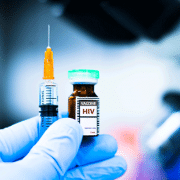
Twice-a-Year HIV Prevention Drug Gets FDA Green Light

The Food and Drug Administration has approved a new long-acting HIV prevention medication that has shown near-total effectiveness in clinical trials, offering a potential breakthrough in the decades-long effort to curb the spread of the virus. Gilead Sciences, the maker of the drug, announced the approval on Wednesday.

The injectable medication, branded as Yeztugo (generic name: lenacapavir), is administered just twice a year and is being hailed by public health experts as a significant advance in HIV prevention, particularly for individuals who struggle to adhere to daily oral PrEP regimens.

“This is the single best opportunity in 44 years of HIV prevention,” said Mitchell Warren, executive director of AVAC, an HIV advocacy nonprofit group.

Clinical trials of lenacapavir showed striking results. In a study involving gay and bisexual men and transgender individuals, participants who received the twice-yearly shot experienced an 89% lower rate of HIV infection than those who took Truvada, a daily oral PrEP pill, and a 96% lower rate than what would have been expected without any preventive medication. In a separate trial conducted among cisgender women in sub-Saharan Africa, no participants who received lenacapavir contracted HIV.

Yeztugo is the first drug in a new class of antiretrovirals designed to prevent HIV from infecting and replicating within the immune system’s target cells. It was previously approved in 2022 under the name Sunlenca for use alongside other medications to treat certain drug-resistant strains of HIV.

All PrEP medications operate on a similar principle. If a sufficient level of the drug is present in the body at the time of exposure, it can prevent the virus from establishing a permanent infection. What sets lenacapavir apart is its extended duration of protection, requiring just two injections per year, administered in a clinical setting.

Gilead’s CEO, Daniel O’Day, called the drug “a major milestone,” suggesting in a statement that it has the potential to “end the HIV epidemic once and for all.”

“Providers are excited about the approval of long-acting lenacapavir for HIV prevention since this once-every-six-month injection has been shown to have high efficacy in preventing HIV in both women and men in two large trials,” Dr. Monica Gandhi, a professor of medicine at the University of California, told Healthline.

“Data from our clinic in San Francisco, which serves low income people with or at risk of HIV, and others have shown that long-acting PrEP works well for people living with HIV who have high rates of concomitant challenges such as housing insecurity and substance use where it can be difficult to take a daily oral pill for PrEP.”

Embed from Getty Images

However, despite the excitement surrounding the approval, public health experts warn that political and financial obstacles could limit the drug’s reach.

The cost of Yeztugo is expected to be a significant hurdle. At $14,109 per injection—or approximately $2,352 per month—the drug is significantly more expensive than generic oral PrEP options like Truvada, which can cost as little as $30 per month. Experts worry that insurers may either decline to cover the injectable or place it on a higher copay tier, making it financially inaccessible to many of the people who would benefit most from it.

A looming Supreme Court case that could strike down provisions of the Affordable Care Act requiring insurers to cover preventive services, including PrEP, adds another layer of uncertainty. Elizabeth Kaplan, director of health care access at Harvard Law School’s Health Law and Policy Clinic, said the potential policy shift “could further complicate access for the populations most at risk.”

Although a Gilead spokesperson stated that individuals could begin requesting the drug from healthcare providers within two days of FDA approval, it may take up to two months for patients to receive their first injection.

PrEP has been available in pill form for more than a decade. Truvada received FDA approval in 2012, followed by Descovy in 2019, both of which are manufactured by Gilead. While these drugs are highly effective when taken daily, reducing the risk of HIV transmission by more than 99%, their success has been uneven across demographic lines.

PrEP uptake has been highest among white gay and bisexual men, who make up the majority of PrEP users. But the HIV burden remains disproportionately high among Black and Latino gay and bisexual men, whose rates of PrEP usage remain comparatively low. Even when PrEP is prescribed, adherence rates are lower among these groups, limiting its effectiveness.

In 2021, ViiV Healthcare introduced an injectable PrEP option called Apretude, administered every two months. While Apretude demonstrated superior efficacy compared to Truvada in clinical trials, it has seen limited uptake. According to the manufacturer, only about 21,000 individuals are currently taking Apretude. Experts cite the frequency of required clinic visits, every two months, as a likely deterrent for many patients.

Yeztugo could overcome some of these barriers. Requiring only two clinic visits per year, the drug has the potential to simplify prevention for people who cannot or will not take a daily pill. However, maintaining adherence to a biannual injection schedule will still be a challenge. Two recent studies found that fewer than half of oral PrEP users continued the regimen for more than six months.

Dr. Susanne Doblecki-Lewis, chief of the Division of Infectious Diseases at the University of Miami Miller School of Medicine, who led several lenacapavir trials, said the new drug could help reduce racial disparities in HIV transmission, provided access is equitable.

“If there are barriers, like complicated prior authorizations or high copays that will prevent people from easily starting it, we could see disparities just get worse.”

Embed from Getty Images

Another concern is the erosion of public health infrastructure needed to support the wide-scale deployment of new prevention methods. The Trump administration recently proposed a 35% cut to domestic HIV funding, including a plan to eliminate the CDC’s $794 million HIV prevention division. Although the administration says elements of the program will be absorbed into a restructured federal agency, many experts fear the impact of such cuts will be severe.

Much of the CDC’s HIV prevention budget is distributed through grants to local health departments and nonprofits that provide education, outreach, and services, such as PrEP navigation. If funding dries up, experts say, it will be significantly harder to raise awareness about lenacapavir or to get it into clinics and community health centers that serve uninsured or underinsured populations.

Despite these challenges, Gilead says it is working to make the drug accessible. The company has pledged to cover up to $7,200 in annual out-of-pocket costs for insured patients and will provide the drug at no cost to low-income individuals through its patient assistance program. Additional funding and logistical support may be available through a patchwork of federal and state programs that help cover the costs of clinic visits and lab work.

Some telehealth and clinic networks are already preparing to distribute the drug. Tristan Schukraft, CEO of the PrEP-focused telehealth service Mistr, said his company plans to begin offering lenacapavir immediately at its storefronts in seven major U.S. cities. The company is also partnering with a nationwide network of community-based clinics to provide the drug to uninsured patients. “We’re ready,” Schukraft said.

According to the Centers for Disease Control and Prevention, the national HIV transmission rate declined just 17% from 2012 to 2022, dropping from 38,300 to 31,800 cases annually. Most of the progress occurred in recent years, including a 12% drop between 2018 and 2022. That same period saw increased investment in HIV prevention under the federal Ending the HIV Epidemic initiative, launched by the Trump administration in 2019, which targeted nearly $3 billion in new spending to reduce infections in 48 high-burden counties.

Still, the reach of PrEP remains limited. In 2023, about 200,000 people were using some form of PrEP each month, a small fraction of the estimated 1.5 million gay and bisexual men who meet eligibility criteria. Whether lenacapavir can reach those who have been left behind by previous prevention methods remains to be seen.

Johanna Mercier, Gilead’s chief commercial officer, said in a recent interview that the company is “optimistic” about securing broad insurance coverage for lenacapavir and believes the new drug could play a transformative role in ending HIV transmission—if the systems to deliver it are adequately funded and supported.

For now, the focus will shift to implementation. With a medication that could radically change the trajectory of HIV prevention, the question becomes not whether it works, but whether the U.S. health system can deliver it to the people who need it most.

Axolotls

Could Axolotls Hold the Key to Regrowing Human Limbs? Scientists Say We’re Getting Closer

When an axolotl—a small, wide-eyed salamander with feathery gills sprouting from its head—loses a limb, it doesn’t panic. It simply waits. In a matter of weeks, that missing arm or leg regrows, fully formed and fully functional, as if nothing ever happened. This natural superpower has long fascinated scientists who wonder: could humans ever do the same?

birds

Trump Administration Terminates Moderna Bird Flu Vaccine Deal, Undermining Pandemic Preparedness

In a striking reversal of pandemic preparedness efforts, the Trump administration has canceled a $600 million contract with Moderna aimed at developing a human vaccine against H5N1 bird flu—a virus with the potential to spark a national outbreak.

The termination also scrapped a key provision granting the U.S. priority access to doses in the event of a pandemic, dismantling an agreement crafted under the Biden administration to boost national readiness against the evolving bird flu threat. The Moderna initiative had expanded on a $175 million government investment made in 2023.

Although the Department of Health and Human Services (HHS) had signaled earlier this year that the contract was under review, the cancellation has still raised alarms across the scientific and public health communities.

Health Secretary Robert F. Kennedy Jr., who has long questioned the safety of mRNA vaccine technology, played a role in the decision. Moderna’s vaccine design relied on mRNA, the same technology used successfully in Pfizer-BioNTech and Moderna’s COVID-19 shots, to prime the immune system by delivering a coded message to produce a harmless piece of the virus.

After what it described as a “rigorous review,” the HHS said it found “continued investment in Moderna’s H5N1 mRNA vaccine was not scientifically or ethically justifiable,” according to department spokesman Andrew Nixon.

Moderna, for its part, defended the project and the underlying mRNA platform. The biotech company said it would continue exploring other avenues to develop vaccines targeting potentially pandemic-level influenza strains.

Embed from Getty Images

“Results during the pandemic speak for themselves, including demonstrated efficacy and a safety profile established in over a billion people worldwide.”

Public health experts are calling the decision short-sighted, particularly given the nature of bird flu’s current spread. The highly pathogenic H5N1 virus has been detected globally in wild birds, poultry, mammals such as bears and sea lions, and most recently, dairy cattle. Since arriving in the U.S. in 2022, it has triggered the culling of more than 173 million birds and infected over 1,000 cattle herds across 17 states.

At least 70 human cases have been reported, with the majority involving farm or dairy workers. One fatality occurred in January in Louisiana, involving an older adult exposed to infected backyard birds, the first known U.S. death tied to the virus.

While H5N1 has not yet shown sustained human-to-human transmission, virologists warn it could mutate and become highly contagious, underscoring the urgent need for adaptable vaccine platforms. Existing stockpiles of bird flu vaccines are limited and may not offer sufficient protection against future variants.

“Pandemic preparedness is about being proactive, fast and adaptable — the mRNA vaccine platform is all of that,” Dr. Amesh Adalja, an infectious disease physician and senior scholar at the Johns Hopkins Center for Health Security, told The New York Times.

“The rationale given is likely fabricated and more of a function of R.F.K. Jr.’s assault on vaccines, the value of which he evades. Canceling this contract makes the world less safe.”

Embed from Getty Images

Jennifer Nuzzo, who leads the Pandemic Center at Brown University, echoed that concern.

“When the next flu pandemic occurs, there is not going to be enough vaccine for everyone who wants it unless we invest to broaden the types of flu vaccines being made and the number of companies that make them. We shouldn’t let politically motivated attempts to unfairly brand mRNA vaccines as dangerous stand in the way of ensuring everyone who wants a pandemic vaccine can get one.”

Critics attribute Kennedy’s unconventional views on disease management as a key factor in the administration’s decision. In a recent interview, he suggested that farmers allow bird flu to run through flocks to study birds that survive the illness for the source of their immunity — an approach many scientists describe as both unethical and dangerous.

Last week, Kennedy publicly urged Canada to halt the planned euthanasia of 400 ostriches exposed to H5N1. Dr. Mehmet Oz, who heads Medicare and Medicaid services, even offered to relocate the birds to his Florida ranch.

Kennedy has a long history of promoting vaccine skepticism, especially toward mRNA vaccines, which he has falsely claimed are the “deadliest” ever developed. Such assertions starkly contradict a broad scientific consensus.

Currently, the federal government holds three other contracts focused on avian flu vaccine development. Still, the Moderna cancellation deals a significant blow to the push for faster, more agile pandemic response tools — and signals a broader resistance within the administration to emerging vaccine technologies.