Posts

bbc

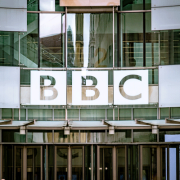
Jared Leto Faces Sexual Misconduct Allegations From 10 Women in BBC Documentary

Ten women have accused Jared Leto of sexual misconduct in a new BBC documentary, with four alleging conduct that could constitute criminal offenses because they were teenagers at the time of the alleged encounters.

Nine of the women featured in “Jared Leto: Hollywood’s Dark Secret,” which airs Wednesday, are publicly sharing their accounts for the first time, according to the BBC. The alleged interactions span from 2002 to 2016, when Leto was in his 30s and 40s.

Leto, now 54, has denied the accusations.

“I have never sexually assaulted anyone in my entire life. These claims are absolutely and categorically false,” the Oscar-winning actor and Thirty Seconds to Mars frontman said in a statement provided to Variety through his representatives.

The BBC said it corroborated “a number of the women’s accounts with friends and family who were told about the encounters with Leto at the time.” The broadcaster also said it reviewed photographs and messages that “support the women’s accounts” in some instances.

One woman alleges that Leto repeatedly made sexually explicit phone calls to her when she was 16. She claims that during at least one of those conversations, he suggested that the two of them should have sex. The woman characterized Leto’s alleged behavior toward her as grooming.

According to the documentary, the BBC reviewed a nondisclosure agreement that the woman was later asked to sign to prevent her from discussing her relationship with Leto. She declined to sign it.

A second woman alleges that Leto assaulted her inside the bathroom of a motel when she was 17. She claimed Leto pulled open a shower curtain and began kissing her before taking her hand and using it to masturbate himself.

“I don’t think there was many words exchanged, and he opened the shower curtain and started kissing me,” she said in the documentary.

Embed from Getty Images

The woman said she had agreed to meet Leto at the hotel. She alleged that she pulled away during the encounter and told him she wanted to leave. According to Isabel, Leto then wrapped himself in a towel and appeared to check whether anyone was nearby before allowing her to exit what she described as a “dingy gross motel” room.

Another participant claims the actor threatened to sexually assault her inside a hotel room in 2002, when she was 19.

A third woman says she had sex with Leto in California when she was 17, below the state’s age of consent. She alleged that the encounter occurred at Leto’s home. The alleged encounter would consequently be classified as statutory rape. She claims Leto “shrugged off” a discussion about California’s age of consent being 18.

The woman, identified as Clara, said Leto was 34 at the time and that one of her friends waited elsewhere inside the house during the encounter.

“It wasn’t a huge concern for him. He told me, ‘I would like you to call me daddy.’ And it was either pretend to be a little girl or ‘my little girl.’… It was only as time went on that I [realized] more and more how scary that really was.”

Clara described herself at the time as “naive and vulnerable” and said she did not know whether Leto’s alleged behavior was typical in an adult relationship.

“There is no well-adjusted man in his 30s who’s going to look at a teenager and think … she would be a great partner.”

The documentary also includes footage from a 2013 Thirty Seconds to Mars concert at Ex’Pression College in Emeryville, California, during which Leto invited a young woman on stage.

“Give me a hug, first of all,” Leto told her before asking for her name and where she was from. After she said she was from Los Angeles, Leto imitated Matthew McConaughey and quoted a line from the 1993 film “Dazed and Confused”: “That’s what I like about high school girls. I keep getting older, they just stay the same age. Alright, alright, alright.”

Four additional women interviewed for the documentary accuse Leto of placing “strange and often very sexual” phone calls to them when they were younger. Altogether, the documentary includes accounts from 10 women, including the four who allege conduct that may have been criminal.

Embed from Getty Images

One of the women said she decided to speak publicly because she believed Leto had avoided accountability for decades. “This was 25 years ago… he has gotten away with it,” she said.

Two men who previously worked with Leto’s band, Thirty Seconds to Mars, were interviewed for the documentary. Both claim that members of the band’s staff felt uneasy about Leto’s alleged interactions with teenage girls.

The men allege that Leto would sometimes invite teenage girls backstage to his dressing room or to the residence where he was recording music. One former worker said the age difference between Leto and the girls caused concern among those around him.

“I think everyone thought the age gap was way too big,” he said.

The BBC said it identified more than 120 separate accusations concerning Leto’s alleged behavior toward women while researching the documentary. Many had appeared online, and some dated back years.

The accusations presented in “Jared Leto: Hollywood’s Dark Secret,” which is being sold internationally by BBC Studios, follow earlier public claims concerning the actor’s behavior.

In 2025, Los Angeles DJ Allie Teilz accused Leto of sexual misconduct, alleging that he assaulted and traumatized her when she was 17. Her accusations prompted other women to come forward with similar accounts.

A month before the Air Mail report was published, Teilz reposted a Facebook status she had originally shared in 2012. “You’re [sic] not really in L.A. until Jared Leto tries to force himself on you backstage… In a kilt.. And a snow hat,” the post read.

Teilz also wrote on Instagram: “I was assaulted and traumatized by this creep when I was 17 … He knew my age and didn’t care. What he did was predatory, terrifying and unacceptable.”

A June 2025 report published by Air Mail subsequently detailed accusations from nine women who alleged that Leto had engaged in inappropriate behavior over a period of years. Leto also denied those allegations. His representatives described the claims at the time as “demonstrably false.”

concert

Harry Styles’ New Stadium Tour Draws Fan Complaints Over Ticket Prices And Obstructed Views

Harry Styles’ long-awaited return to touring was always going to arrive with enormous expectations. After two-and-a-half years away from the stage, the British pop star launched his 67-date “Together, Together” tour in Amsterdam, performing before a crowd of around 50,000 fans and debuting the live version of his new album, Kiss All the Time, Disco Occasionally.

For some, the opening night marked the triumphant beginning of a new chapter. But for others, especially fans who paid premium prices to attend, the show raised a more uncomfortable question of whether they got enough for what they spent.

The concerns began circulating almost immediately after the concert, with fans taking to X, Threads, TikTok, and Instagram to criticize everything from the length of the setlist to the stage layout. Although critics praised the performance as a successful comeback, some attendees felt the scale of the show did not match the cost of admission.

“Harry, please, I beg as a friend of someone that’s actually going to your shows—stadium shows cannot be the same length as arena shows—you need more than 20 songs,” one user posted on X.

“[The] price they’re paying does warrant more songs—The Weeknd’s stadium shows are 39-41 songs, brother.”

Ticket prices for the tour had already generated backlash when they first went on sale. Some resale listings reportedly climbed past $1,000, setting an especially high bar for fans who expected a stadium-sized production to match the stadium-sized price tag.

A major point of frustration was the stage itself. The show’s design featured elevated walkways connected across the stadium floor, a setup meant to bring Styles closer to different sections of the crowd. But some fans who purchased special VIP floor tickets for the tour’s first two nights said the roughly 10-foot-high runways left them with restricted views when Styles performed on or near them.

Embed from Getty Images

“The stage set up for the Harry Styles tour is genuinely one of the most poorly planned out stage designs I think I’ve ever seen. Like it pretty much means the majority of the floor tickets, aka the most expensive ones, have an absolutely crap view for most of the show, and some can’t even see the screens.”

A representative for the tour defended the broader concept behind the staging in a statement to Fast Company, while noting that the affected areas were under review.

“That open, free-flowing floor experience has always been an essential part of Harry’s live shows. A small area of the staging in specific floor positions appears to have had a restricted sightline. Those areas are being reviewed carefully and adjusted where possible in compliance with all safety restrictions.”

According to Variety, changes to the setup are expected in the coming days, though it remains unclear what those fixes will involve. Tour representatives have also reportedly encouraged floor-ticket holders to shift positions if their view is blocked, rather than remaining close to the barricades.

Variety, which attended opening night at Johan Cruijff Stadium in Amsterdam, reported that one mid-floor position offered mostly clear sightlines, although the elevated walkways occasionally obscured Styles. The outlet noted that fans farther back on the floor appeared to face more significant visibility issues, based on posts shared online.

The stage complaints also fed into a larger debate over the production value of Styles’ new tour. Some fans expected a more elaborate spectacle from an artist moving into stadiums, especially given the pricing and the scale of the venues. Instead, the Amsterdam show introduced a more restrained creative direction than the glitter-heavy, flamboyant aesthetic of Styles’ previous eras.

Visually, the new era is a clear departure. On opening night, Styles appeared in tailored trousers, a red jacket, a shirt, and a tie—a polished look that stood in contrast to the bright colors, sequins, and androgynous silhouettes that defined his last tour. For fans who associate Styles’ live performances with theatrical fashion and maximalist styling, the shift felt jarring.

Embed from Getty Images

Still, the show was not without new flourishes. The tour introduces elements that were not central to Styles’ past performances, including intricate choreography, backup dancers, and additional musicians during select acoustic numbers. In other words, the production may be less flamboyant in some areas, but it is not necessarily less considered.

That distinction has become central to the fan debate. While some viewers found the concert underwhelming, others argued that the new tour is being misunderstood by those expecting another round of his last aesthetic.

Another fan on X said the show worked especially well for people watching from the stands rather than the floor:

“Harry Styles tour is made to be seen from seating because yesterday was amazing and I have nothing to complain about.”

Supporters of the show have also pointed to the concept behind Styles’ new album, which appears to emphasize dancing and communal energy over the perfectly framed, phone-first concert experience that has become common at major pop tours. To those fans, the open floor design was not a mistake but part of the point.

“He put a lot of thought into this tour, he said he wanted people to dance, so obviously the floor is best for and has been made for that,” one user said. “Why be on the floor if you aren’t dancing?”

The issue is not unique to Styles’ tour. Variety noted that Beyoncé’s “Cowboy Carter” tour faced similar sightline complaints, with some venues reportedly raising sections of the floor, though there was no official confirmation from that tour about the tactic.

The disagreement ultimately reflects the tension surrounding many high-priced stadium tours; fans are not only paying to see an artist perform but also to satisfy expectations of spectacle, access, and visibility. For Styles, whose image has long been tied to fashion, theatricality, and fan intimacy, even a deliberate creative reset can feel like a downgrade to those who came expecting a bigger, brighter version of what came before.

AI music

Deezer Says AI-Generated Tracks Now Make Up 44% of Uploads

Deezer says the flood of AI-generated music is accelerating at a pace that’s reshaping its platform, even as listeners remain largely disengaged.

On Monday, the streaming service revealed that nearly half of all tracks uploaded each day are now created using artificial intelligence. According to the company, about 44% of daily uploads fall into that category, amounting to roughly 75,000 AI-generated songs per day, or more than 2 million per month.

Deezer described itself as “the only streaming platform in the world transparently tagging AI-generated music,” positioning its approach as a potential industry standard amid growing concerns over disclosure and authenticity.

Despite that surge in supply, demand has not kept up. Deezer said AI-generated tracks account for just 1–3% of total streams on the platform. Of those listens, the streaming platform estimates that 85% are fraudulent and subsequently demonetized, underscoring concerns that much of the activity around AI music is being driven by manipulation rather than genuine audience interest.

The announcement reflects a steady climb in AI music uploads over recent months. Deezer reported receiving approximately 60,000 AI-generated tracks per day in January, compared to 50,000 in November and 30,000 in September. The growth is even more stark when measured against early 2025, when the platform first introduced its AI-detection tool and logged about 10,000 such uploads per day.

That detection system, which Deezer says is “patent-pending,” has evolved to identify content from leading generative models such as Suno and Udio, while also expanding toward more generalized detection that does not rely on training data from specific tools.

In response, Deezer has been tightening its handling of this content across its ecosystem. Tracks identified as AI-generated are excluded from algorithmic recommendations and do not appear in editorial playlists. Deezer also said it will stop storing high-resolution versions of these files, signaling a broader effort to limit their prominence and potential value within the platform.

Embed from Getty Images

Deezer framed these measures as an effort to prevent AI tracks from “diluting the royalty pool in any significant way,” suggesting that unchecked uploads could undermine how artists are paid across streaming platforms.

“AI-generated music is now far from a marginal phenomenon, and as daily deliveries keep increasing, we hope the whole music ecosystem will join us in taking action to help safeguard artists’ rights and promote transparency for fans,” said Deezer CEO Alexis Lanternier in a press release.

“Thanks to our technology and the proactive measures we put in place more than a year ago, we have shown that it’s possible to reduce AI-related fraud and payment dilution in streaming to a minimum. Since January, we have made our detection technology available for licensing, and we’re looking forward to seeing industry peers of all kinds join us in the fight for fairness in the age of AI.”

The company’s latest data arrives at a moment when AI music is beginning to break through in more visible ways. Last week, an AI-generated track reached the top of the iTunes charts across multiple countries, including the United States, the United Kingdom, France, Canada, and New Zealand. This milestone highlights both the technology’s reach and the difficulty listeners may have in distinguishing it from human-made work.

That confusion is showcased in Deezer’s own research. In a November survey, 97% of participants were unable to reliably distinguish between fully AI-generated songs and those created by human artists. At the same time, listeners expressed clear preferences around how such music should be handled; 52% said entirely AI-generated tracks should not be included alongside human-made songs in main music charts, while 80% said AI content should be clearly labeled.

Embed from Getty Images

The survey, conducted with Ipsos across 9,000 participants in eight countries, also found that 73% of users want to know when a streaming service recommends fully AI-generated music, pointing to broader demand for transparency beyond simple labeling.

Deezer has positioned itself as one of the more proactive players in the streaming industry when it comes to transparency. It began tagging AI-generated tracks at the platform level in June 2025, becoming the first major service to do so. Over the course of that year, Deezer said it labeled more than 13.4 million AI-generated songs.

In addition, Deezer said it has applied for two patents related to its detection technology, focused on identifying “unique signatures” that distinguish synthetic audio from human-created recordings.

Other platforms are moving more cautiously. In February, French streaming service Qobuz announced plans to introduce its own labeling system for AI-generated content. Meanwhile, companies like Spotify and Apple Music have taken a more fragmented approach, relying on a mix of detection tools, quality filters, and distributor-led disclosures rather than a unified, platform-wide tagging policy.

The stakes extend beyond platform governance. A recent industry study cited by Deezer estimates that nearly 25% of creators’ revenues could be at risk by 2028 due to AI, potentially amounting to as much as  $4.7 billion in losses, a figure that underscores how rapidly the economics of music creation could shift.

As the volume of AI-generated music continues to climb, Deezer’s latest figures suggest the industry is entering a new phase in which the challenge is no longer identifying a niche trend but managing a rapidly expanding category that is already testing the boundaries of streaming economics, authenticity, and trust.

katy perry

Investigation Underway After Ruby Rose Accuses Katy Perry of Assault at Melbourne Club

As police in Australia begin examining allegations made by Ruby Rose, new accounts are emerging about the night she claims she was sexually assaulted by Katy Perry nearly two decades ago.

pepsi

Pepsi, Diageo Withdraw Sponsorship From UK Wireless Festival After Kanye West Named Headliner

Major sponsors are stepping back from one of the UK’s biggest music events after controversy erupted over its headline act, raising fresh questions about how festivals navigate reputational risk and public backlash.

Pepsi and drinks conglomerate Diageo have both withdrawn their sponsorship of the 2026 Wireless Festival, organizers confirmed, days after it was announced that Kanye West would headline all three nights of the London event.

Wireless, held annually in Finsbury Park and drawing crowds of up to 150,000 people, had positioned West as the centerpiece of its July 10–12 lineup. The decision quickly triggered criticism from political leaders, advocacy groups and corporate partners alike, reflecting the lingering fallout from the artist’s past controversies.

“Pepsi has decided to withdraw its sponsorship of Wireless Festival,” a company spokesperson told CNN Monday, signaling an abrupt break from its role as the festival’s primary sponsor.

Diageo followed suit, distancing its corporate brand and its affiliated labels, including Guinness, Baileys, Smirnoff, Cîroc, Captain Morgan and Johnnie Walker, from the event. “We have informed the organizers of our concerns, and as it stands, Diageo will not sponsor the 2026 Wireless festival,” a spokesperson for the company said.

The withdrawals come after years of scrutiny surrounding West’s public statements and behavior. The artist, who now goes by Ye, has faced widespread backlash for repeated antisemitic remarks. Though he issued a public apology earlier this year, controversy has continued to follow his career.

Embed from Getty Images

In a full-page advertisement published in The Wall Street Journal in January, West reflected on his past actions, writing: “One of the difficult aspects of having bipolar type-1 are the disconnected moments − many of which I still cannot recall − that lead to poor judgment and reckless behavior that oftentimes feels like an out-of-body experience.” He added, “I regret and am deeply mortified by my actions in that state, and am committed to accountability, treatment, and meaningful change. It does not excuse what I did, though. I am not a Nazi or an antisemite. I love Jewish people.”

“I lost touch with reality. Things got worse the longer I ignored the problem. I said and did things I deeply regret. In that fractured state, I gravitated toward the most destructive symbol I could find, the swastika, and even sold T-shirts bearing it.”

Festival organizers have not publicly responded to the sponsors’ decisions.

Political reaction in the UK has been swift. Prime Minister Keir Starmer criticized the booking, stating, “It is deeply concerning that Kanye West has been booked to perform at Wireless despite his previous antisemitic remarks and celebration of Nazism.”

Advocacy groups have gone further, calling for direct government intervention. The Campaign Against Antisemitism urged authorities in a post on X to block West from entering the country altogether.

Embed from Getty Images

“The Prime Minister is right to be deeply concerned that @WirelessFest wants to headline someone whose anti-Jewish bigotry has gone as far as recording a track titled ‘Heil Hitler’ less than a year ago. But the Prime Minister is not a bystander. The Government can ban anyone from entering the UK who is not a citizen and whose presence would ‘not be conducive to the public good’. Surely this is a clear case. @pepsi has done the right thing by dropping its sponsorship of the festival, but if management are adamant that they want to headline Kanye West, it is only the Government that can stop them.”

Concerns have also been raised within Britain’s Jewish community. Board of Deputies of British Jews president Phil Rosenberg said in a statement that the festival “should not be profiteering from racism,” adding that the booking “decision breaches Wireless’s own charter” on discrimination.

The backlash is unfolding against a broader backdrop of rising concern about antisemitism in the UK. Just last month, police arrested two men in connection with a suspected antisemitic arson attack in London, in which ambulances belonging to a Jewish volunteer rescue group were set on fire.

West’s relationship with major institutions and brands has been strained for several years. In 2022, companies including Adidas, Balenciaga, TJ Maxx and Gap cut ties with him following antisemitic comments and the release of merchandise featuring the slogan “White Lives Matter.”

Further consequences followed internationally. In July, Australian authorities canceled his visa after the release of a song titled “Heil Hitler,” which promoted Nazi ideology. That same year, West was suspended from X for violating policies related to inciting violence, though his account was reinstated in 2023.

The unfolding situation surrounding Wireless Festival highlights the delicate balance between artistic programming and corporate accountability. As sponsors retreat and public pressure mounts, organizers now face growing scrutiny over whether the event can proceed as planned and at what cost.

security

Security Guard Addresses São Paulo Incident Involving Chappell Roan

A security guard connected to the recent controversy involving Chappell Roan is now speaking publicly, offering his own account after multiple versions of events surfaced.

The controversy began earlier that day when Jorginho Frello, the Brazilian soccer player, shared his version of events on Instagram. His post was later amplified on X by Rio de Janeiro Deputy Mayor Eduardo Cavaliere.

According to Frello, his wife, Irish singer Catherine Harding, and her 11-year-old daughter Ava were staying at the same São Paulo hotel as Roan. Frello said Ava believed she had spotted the Grammy-winning artist during breakfast and walked closer to check.

“She simply walked past the singer’s table, looked to confirm it was her, smiled, and went back to sit with her mum. She didn’t say anything, didn’t ask for anything,” the athlete wrote.

Frello alleged that a security guard then approached them and reacted in a way that was “completely disproportionate.”

“A large security guard came over to their table while they were still having breakfast, and began speaking in an extremely aggressive manner to both my wife and my daughter, saying that she shouldn’t allow my daughter to ‘disrespect’ or ‘harass’ other people.”

He said the encounter left Ava in tears.

Pascal Duvier addressed the situation in an Instagram post on March 25, pushing back against what he described as false claims circulating online. “I do not normally address online rumors, but the accusations currently circulating are false and constitute defamation,” he wrote.

Embed from Getty Images

Duvier acknowledged his involvement in the March 21 incident but emphasized that he was not working for Roan at the time.

“I take full responsibility for the interactions on March 21. I was at the hotel on behalf of another individual, and I was not part of the personal security team of Chappell Roan,” he said.

He added that his actions were independent of the singer and her team.

“The actions I took were not on behalf of Chappell Roan, her personal security team, her management, or any other individuals. I made a judgment call based on information we obtained from the hotel, events I had witnessed in the days prior, and the heightened overall security risk of our location. My sole interaction with the mother was calm and with good intentions, and the outcome of the encounter is regretful.”

Roan has quickly distanced herself from the situation, stating that the individual involved was not part of her team and that she was unaware of the interaction as it unfolded.

“I’m just going to tell my half of the story of what happened today with a mother and child who were involved with a security guard who is not my personal security,” she said in an Instagram story. “I didn’t even see a woman and a child. No one came up to me. No one bothered me. I was just sitting at breakfast in my hotel.”

“I did not ask the security guard to go up and talk to this mother and child,” she added. “They did not come up to me. They weren’t doing anything.”

Harding later shared her own perspective in a video posted March 22, expressing uncertainty about who the guard was working for.

“I know that Chappell has responded saying that it wasn’t her security, and she didn’t do it,” she said. “So, 100% this security guard was not a security guard of the hotel, that’s what I can say. He looks after artists. So I don’t know if it was her personal security guard, but he was with her, so that is all I know.”

Embed from Getty Images

“I think that you have a responsibility, when you are a celebrity, to make sure that the people that work for you are acting on your behalf,” she continued. “So, would he do that if he didn’t have her authority to do so? I don’t know.”

While addressing the situation, Roan also reiterated her broader stance on fan interactions, citing comments she had made in 2024.

“I don’t agree with the notion that I owe a mutual exchange of energy, time, or attention to people I don’t know, do not trust, or who creep me out — just because they’re expressing admiration.”

She clarified that her position is about maintaining boundaries, not rejecting her supporters.

“This has nothing to do with the gratitude and love I feel for my community, for the people who respect my boundaries and for the love I feel from every person who lifts me up and has stuck with me to help the project get to where it is now.”

Roan also addressed what she described as a broader cultural issue.

“I’m specifically talking about predatory behavior (disguised as ‘superfan’ behavior) that has become normalized because of the way women who are well-known have been treated in the past,” she wrote. “Please do not assume you know a lot about someone’s life, personality, and boundaries because you are familiar with them and their work online.”

Despite denying involvement, Roan apologized to those affected in a follow-up video responding to Frello’s claims.

“I do not hate people who are fans of my music,” she said. “I do not hate children. That is crazy. I’m sorry to the mother and child that someone was assuming something that you would do something, that if you felt uncomfortable, that makes me really sad. You did not deserve that.”

live nation

Live Nation to Divest Venues, Curb Ticketing Practices Under DOJ Antitrust Settlement

Live Nation will be required to sell more than 10 amphitheaters and accept new limits on its ticketing practices under a proposed settlement with the Department of Justice, bringing a high-profile antitrust case against the live entertainment giant to an abrupt close.

The agreement allows Live Nation to keep its Ticketmaster subsidiary, avoiding the corporate breakup some regulators had sought, but introduces structural changes aimed at loosening the company’s grip on venues and ticket sales.

The Justice Department and 40 state attorneys general originally sued Live Nation in May 2024, alleging the company had built and maintained an illegal monopoly across the live music business.

Regulators argued that its combined control of ticketing, artist promotion and venues allowed the company to squeeze competitors and lock venues into exclusive arrangements that hurt both artists and fans.

A central pillar of the government’s case focused on amphitheaters, a relatively scarce type of venue that hosts many major touring acts. The Justice Department said Live Nation controls roughly 78 percent of the nation’s major amphitheaters, giving the company substantial leverage across the concert industry.

Under the settlement, Live Nation will divest more than 10 amphitheaters, creating opportunities for independent operators and potentially reshaping regional concert markets. The company’s service fees at its amphitheaters will also be capped at 15 percent of the ticket price.

The proposed agreement still requires approval from a federal judge and could face challenges from state attorneys general who may wish to continue the fight. But if finalized, it would resolve the case just days after it began heading to trial.

Embed from Getty Images

A 12-person jury had been seated last Tuesday in a Manhattan federal courthouse, and the proceedings had already moved into witness testimony by the end of the week when the settlement was reached.

Beyond venue divestitures and fee caps, the settlement would also reshape Ticketmaster’s relationships with venues and rival ticketing platforms.

Historically, Ticketmaster has relied on long-term exclusivity contracts that required venues to use its ticketing system. Under the deal, those agreements would be shortened to four years, and venues would be allowed to allocate a portion of their tickets to competing platforms.

Companies such as SeatGeek would also gain access to Ticketmaster’s platform under the settlement’s terms, potentially expanding the number of ticket sellers operating within the same marketplace.

“This will revolutionize the ticketing marketplace,” said one of the people who was granted anonymity by Politico to speak candidly.

“These are innovative technological solutions to a very difficult problem with prying open the marketplace.”

The Justice Department has argued that Live Nation’s dominance over venues has had ripple effects in local markets. In some cases, smaller competitors have struggled to survive after the company entered an area.

An executive at one advocacy group said two venues near Des Moines, Iowa, closed within six months of a Live Nation venue opening nearby.

Embed from Getty Images

The company has continued expanding its physical footprint even as the antitrust case moved forward. Last year, Live Nation announced a $1 billion investment to build or open 18 venues across the United States, with a particular focus on smaller markets.

At the time of that announcement, the company already owned or operated about 150 venues nationwide, accounting for roughly 4 percent of all music venues in the country.

Live Nation’s portfolio spans a wide range of properties and brands. The company operates venues under the House of Blues and The Fillmore banners and controls numerous prominent locations across major markets.

In New York alone, its holdings include Gramercy Theatre, Irving Plaza, Warsaw, Brooklyn Paramount, Northwell at Jones Beach Theater, Flagstar at Westbury Music Fair, PNC Bank Arts Center, Darien Lake Amphitheater, The Capitol Theatre and The Paramount. The settlement does not specify which venues will be sold.

Still, regulators have argued that forcing Live Nation to part with some of its amphitheaters, while curbing Ticketmaster’s exclusivity contracts and service fees,  could begin to open up a market long dominated by a single company.

If approved by the court, the deal would mark one of the most significant regulatory interventions in the live music business in decades.

music

Taylor Swift’s ‘The Life of a Showgirl’ Becomes Fastest-Selling Album in Modern Music History

Taylor Swift has done what even pop icons with decades-long careers couldn’t: sell more than 4 million copies of a single album in just one week. According to Billboard, Swift’s 12th studio LP, “The Life of a Showgirl,” moved 4.002 million units between October 3 and 9, combining traditional sales and streaming numbers. The figure marks the largest opening week for any album since modern tracking began.

universal

Universal Music Group Responds to Drake’s Lawsuit, Calling It ‘Illogical’

Universal Music Group has responded to Drake’s lawsuit against the record label for its release and promotion of rapper Kendrick Lamar’s diss track “Not Like Us.” In a statement, the company dismissed the rapper’s case as lacking merit.

In a lawsuit filed on Wednesday in federal court, Drake accused the music company of spreading a “false and malicious narrative” last year by allowing the song, which painted Drake as a pedophile, to be published.

Last year, Drake and Lamar verbally sparred back and forth through a series of rap songs. Drake accused Lamar of domestic violence in his song “Family Matters” and also implied that producer David Free was the father of one of Lamar’s children. Lamar responded by releasing “Not Like Us,” in which he called Drake and others close to him “certified pedophiles” who should be “registered and placed on neighborhood watch.”

Responding to the lawsuit, Universal Music Group (UMG) stated, “Not only are these claims untrue, but the notion that we would seek to harm the reputation of any artist—let alone Drake—is illogical.”

For over ten years, UMG has served as Drake’s label. In a statement, UMG accused Drake of attempting to “silence” Lamar by escalating their rap battle into a legal dispute.

“Throughout his career, Drake has intentionally and successfully used UMG to distribute his music and poetry to engage in conventionally outrageous back-and-forth’ rap battles’ to express his feelings about other artists. He now seeks to weaponize the legal process to silence an artist’s creative expression and to seek damages from UMG for distributing that artist’s music.”

Embed from Getty Images

In addressing allegations that UMG intentionally jeopardized Drake’s career, the label emphasized its significant financial investment in his music, which has contributed to his remarkable commercial and personal financial success. The statement also asserted that the company does not engage in defamation “against any individual.”

The suit argues that “by devaluing Drake’s music and brand, UMG would gain leverage to force Drake to sign a new deal on terms more favorable to UMG.”

Drake stated in court filings that UMG “continued to fan the flames” of the controversy for financial gain while knowing that Lamar’s lyrics were false. The artist alleges that the label “approved, published, and launched a campaign to create a viral hit out of the rap track” and implied that a shooting at his Toronto mansion last May was directly connected to the company’s actions.

Drake’s legal team asserts that UMG’s actions were “intended to convey the specific, unmistakable, and false factual allegation that Drake is a criminal pedophile and to suggest that the public should resort to vigilante justice in response.”

Following the incident at his residence, Drake contacted UMG to discuss the ramifications of the song’s release, which included the difficult decision to remove his young son from elementary school due to safety concerns. However, the suit alleges that he was told that he “would face humiliation if he brought legal action.”

Embed from Getty Images

Drake primarily filed the case “to hold UMG accountable for knowingly promoting false and defamatory allegations against him,” according to a statement from his attorneys. They disagreed that the dispute was just “a fight between rappers.”

“Beginning on May 4, 2024, and every day since, UMG has used its massive resources as the world’s most powerful music company to elevate a dangerous and inflammatory message that was designed to assassinate Drake’s character and led to actual violence at Drake’s doorstep. This lawsuit reveals the human and business consequences to UMG’s elevation of profits over the safety and well-being of its artists and shines a light on the manipulation of artists and the public for corporate gain.”

According to the documents, Lamar and his lyrics are not the target of the lawsuit. Instead, Drake argues that UMG prioritized “corporate greed over the safety and well-being of its artists.”

“This lawsuit is not about the artist who created ‘Not Like Us.’ It is, instead, entirely about UMG, the music company that decided to publish, promote, exploit, and monetize allegations that it understood were not only false but dangerous.”

halftime

Rihanna Reveals She Is Pregnant at Superbowl Half-time Show

Rihanna revealed to fans that she is pregnant with her second baby in an unexpected way. The Grammy award-winning singer performed at the 2023 Superbowl half-time show in Phoenix, where she danced on platforms dressed in a fiery red jumpsuit that accentuated a baby bump.

In the first few moments of her set, the singer rubbed her belly and performed with the zipper of her jumpsuit open. Because of the snugness of the red bodysuit she was wearing underneath, it was visible that she was expecting a child.

People were quick to take to the internet to speculate whether the singer was pregnant again. Shortly after Rihanna’s 13-minute set concluded, her representatives confirmed the news to the media.

Rihanna and her partner, rapper A$AP Rocky, had their first child, a son, in May 2022.

Onlookers saw the rapper filming Rihanna’s performance and dancing enthusiastically throughout the half-time show as he cheered her on from the sidelines.

This is not the first time the couple has shared such a momentous announcement with dramatic flair.

During Rihanna’s first pregnancy, the pair shared photographs of the singer’s growing baby bump to announce that she was pregnant.

Embed from Getty Images

Photographer Miles Diggs took the series of photos as part of a pregnancy photo shoot for the couple. With the buttons of her long pink coat undone, Rihanna flaunted her expanding tummy, and lengthy body chains ornamented her outfit.

Before their first baby was born, Rihanna was interviewed by Vogue magazine, where she revealed how she and Rocky became more than friends after a lot of reluctance. The two had known each other for many years.

“People don’t get out of the friend zone very easily with me, and I certainly took a while to get over how much I know him and how much he knows me because we also know how much trouble we can land each other in.”

Their relationship became more serious when the pandemic took hold and quarantines were implemented. Rihanna said Rocky became her “family in that time.”

The two went on a road trip from Los Angeles to New York in the summer of 2020.

“I cooked our food on this little janky grill I bought from Walmart. I still have it, too. It works like nobody’s business. I love the simple things but also the grand adventures. There’s no pretentious my-brand-your-brand bullshit; it’s just us living. I just feel like I can do any part of life by his side.”

Embed from Getty Images

She shared that her first pregnancy was not something the pair had planned, but they were both receptive to the idea of carrying it to term.

“It was just there on the test. I didn’t waste any time. I called him inside and showed him. Then I was in the doctor’s office the next morning, and our journey began.”

Rihanna told British Vogue in March 2020 that she wants to have three to four kids within the next 10 years.

After her son was born, she told Entertainment Tonight that he was a “happy baby” and that she had affectionately taken to freestyling songs to sing to him.

“Oh my god, the mornings, like, seeing his morning face! Seeing a baby with, like, little bags and waking up, and they’re just, like, startled. They’re trying to figure out where they’re at. It’s the cutest. It’s my favorite part of the day,”

Rihanna was elated but reluctant to take on new projects so soon after becoming a new mom. She told Entertainment Tonight, “If I’m going to leave my baby, I’m going to leave my baby for something special.”

Recognizing the gravity of performing at the Superbowl half-time show, she said, “It was now or never for me.”

“It was a challenge that I welcomed. It was a stage bigger than anything I’ve ever done.”