Major Corporations Stay Silent as Supreme Court Weighs Trump’s Tariffs
America’s largest companies have gone quiet as one of the most consequential economic showdowns of the decade hits the Supreme Court. The battle over Donald Trump’s global tariffs isn’t being led by Wall Street or Silicon Valley. It’s being waged by small businesses, the kind that can’t afford to wait out the uncertainty or absorb the hit of another presidential trade gambit.
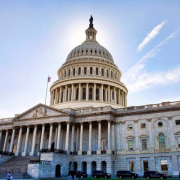
The Supreme Court will hear arguments on Wednesday on whether Trump’s “Liberation Day” tariffs and his unilateral duties on goods from China, Mexico, and Canada violate presidential authority.
In their case, businesses like a family-run toymaker from Illinois, a wine importer from New York, and a scattering of other modest firms say they have been suffocating under unpredictable import duties. Victor Owen Schwartz, founder of the wine and spirits importer V.O.S. Selections, told CNN he felt compelled to speak up.
“I was shocked that those with much more power and money did not step up. So when I was afforded the opportunity to speak for small American businesses, I took it.”
President Trump invoked a 1970s emergency statute, the International Emergency Economic Powers Act (IEEPA), to reshape global trade in the name of tackling trade imbalances and fentanyl trafficking. While the law allows a president to “regulate importation” in emergencies, it never explicitly mentions tariffs, and that omission is now at the heart of the fight.
The plaintiffs argue the tariffs have driven up costs and created crippling uncertainty. “It’s an asphyxiating tax,” said Rick Woldenberg, CEO of Learning Resources, one of the lead plaintiffs.
“I’m not targeting Mr. Trump because I’m not a politician. I’m a taxpayer who’s been hit with an unlawful tax.”
Despite the far reach of the case, America’s corporate heavyweights are mostly staying out of it. That silence, experts say, likely stems from a fear of political retaliation.
“The federal government has immense leverage and immense power and can upend your business with a tweet or a tax investigation,” said Georgetown Law professor Gregory Shaffer.
“I think there’s a sense that companies wanted to be more careful with this administration.”
It wouldn’t have been the first time big business has weighed in on controversial legal fights. In recent years, dozens of corporations, including Apple, Walmart, General Electric, and Intel, have filed friend-of-the-court briefs on social or economic issues. But this time, there’s no such chorus.
“Anyone who wants to speak out against this is going to be in the pain cave,” said Cassie Abel, founder and CEO of women’s outdoor brand Wild Rye. Abel, who joined an amicus brief opposing the tariffs, said the fear of blowback from Trump’s camp is real, especially after large retailers faced his public ire for linking tariff costs to price hikes.
Trump’s legal team insists the IEEPA gives him wide latitude to impose tariffs, even if the term isn’t spelled out. The administration’s top appellate lawyer, Solicitor General D. John Sauer, warned that striking down the tariffs could have “catastrophic consequences” for the economy.
“Plaintiffs would unwind trade arrangements worth trillions of dollars, as President Trump has leveraged the IEEPA tariffs into negotiated framework deals with major trading partners—including the European Union, the United Kingdom, Japan, South Korea, and now China—that address underlying causes of the declared emergencies.”
Some major companies have found quieter ways to protect themselves by securing exemptions or rerouting supply chains to minimize damage. Others, like Apple and Home Depot, have not commented on why they’ve stayed on the sidelines this time.
Trade lawyer Gregory Husisian said many large corporations are calculating whether joining the case would add anything new to the arguments already made by smaller players. If you don’t have a fresh legal angle, he said, “What do you really gain by being the person who sticks your neck out?”
The Chamber of Commerce and several other industry groups have broken ranks to file briefs urging the court to undo the tariffs. They’re joined by nearly three dozen former federal judges, national security officials, and smaller trade groups who say the emergency powers law was never meant to let a president unilaterally reshape global trade.
For the plaintiffs, the case has become symbolic, as small businesses face off not just against Washington but also against the silence of their larger counterparts.
Meanwhile, Trump has avoided directly attacking the companies behind the lawsuit, perhaps wary of alienating the small-business community, which enjoys bipartisan sympathy. Whether that restraint lasts may depend on how the court rules.

Moumita Basuroychowdhury is a Contributing Reporter at The National Digest. After earning an economics degree at Cornell University, she moved to NYC to pursue her MFA in creative writing. She enjoys reporting on science, business and culture news. You can reach her at moumita.b@thenationaldigest.com.