Posts

ai

Scientists Utilizing Artificial Intelligence To Find New Hit Songs And Musicians

According to new research from scientists in California, a robot utilizing artificial intelligence (AI) could be the next step in identifying hit pop songs and artists in the music industry. The scientists said that by utilizing the technology, they’ve been able to identify hit songs with 97% accuracy.  

“By applying machine learning to neurophysiologic data, we could almost perfectly identify hit songs. That the neural activity of 33 people can predict if millions of others listened to new songs is quite amazing. Nothing close to this accuracy has ever been shown before,” says Paul Zak, a professor at Claremont Graduate University and senior author, in a media release

Embed from Getty Images

The AI itself uses a neural network, which is apparently so straightforward that it can also be utilized for streaming service efficiency, TV shows, and movies in general. 

The music industry today is dominated by streaming services. With billions of songs to choose from, it can become challenging for popular apps such as Spotify, Apple Music, Tidal, etc. to choose which ones their users will listen to, especially among newer artists. 

Professor Zak claims that his colleagues and himself believe that their method is twice as effective as previous models which only showed a 50% success rate. 

In the study itself, participants listened to a set of 24 songs while wearing a skull-cap brain scanner. Throughout the process, they were asked about their preferences while the scientists measured their neurophysiological responses. 

“The brain signals we’ve collected reflect activity of a brain network associated with mood and energy levels,” Zak stated.

Embed from Getty Images

Based on the responses, the team of scientists were able to use their technology to predict market outcomes for certain songs, including the number of streams a song may receive. This process is referred to as “neuroforecasting,” which essentially means using the brain activity of a select group of people to predict how a larger population will react.

According to reports from Study Finds, who reported on the study, “a statistical model identified potential chart hits 69 percent of the time, but this jumped to 97 percent when machine learning was applied to the data. The team found that even by analyzing neural responses to only the first minute of songs, they achieved a success rate of 82 percent.

“This means that streaming services can readily identify new songs that are likely to be hits for people’s playlists more efficiently, making the streaming services’ jobs easier and delighting listeners,” Zak explains.

“If in the future wearable neuroscience technologies, like the ones we used for this study, become commonplace, the right entertainment could be sent to audiences based on their neurophysiology. Instead of being offered hundreds of choices, they might be given just two or three, making it easier and faster for them to choose music that they will enjoy.

“Our key contribution is the methodology. It is likely that this approach can be used to predict hits for many other kinds of entertainment too, including movies and TV shows,” Zak stated.

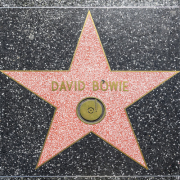
David Bowie Song Catalogue Publishing Rights Sold For $250 Million

The publishing rights to David Bowie’s extensive and iconic catalogue of songs have been sold by his estate to Warner Chappell Music (WCM), the publishing arm of Warner Music Group. According to an anonymous source, the deal is worth at least $250 million. 

Guy Moot, chief executive of WCM, said: “These are not only extraordinary songs, but milestones that have changed the course of modern music for ever … We are looking forward to tending his unparalleled body of songs with passion and care as we strive to build on the legacy of this most extraordinary human being.”

Embed from Getty Images

The deal itself means that Warner now owns all the rights to Bowie’s songwriting itself, as well as almost all of the recordings of it. In September of this year, Warner completed a deal to acquire Bowie’s recordings and songs from 2000 to 2016 when he passed away. 

Warner already owned all of Bowie’s recordings that were done between 1968 to 1999. There is now just a small number of recorded music that Bowie recorded before the late 60’s that Warner Music does not own. 

Warner Music has been repackaging Bowie’s back catalogue in a series of box sets in recent years, which happens fairly often when an older musical legend’s discography is purchased by a larger label. 

Bruce Springsteen, Bob Dylan, Neil Young, and Fleetwood Mac are some other musical legends who have sold the catalogues of their music to various companies as a means of earning more money in exchange for the rights. 

Embed from Getty Images

These deals and acquisitions allow publishing companies to acquire income from royalties, as well as when music is licensed for use in films, TV, and advertising as well. 

The specific terms of the Bowie deal have not been disclosed to the public, however, the Bowie estate in the past has been known for closely controlling the use of his music. The 2020 David Bowie biopic, Stardust, which was about the creation of Bowie’s Ziggy Stardust persona, was forbidden by the estate from using any of Bowie’s music in the film. 

WCM co-chair Carianne Marshall said: “We were pleased that the estate felt that Warner Chappell has the knowledge, experience, and resources to take the reins and continue to promote a collection of this stature. All of our global leaders and departments are incredibly excited and primed to get to work with these brilliant songs across multiple avenues and platforms.”

Another film has already been approved by the estate, and will be a documentary by Brett Morgan, who is using thousands of hours of rare and unseen live performance footage.

Singing

Scientists Examine Musical Similarities Across Cultures

Virtually everyone would agree that music is a fundamental part of human existence. In fact, Charles Darwin hypothesized that musical appreciation emerged in human beings before the evolution of language. However, anyone who’s been exposed to music from various cultures knows that there can be tremendous differences in how different populations relate to music, both in terms of its musical composition and the role music plays in people’s lives. That being said, a research team from multiple universities recently engaged in a wide-ranging study of music from around the world in search of similarities between the music of different cultures, and found that different cultures have more musical commonality than one might at first assume. The scientists hope to understand more fundamental qualities of the relationship between human beings and music, and explain what it is about music that speaks so strongly to the human condition.

Embed from Getty Images

In their study, scientists found that certain archetypes of music, whether they be lullabies, dance music, love songs, or healing melodies, emerge in all cultures, suggesting that these different forms of music relate more to the fundamentals of human behavior than to one’s particular social environment. While it should come as no surprise that certain aspects of musical appreciation are hardwired into the human brain, it is perhaps more surprising that similar styles of music independently arise in different cultures to serve similar purposes. And not only do the same kinds of songs show up in different cultures, but these kinds of songs have certain similarities in terms of acoustic features like tone, tempo, and pitch, suggesting that musical composition itself may have deeper roots in the evolution of human beings than previously thought.

If music is to be considered a biological human trait like language, then it follows that music should have universal properties.

The researchers observed both a database of descriptions of songs throughout history as well as recordings of songs from around the world, and analyzed these pieces of music in terms of their structure and composition to determine how they relate to each other. They found that music from all cultures shares the characteristic of the organization of melodies around a hierarchical chord structure. If music is to be considered a biological human trait like language, then it follows that music should have universal properties. The research, published on Thursday, seeks to define the “musical grammar” shared between virtually all human beings.

The researchers compiled 4,709 written accounts of vocal music from 60 societies, and combined them with a wide range of musical recordings, culminating in a database they called the Natural History of Song. As the researchers were concerned with the biological and evolutionary foundations of music, they primarily focused on singing, as singing can be done by virtually anyone and does not require the use of technology like instruments. The researchers used a combination of methods to analyze this massive and varied database; they transcribed the songs with Western notation, and asked 30 expert musicologists as well as hundreds of laypeople to analyze the music and give their commentary.

Embed from Getty Images

The researchers found that fundamentally, songs vary in three ways—formality, religiosity, and level of excitement. By looking at these factors, the researchers were able to predict which genre of music a particular song belongs to. As the study of music has long been compromised by biases resulting from the Western point of view, the researchers made an effort to correct for this bias, even using machine classifiers to categorize the music. However, some musicologists were critical of their approach, noting that the use of Western notation could inherently bias the researchers’ interpretation of the data, and that most of the musicologists involved in the study were of Western origin. That being said, the study likely shows that there is truth not only to the idea that music is a universal aspect of human experience, but that music contains elements which are shared between all human societies, serving an essential social role in each culture.