Posts

Rugby

Rugby Players’ Association Fearful For Sports Future Amid Growing Covid-19 Concerns 

Damien Hopley is the chief executive of the Rugby Players’ Association and he recently spoke with the press about his immense desire to protect his members’ livelihoods as the coronavirus pandemic continues to take its toll on the world. According to Hopley, “the foundations of sport have been completely rocked and we’re now in a position where we’re starting to understand the real impact.”

The way the Covid-19 pandemic is projected to keep growing has Hopley worried about the financial impact playing for crowdless stadiums will have on not only the players’ incomes, but the rest of the association as well. Rugby especially hasn’t received any government assistance when it comes to making up for the financial loss of playing a sport without a crowd. 

Embed from Getty Images

Rugby in general is also a sport that’s had to fight to be taken seriously, and after 25 years of work to “build a viable professional structure,” Hopley is worried it will all be diminished in a matter of months thanks to Covid-19. He referred to it as a “typhoon sweeping through the sport.” 

“When Rugby club owners’ businesses start being affected as adversely as they have been, there’s a seismic issue. A lot of players are getting nervous about what the future holds. No one can look into a crystal ball and say where it is going to end up, hence the call for government support.”

There’s already been a significant cut to many players’ salaries, and Hopley is worried that these drops will cause more and more players to leave the league and leave it completely void of talent. The association itself has a multitude of wealthy investors who have always been inspired by the sport, however, it’s hard to get players to want to stick around for a sports future that may or may not exist. 

Embed from Getty Images

As a players’ union the ultimate goal is to keep everyone employed, and protecting those jobs as well. Right now the biggest concern is over the amount of jobs available and which ones will be terminated as the pandemic continues. If fans aren’t able to come back and pay for the games that they normally enjoy, the impact on the sport could be devastating. 

Hopley claims that even if there is some sort of financial bailout, at this point the players’ association has endured “irreversible damage” due to the looming dark future and already massive pay cuts some individuals have seen; some players have received cuts up to 25%. 

“Communities rely on their local rugby club as a beacon of hope and inclusivity. You just hope that with common sense and social distancing people can return, revenues can start to trickle in and a bit of confidence will come back. The bottom line is we all want to see the game surviving.”

The regular Premiership season is still in the midst of concluding and as four teams remain fans are eager to see which of the Bath, Wasps, Sale, or Bristol teams will be eliminated next. The Wasps’ win on Monday has elevated them to a second place position where they will aim to take the gold this upcoming Sunday. 

Bath will have to win as well to qualify by virtue as well, and based on if they win or not they could knock out either Sale or Bristol for the final game.

Business people putting their hands together

Kickstarter Workers Make Historic Vote To Unionize

Kickstarter is one of the most well-known tech companies out there. They were one of the original businesses to create a platform for individuals who needed funding for whatever projects life threw their way. Users have used the website to raise money for surgery, travel funds, textbook payments, charities, and more. Now, Kickstarter is setting yet another precedent for the tech industry this week after employees voted to unionize on Tuesday (2/18), making them the one of the only companies in their field to do so. 

The National Labor Relations Board held the election this week in which the workers won the unionization vote by a margin of 46 to 37. The passing vote states that Kickstarter’s employee’s will now be affiliated with the Office and Professional Employees International Union (OPEIU). This partnership is between the OPEIU and unionizes 85 employees of all sorts including engineers, analysts, designers, and customer support. 

“Kickstarter employees felt their employer, a public benefit corporation, should live up to the foundational progressive values it espouses by ensuring trust and transparency from management, guaranteeing equal pay for equal work, implementing more inclusive hiring practices and giving employees a voice in the decision-making process,” OPEIU said in a statement.

Embed from Getty Images

While Kickstarter has become one of the first ever tech unions in the United States, the move itself wasn’t surprising, as employee’s have been quite public about their discontent with their employers for several months now. Back in September the company fired two employees both of which claimed that their termination was in direct connection to their unionization efforts, a claim Kickstarter has since denied.

Kickstarter also had to give a detailed documentation of events that led up to the two employees terminations to the National Labor Relations Board, those reasons have not been made public, however. But besides that initial incident, corporate heads from Kickstarter have been otherwise supportive of their employees this week as their union dreams have come into fruition. 

“We support and respect this decision, and we are proud of the fair and democratic process that got us here,” Kickstarter CEO Aziz Hasan claimed after the vote was finalized. 

“This is a sign, loud and clear, that it’s possible to organize tech. Workers in tech want the same agency union workers have won for decades. Nothing is really new, tech is just joining history and proving we’re not an exception,” Clarissa Redwine, one of the fired employees stated.

Embed from Getty Images

As Redwine stated, this is a huge move for the tech industry as a whole, as no company as large as Kickstarter has ever been able to successfully unionize despite the concerns from individuals on the corporate end of things. Workers from all sorts of major tech companies, such as Google and Amazon, have been increasing their overall efforts to unionize within the past few years. 

Claims of sexual harassment, and complaints regarding company impact on the environment have fueled the employee fire for change. However, with companies as large as Google or Amazon, it can be nearly impossible for workers on the ground level to make a real impact without succumbing to the pressure of intimidation and corporate jargon. Lucky for them, The National Labor Relations Board doesn’t take to kindly to wealthy employers restricting their workers rights all in the name of saving a few dollars from their multi-million dollar paychecks. In fact, the NLRB has already opened an investigation against Google after four terminated employees stated they were fired for speaking out against company practices. Amazon is being investigated for the same type of situation involving five employees. 

So while the creation of a union may not seem like a huge deal, in America, and in the tech industry especially, worker rights are often overlooked, so having official employee protections guaranteed is a huge deal. Kickstarter was able to do the impossible and, hopefully, inspire more tech corporations to treat their employees for what they are, hard-working, dedicated, passionate people just trying to make a real honest living; isn’t that the American dream?

Airplane Taking Off

With Airlines Expecting a Tenth Year of Profits, Employees Are Asking For Better Deals

Thanks to the majority of United States airlines coming to the end of yet another profitable year – the tenth in a row – many of their employees are calling for bosses to provide improved remuneration packages.

Over 120,000 unionized employees will start negotiating their labor agreements that could potentially see major American carriers having higher expenses, including American Airlines who are starting to negotiate not only with pilots and flight attendants but maintenance workers too.

Currently airline companies spend the majority of their expenses on their labor costs with 28 percent of the overall $187 billion revenue being spent on labor costs, an increase of 21% in 2008 – mostly due to higher work forces and increased compensation payments.

Sara Nelson, international president of the Association of Flight Attendants – who has around 50,000 cabin crew members from 20 different airlines, including United Airlines and is calling for flight attendants at Delta Airlines to also join the union – commented that “there are simply more funds to get and workers are cognizant they’re turning out more value.”

This is in stark contrast to ten years ago when many airlines were hit with bankruptcies alongside several megamergers leaving three quarters of the market in the control of four carriers.

However profits started to increase and experts have forecast a net income of under 1% for each of the four big airlines, which although does not sound much actually equates to $12.44 billion.

Embed from Getty Images

Kit Darby tracks the pay rate of pilots and notes that “when the airlines are making money, it’s hard to deny the increase in compensation. Everybody tries to get a good contract when times are good. If it’s a short downturn, they hold on to what they got.”

With the news that profits are continuing to increase airports across the country have started to see protests as airline workers demand better schedules and working conditions as well as pay increases.

Executives at American Airlines and Southwest Airlines have attempted to have labor talks with their employees however they have laid the blame with the mechanics’ unions for delaying talks in an attempt to gain leverage, which in turn has caused operational issues that have led to thousands of flights being delayed or even canceled, although the unions have denied this.

In March of this year a resolution between Southwest and their mechanics ended six years of discussions with the new five-year contract including a 20 percent increase in wages as well as $160 million in back pay for employees.

However the airline’s discussions with their flight attendants is still continuing as well as their discussions with their customer service agents, dispatchers, and pilots. Most of the staff is concerned regarding the Boeing 737 Max still being grounded with the unions claiming the issue has caused employees to lose over $100 million in wages.

American Airlines are still in talks with their mechanics’ unions with the airline suing the unions in May due to the travel disruptions they were causing, winning an injunction that means they can no longer get involved in the airlines’ operations.

Embed from Getty Images

Josh Freed, the spokesman for American Airlines, said “since August, teams for the company and the union have met for multiple days nearly every week” confirming that both groups have “made considerable progress” although further talks have already been scheduled for January.

Another issue is the fact that although unionized airline workers’ contracts are allowed to have the dates amended they do not expire, all contracts are valid beyond the finalized date and any negotiated raises will no longer be applied.

It is worth noting that employees are not only looking for extra wages with American airlines mechanics asking for the outsourcing of jobs to be limited, especially those to foreign companies. American Airlines pilots are also requesting improved scheduling to ensure a “better quality of life.”

Eric Ferguson, Allied Pilots Association President as well as an Airbus A320 captain agrees that “scheduling is our no. 1 issue.” The union has also requested that employees on the less-desirable flights receive higher wages as well as providing easier ways for the routes to be available to pilots. This should encourage the trips to be picked up by pilots, reducing the operational problems, which in turn would enable revenue and profits to increase and therefore be shared with the airline’s employees. However Ferguson wants to make it clear that the unions are not just saying “pay us more,” but that they want the airlines to “fix the problems” they already have.

The APA represents around 15,000 pilots and although talks started in the first half of 2019, the contract would not be amendable until the beginning of 2020. However the union are asking for 16% raises over a three-year deal. The airline has countered with the same increase but over five years.

Doug Parker, CEO of American Airlines, spoke at a meeting in June last year telling their pilots “shame on us if we can’t figure out over the course of a year how to get a contract done before the amendable date.”

Small Movie Theatre

The Irishman: A Near-Perfect Gangster Epic

Director Martin Scorsese has implored audiences not to watch his latest crime epic, The Irishman, on a smartphone. And while many viewers of the director’s latest film are likely to ignore this advice, Scorsese’s request is well-founded. At three-and-a-half hours long, The Irishman can be difficult to watch in one sitting — but the cinematic experience on offer is best enjoyed on a big screen, whether it’s projected on a movie screen or displayed on a large TV. Scorsese has drawn criticism lately for his comments about Marvel movies, which he’s characterized as “not cinema,” comparing them to amusement park rides, entertaining and full of spectacle but lacking in substance. And while his comments have angered fans of the immensely profitable superhero genre, they also speak to Scorecese’s understanding of the potential of cinema as an art form and its ability to speak to audiences on a deep, human level. Scorsese’s commitment to artistry is evident not only by his extensive catalogue of critically-acclaimed crime dramas, but by his career-defining work on his latest epic.

Spoilers for The Irishman follow.

The Irishman is based on the true story of Frank Sheeran, a hitman for the mafia who claimed to be responsible for killing the famous Jimmy Hoffa, a labor union activist who disappeared in 1975. While the nature of Hoffa’s disappearance in real life remains a mystery, Sheeran’s account is perhaps the most compelling explanation, as details of his story are corroborated by evidence, though most if not all of the other witnesses to the killing were dead by the time Sheeran confessed to author Charles Brandt shortly before his death. Brandt’s book, “I Heard You Paint Houses,” forms the basis of Scorsese’s film, and the director took great lengths to ensure that the movie closely follows Sheeran’s recollection of events. Whether or not you believe that the film accurately portrays historical events, including details surrounding the assassination of John F. Kennedy, depends on whether you trust Sheeran’s retelling of the events of his life and Brandt’s memorialization thereof.

Embed from Getty Images

Regardless of its questionable historical accuracy, though, The Irishman shines as a meditation on the reality of aging, death, and how the decisions a person makes come to define the stories of their lives, for better or for worse. Sheeran is not a particularly sympathetic character he expresses no remorse for his many killings, some directed by the military and others by the mob — but the film succeeds in emotionally engaging the viewer with the protagonist nonetheless. This is in no small part thanks to Robert De Niro’s excellent portrayal of Frank Sheeran’s life over a period of decades, as the legendary actor imbues his character with an emotional depth and complexity rivaled by few other performances in recent memory. 

Scorsese pioneered the widespread use of expensive de-aging technology to allow the 76-year-old De Niro to portray a character several decades younger, and the implementation has received a mixed reception. While the effect is not entirely convincing and can at times even be a little distracting, it works for the most part, though it is at times clear that the aging principal cast struggle to mimic the vibrancy of men half their age throughout the film. It’s easy to look past this minor deficiency, however, and as the film’s narrative largely explores the concepts of aging and death, the at times geriatric performances of Robert De Niro, Al Pacino, and Joe Pesci fit the film’s narrative framing of an elderly man sitting alone in a nursing home reminiscing about his past.

Embed from Getty Images

Irrespective of how you feel about the visual effects, the actors’ performances are phenomenal, and add to the remarkable depth of the film’s writing and direction. Ultimately, while most of the events of the film revolve around Sheeran’s participation in the mob and his relationships with his mentor Russell Bufalino and the egotistical, hot-headed Jimmy Hoffa, I would argue the real point of the film is its examination of the importance of family life. Sheeran had four children, and while these characters don’t prominently factor into the events of the narrative, the emotional weight carried by Sheeran’s neglect of his children is immense. Sheeran’s daughters must grapple with the violent reality of his lifestyle and profession throughout the picture, mostly in the background, resulting in an ongoing rejection of their father that culminates in their disowning of him as he becomes an elderly man. After nearly all of the people close to Sheeran die, only his family remain, but his efforts to reconnect with his daughters fail as they have effectively disowned him. By the end of the film, Sheeran is left in a nursing home, talking about his daughters with a nurse who barely pays attention to his stories. Ultimately, the film plays a trick on the audience; while it seems at first to be about the mob, the Teamsters union, and the larger-than-life Jimmy Hoffa, it reveals itself by its conclusion to in actuality be about the inevitability of death and the importance of family ties.

This level of depth and thematic complexity is what has led The Irishman to receive near-universal critical acclaim. Though it premiered as a limited theatrical release, the movie is now available exclusively on Netflix, which incidentally turned out to be the only company willing to fund Scorsese’s experimental epic. Critics are speculating that The Irishman could sweep the Oscars, and many have speculated the film is a strong contender for Best Picture. If you’re willing to set aside the three-and-a-half hours necessary to engage in Scorsese’s latest film, you’ll be rewarded with a work of nearly-unparalleled emotional weight and tragedy.

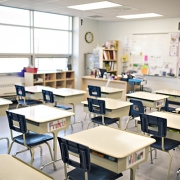
Classroom

Teacher Walkouts Continue Amid Education Crisis

It’s been nearly two weeks since about 300,000 Chicago students have been to class. Even if they showed up, their 25,000 teachers wouldn’t be there. They’ve been on strike since 17 October, demanding pay raises, resource improvements, school staffing increases and even solutions to the city’s pricey housing.

Weeks of negotiations between the Chicago Teachers Union and the city’s school system – the third-largest in the US – have been unsuccessful. But Chicago is just the latest in a wave of teachers’ strikes that has swept through many US cities.

Last year saw the most US workers on strike in a generation. According to the Bureau of Labor Statistics, there were 20 major work stoppages in 2018, involving 485,000 workers – the most since 1986. In a big shift, the most-represented industry was teaching.

Significant state-wide work stoppages in education occurred in West Virginia, Arizona, Oklahoma, Kentucky, Colorado and North Carolina. In January 2019, teachers in Los Angeles – the nation’s second-largest school district – went on strike for six days. Smaller strikes have taken place nationwide as well.

The strikes are about better working conditions for school staff and better learning conditions for students, according to Eric Blanc, a sociologist at New York University and author of Red State Revolt, a book about the teachers’ strike wave.

Embed from Getty Images

Specific demands may differ, but across the country teachers claim to face many of the same challenges – large class sizes, teacher shortages, low pay and a lack of proper resources. In Chicago, teachers are calling for things like raising teacher salaries, reducing class sizes and adjusting school schedules to add morning preparation time for teachers.

Strikes in other states involved similar issues, with some pointing towards a lack of funding as the root of the problem. During the financial crisis of 2008, most states cut school funding, according to the Center on Budget and Policy Priorities. And while school funding has gradually improved since 2015, most states have not yet recovered to pre-recession levels.

Dr Ileen Devault, labour historian at Cornell University, said the problems started earlier than that, pointing to decades of US tax policy. “All of the efforts in the US to cut back on taxes – which means cutbacks on public funding – has meant that schools have gotten less and less funded,” she said, adding teachers have finally reached a breaking point.

Dr Devault also said the strikes are about a lot more than salaries, with teachers demanding a variety of changes needed for schools to run effectively.

In early 2018, 35,000 teachers in West Virginia went on strike state-wide for almost two weeks, resulting in a 5% pay raise. Shortly after, 20,000 teachers across the state of Arizona won a 20% salary raise by 2020 after a five-day strike. And in early 2019, 30,000 teachers in Los Angeles went on strike for six days, resulting in a 6% salary raise, smaller class sizes and an increase in support staff.

Embed from Getty Images

There have been significant wins in other cities as well. Dr Devault called the strikes “amazingly successful”. She believes the reason for this is that teachers have communicated to the public that they’re not just looking out for their own salaries, but for everyone, including students and support staff like bus drivers and nurses.

The spike in strikes might also be a contributing factor to their success. It’s given legitimacy and added power to teachers, allowing for them to make more transformative demands. “There’s a national teachers’ movement now,” Mr Blanc said. “Strikes as a whole are more successful because they’re feeding off one another.”

The wave may have been sparked in the same city that it’s playing out in now. The Chicago teachers’ strike back in 2012 sowed the seeds of protest for teachers across the US, according to Mr Blanc. “Organizers in West Virginia, Arizona, Oklahoma, very consciously looked at that 2012 strike,” he said. “They studied the experience of Chicago.”

The strike in 2012 – which included pay raises and blocking a programme that would’ve placed increased emphasis on student test scores – was successful, but much less ambitious than what’s being demanded now.

As a comparison, while the recent wave of US strikes has not been matched in the UK, teachers in both countries share many of the same concerns, including pay, class sizes and school staffing.

Earlier this year, the Department for Education announced a 2.75% increase in teachers’ pay. Dr Mary Bousted, joint general secretary of the National Education Union – one of the UK’s biggest teaching unions – called the salary increase “fundamentally necessary” to encourage young graduates to pursue teaching and address the teacher shortage facing the country.

Another concern weighing heavily on UK teachers is the workload. A 2018 survey by the National Education Union found that 80% of teachers are considering leaving the profession due to the heavy workload, including long hours.

Chess

Britain and the E.U. Reach Tentative Brexit Deal

On Thursday, the European Union and Britain announced that they had reached an agreement for Brexit, just two weeks in advance of the October 31st deadline for departing the organization. Britain’s decision to withdraw from the multi-country alliance, the result of a 2016 referendum in which a narrow majority of British citizens voted to leave, has plunged the country into several years of chaos and intragovernmental conflict, as various parties within the country’s Parliament argued vehemently about how to conduct the extraordinarily complicated process of withdrawal. Tensions have only continued to escalate within the country’s government since they promised to implement the results of the referendum, eventually leading to the election of the highly controversial Boris Johnson to Prime Minister, who campaigned on a promise to “get Brexit done,” no matter what. 

Embed from Getty Images

While all possible scenarios for Brexit are forecasted to have a strongly negative effect on the European economy, with the country’s decision to leave having already led to an economic downturn, the no-deal Brexit scenario is widely considered the worst possible outcome. As such, Johnson’s pledge to leave the EU by October 31st, with or without a deal, has raised alarms within the government and the passing of legislation requiring the Prime Minister to reach an agreement with the EU before leaving. With today’s news, a major hurdle for Boris Johnson has been overcome, though the deal is not official until it passes a vote in Parliament. As previous proposed deals have failed in spectacular fashion to receive a necessary majority vote from members of Parliament, leading to the resignation of then-Prime Minister Theresa May, the future of Brexit is by no means certain.

That being said, the new deal seeks to account for many of the complaints that members of Parliament had about Theresa May’s deal which led to its failure to get through Parliament. Under the revised deal, Northern Ireland will be a part of the U.K. customs territory, instead of being in a separate customs area from the rest of the country, which lawmakers cited as a reason for rejecting the previous deal. The new deal gives a degree of “democratic consent” to Northern Ireland, a part of the U.K. that voted overwhelmingly to stay in the EU, as the Northern Ireland assembly will be called to vote on whether to continue this arrangement in the future. 

As the potentially disastrous economic consequences of Brexit become more immediate, however, some U.K. lawmakers are instead calling for a second referendum to hopefully undo the decision to leave the E.U. The Labour party, which opposes the Conservative party led by Johnson, is expected to attempt to force another referendum, under the reasoning that having witnessed several years of governmental chaos has caused a majority of the country to favor staying in the European Union. Public opinion polling has shown that a plurality of U.K. citizens believe, in hindsight, that the decision to leave the E.U. was a mistake, and a second referendum could offer these citizens an opportunity to undo the chaotic results of the previous vote. 

Embed from Getty Images

However, another referendum is unlikely to be conducted before a Parliament vote on whether to accept Johnson’s deal, which is due to be held on Saturday. Though it is difficult to predict the results of Saturday’s vote, members of the opposition party have already publicly criticized the new deal, calling it “a far worse deal than Theresa May’s deal” and raising concerns about its impact on workers’ rights, environmental standards and consumer protection. The U.K.’s membership in the E.U. has long been deeply integrated into the country’s system of government, and as such, concerns about withdrawal apply not only to the European economy but to the impact it could have on the rights and wellbeing of British citizens.

Strike

50,000 Union Members Go on Strike at GM

This morning, September 16, nearly 50,000 employees of General Motors went on strike at factories across the country, standing in picket lines and holding signs, according to a report from the New York Times. The strike was authorized by regional leaders of the United Automobile Workers union and was the union’s first walkout since 2007. The demands of the union for their employer echo many of the complaints expressed by working people in modern-day America: strikers want higher pay, idle plants to reopen, and jobs to be created. GM, on the other hand, wants to lower the amount of money they pay for their employees’ health care and increase employee productivity. This is the largest strike of any union on any business since 2007, which is the last time the UAW went on strike.

The UAW has the support of the Teamsters union, which is comprised of truckers, many of whom are responsible for transporting vehicles from GM’s plants to dealerships. The Teamsters union, standing in solidarity with the UAW, will not cross UAW picket lines, effectively joining them in their strike by refusing to work at GM plants where strikes are ongoing. While the UAW and GM negotiate an end to the strike, GM’s stock prices have fallen precipitously, as investors worry about the company’s financial future. While GM has enough cash, borrowing power, and inventory to sell to keep the company financially afloat for a few weeks, a strike lasting beyond that period of time could have long-lasting devastating consequences, reducing the company to junk bond status.

Embed from Getty Images

Strikers complain that while GM has seen increases in profit over the past several years, their wages have not gone up in response. Although the UAW includes members from Ford and Chrysler, only GM employees went on strike because GM is the only auto manufacturer that is closing American plants. Though GM is the primary target of the UAW, the union is negotiating for terms that would benefit workers across the industry. The strike was triggered by the expiration of labor contracts over the weekend; as Ford and Chrysler were not the target of the strike, their contracts were temporarily extended. Though it’s bad for business, auto manufacturers prefer to be the first target of strikes rather than the second or third targets, as they can work to meet bargaining objectives more directly with greater flexibility, according to CNN.

The union feels particularly aggrieved because it claims that it helped save GM during the Great Recession.

Though they will not receive regular pay from GM while they are striking, workers will receive $250 per week from the union’s emergency strike fund. For these employees, the potential for higher wages upon the strike’s conclusion makes the temporary loss of income worth going on strike. One of the union’s major complaints is GM’s reliance on temporary workers, who receive fewer benefits and often don’t have a clear path to permanent employment. Additionally, the union wants a better profit sharing plan from GM and lump sum payments in addition to higher hourly wages. The union argues that while these concessions may hurt GM’s bottom line in the short term, paying employees higher wages would boost the economy overall and lead to higher productivity and quality of work.

Embed from Getty Images

The union feels particularly aggrieved because it claims that it helped save GM during the Great Recession. After economic problems led sales to plunge, GM and Chrysler went into bankruptcy, being kept alive by federal bailout money. During this time, the union agreed to several concessions for GM, including reduced pay and fewer benefits for new hires, in an effort to keep the business afloat. Analysts, however, claimed that this move on behalf of the unions was made out of necessity, as bankruptcy judges have the power to break union contracts, giving employers in bankruptcy more leverage.

Democratic candidates for president have weighed in on the strike, generally offering support for the workers and unions generally. Joe Biden’s campaign tweeted that he stands with UAW, adding that jobs are about dignity and respect in addition to a paycheck. Pete Buttigieg, Bernie Sanders, and Elizabeth Warren have also expressed their support of the strike via Twitter. The strike also comes amidst legal problems for many of the union’s leaders, who have been accused of appropriating union funds for extravagant personal purchases, including a Ferrari, and may serve to draw attention away from this controversy.

British Airways Plane

200,000 Flights Cancelled Due To Pilot Strike At British Airways

For the first time in British Airways history, the airport was forced to cancel almost all flights due to one of the largest pilot strikes an airline has faced in years.