Posts

recycle

The Importance Of Proper Electronic Recycling 

In the digital age, most of us have the experience of our old devices piling up in bins and drawers as we upgrade them over the years. While electronics can be recycled, it can feel difficult to figure out the specifics of how to properly dispose of each individual item, but it’s important that we do.

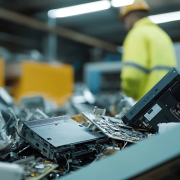
According to the United Nations’ most recent estimates, the world generates millions of tons of electronic waste (e-waste) annually. In 2022, for example, people around the world produced 137 billion pounds of e-waste with only 22% of it being properly recycled. 

Embed from Getty Images

The Environmental Protection Agency echoed those estimates, claiming that less than a quarter of e-waste is recycled in the US every year. 

When e-waste goes to regular landfills, the devices can emit harmful materials that can hurt our environment. They also contain metals that are hard to source, so recycling is the best option to maintain sustainability. 

Rick Neitzel, an environmental health sciences professor, said: 

“The way that we’re creating and using and disposing of these devices has generated this completely unsustainable waste stream, and there’s no signs of that abating at all. In fact, the trend continues to accelerate.”

If more electronics were properly recycled, it could also drive down to costs of some newer electronics. 

Electronics have such a wide range of materials and types, making recycling seem daunting. Recyclers need to be able to extract each component and material efficiently, which can be a complex, energy-intensive, and expensive process, Neitzel said. 

Components such as steel, aluminum, copper, gold, silver, plastics and even glass, can be recovered and reused, said John Shegerian, founder of Electronic Recyclers International, to AP

“These electronics — which could and have historically ended up in our landfills or in other inappropriate places — can leak all the stuff that’s contained there within: Mercury, lead, cadmium, beryllium, arsenic. All these things are horrible if they get into our environmental ecosystem,” Shegerian said.

Embed from Getty Images

If one of your devices is newer and still in working condition, manufacturers can potentially refurbish and resell it. There are organizations that will also refresh and reset these devices to give them to those in need or community-type centers to be utilized for free by many. 

If you think your device can no longer be refurbished, checking in with a manufacturer is still a great place to start when it comes to being guided in the right direction on properly disposing your device. 

“The manufacturers are where we want this stuff to end up because they know their products, they know best and most efficiently how to recycle them,” Neitzel said.

There are major retailers that also offer recycling services. Stores like Best Buy and Staples often accept big and small devices for recycling, and can even help with larger items like refrigerators and televisions. 

Many local governments also have information regarding where to drop off certain electronics in your specific area, so make sure to check out your community websites and local offices for information as well. 

“Typically, if you’re dropping them off at a government-run electronic waste collection station, you can be confident in that,” Neitzel said.

There are many online resources that you can also use to mail-in your old devices to have them properly disposed of. Many websites such as Waste Management, Amazon, Best Buy, and others will send you boxes directly to your door to fill up and mail out for disposal.

leather

Luxury Designer Brands Are Investing In Sustainable Bags Made From Leather Scraps And Unconventional Materials 

Luxury designer bags are often made from exotic animal skins, which in recent years has been called out for its harm towards the environment. Now, some brands are shifting their focus to create bags made from recycled materials as a form of up-cycling, and reducing the carbon footprint/environmental impact that comes from traditional designer bag production. 

Coach, for example, just launched Coachtopia, a sub-brand that will be focusing on creating a variety of bags made from leather and other materials that would otherwise have been thrown away and ended up in landfills. 

Embed from Getty Images

Telfar’s vegan bags are also nicknamed the “Bushwick Birkin ” after they grew in popularity in New York. While the bags are still on the more expensive side, the prices are more reasonable for the average consumer looking for a nice sturdy designer bag. 

“Every time you eat an apple, you’re basically eating a handbag,” said Stella McCartney after showcasing her latest collection of bags made from waste such as orange and cacti byproducts. 

The animal leather industry is actually one of the first examples of up-cycling, as the leather is brought from cows who are used for their meat/food, however, the industry is still very wasteful. According to ELeather, an engineered leather supplier, up to 75% of all leather hides are disposed of. 

The Leather and Hide Council of America also released a report in 2019 that stated 5 millions hides went to landfill in America that year. 

The younger generation has also been a driving force in this shift in fashion. In general, Gen Z has been a major player in the fight against climate change and the industries that drive it, especially fashion. 

Embed from Getty Images

According to research, 90% of Gen Z consumers believe companies have an obligation to address environmental and social issues. 54% of the group also stated they’re willing to spend more if it means they’re getting a sustainable product; only 23% of baby boomers had the same ideals. 

Joon Silverstein, senior vice president for global marketing, creative and sustainability at Coach and head of Coachtopia, says that “according to [the company’s] research older generations and more established luxury consumers tend to consider pieces made from recycled leather as low quality. Gen Z has a different mindset – they consider it a moral and ethical [issue].”

There are two major aspects to the leather industry that lead to its waste. When the leather is being tanned at the tannery, the hides are treated and processed into leather using chemicals that make the leather, and its waste, non-biodegradable. The production also takes place in large factories where pollution is consistently emitted. 

Faux leather, like “pleather,” also comes with its faults, as it’s often produced from plastic or petroleum-based materials that have their own environmental issues. 

While this issue is going to take a lot more than a couple brands releasing small collections of sustainable bag lines, it’s hopeful to see sustainability and recycling/up-cycling trends enter the mainstream.

Solar Panel

The Growth And Development Of Renewable Energy Technologies

It is no secret that the call for green sources of energy is growing louder as climate concerns rise with each day. Among the warranted concerns for climate disasters and a need for immediate and real change, it is sometimes difficult to recognize the progress. As Greta Thurnburg said to the US Congress in 2019: “You must unite behind the science. You must take action. You must do the impossible. Because giving up can never ever be an option.” So how is the industry fairing? How are technologies developing? What can we expect to see from 2020?

Recently, The Guardian reported that tech giants such as Amazon, Facebook, Microsoft and Google (by a considerable lead) were the “world’s biggest buyers of renewable energy.” Adding that, the overall purchase of renewable energy from corporations had tripled in the last two years. Google’s involvement should come as no surprise considering its serious push for green energy in the last three years alone. In 2017 the giant announced it would use 100% green energy, utilizing wind and solar energy across the globe. In 2019 it increased its investment by a further 40% which equated to roughly $2 billion in clean energy. Sundar Pichai stating that it would “spur the construction of more than $2 billion in new energy infrastructure” in order to fuel new developments as the company matures.

As investments in sustainable energy grow, development of those technologies can be expected. Some technologies, more than others, will be more popular and easier to implement or develop, so which are due to have a growth spurt in 2020?

Embed from Getty Images

Marine Solar Panels and Offshore Wind

Whilst these are not new technologies, their rapid development and increasing affordability has warranted leaps of progression in the sector. In particular the rising installment of floating solar panels seems to be an efficient way of harvesting green energy. One of the age-old protests of wind and solar farms is its use of needed land and its “unattractive” blot on the environment. Like offshore wind-farms, floating Solar panels can make use of offshore space and utilize uninhibited sun. In 2019, China instated what is said to be the largest floating Solar panel installment in the world, totaling 70MW. Green Tech Media stated in 2019 that the “global floating solar demand is expected to grow by an average of 22 percent year-over-year from 2019 through 2024.”

Already with its roots down is Offshore wind, which as a fast growing and lucrative sector, has promising trajectories in the future. With one wind turbine able supply a year’s worth of energy for 1500 homes. It is no wonder that according to offshorewind.biz “Investment in offshore wind reached USD 29.9 billion in 2019, up 19% on 2018 and USD 2 billion more than in the previous record year of 2016.”

Artificial Intelligence

Whist not a stand-alone supplier of green energy, the development of AI has been a fundamental catalyst in quickly improving the technologies and uses of green energy. By data analysis AI has been able to advance the effectiveness of green energy by speeding up production, reducing waste, increase energy efficiency, storage and track trends. The development and use of such technology should make more green energy services more cost-effective.

Embed from Getty Images

Improvements in energy storage and reliability

One pressing concern in the production and utilization of sustainable energy, is how to store it. Some energy producers such as wind and solar are privy to changes in conditions (such as lack of wind and sun) whereby energy is not efficiently produced, if at all. Batteries are then needed to meet the demand of businesses and homes, who will need energy regardless of these factors. Batteries can “fill the gaps” in energy stream when wind and solar farms struggle to do so and maintain consistency when there are fluctuations in the supply. At the moment batteries are not sufficient enough to meet consumers demands, so a heavy push to develop these technologies is needed and expected to be seen in the near future.

Other technologies are allowing green energies to be accessible by more and more businesses and individuals. In order for renewable energies to take hold of the market, the market needs to easily and reliably utilize that energy. Block-chain technologies, Grid Parity and Distributed Energy Resources (DER’s) all aim to aid this. Block-chain technology will allow securer, smarter and easier trade of energy whether derived from individuals or businesses. For example, Individuals will be able to safely sell and exchange their excess energy to a nearby buyer. Grid parity aims to equalize the cost of green energies to other energy producers, making them more attractive to buyers. DER’s are decentralized community-produced forms of energy supply that can be more affordable and will allow individual producers of energy to sell electricity to the grid.

Plastics

China Wants To Ban All Single-Use Plastic By 2025

China has announced their plan to help combat the damaging effects of climate change by reducing their plastic waste as a country. One of the most harmful man-made products that’s currently killing our planet is single-use plastic. These products not only are impossible to decompose, but are the most wasteful in terms of use. Things such as the Great Pacific garbage patch and the microplastic epidemic currently taking over could’ve all been avoided had policies such as the one China is about to implement been around. 

By 2025, China is planning on reducing their single-use plastic product distribution and use greatly, starting with a ban on single-use plastic straws and bags throughout the country. Obviously, this is a major shift for such a large country, hence why the government is giving itself a 2025 goal. China’s National Development and Reform Commission (NDRC) made a statement this past Sunday (1/19) in which they claimed that certain plastics will be banned in different territories at specific times throughout the next five years to gradually phase out all single-use plastic. 

Embed from Getty Images

It’s expected that the government will start with larger metropolitan areas first and then move to banning plastics in more suburban/rural areas as time progresses. It’s much easier to regulate plastic product distribution in larger cities, as most receive their shipments of single-use plastic products from the same companies, so they can collectively switch to more sustainable options. Rural areas are given more time so residential businesses can transition at their own pace. 

For example, “thin, single-use plastic bags will be banned in most stores in large cities by the end of 2020, but smaller cities and villages have until 2022 or even 2025 to begin phasing them out. By the end of 2025, hotels will no longer be allowed to provide single-use plastic items and no postal service nationwide will be allowed to use any plastic packaging,” according to the NDRC.

Embed from Getty Images

China has mapped out other plastic ban specifics in their official new policy for the next five years, including a ban on all single-use plastic cutlery within China’s catering industry by the end of 2020. The plan is to have all plastic tableware phased out of China’s restaurants by 2025, however, with the takeout industry being as huge as it is, single-use containers will only be partially phased out by the end of the five years. Plastic straws will also be banned entirely throughout the whole country by the end of the year. 

A policy as major as this one happening in a country as impactful as China is extremely important, and will hopefully set a precedent for other major countries. China alone produces up to 30% of the plastic products distributed throughout the world every year, making it the number one plastic manufacturer on the planet.

The significance of that statistic is major, for example, the Yangtze River in China carries more plastic pollution into our oceans than any other water way in the world, according to the World Economic Forum. Plastic levels in our oceans are at an all time high, with an estimated 8 million tons of it being dumped into them every year, a majority of which is coming from China. While it can be argued that the damage has already been done, at least China is leading the way on making major systematic changes to at least try and combat the harmful repercussions of humanity’s actions. 

Along with the new policy, Chinese lawmakers announced that they would be creating a new comprehensive recycling program for the entire country to abide by. This way, it’ll be easier to organize and regulate the recycling process in a country as massive as this one. China is hoping it can return its country’s health to what it once was, and hopes the rest of the world catches up with them soon. Our oceans are hoping for the same.

Recycle Christmas

How To Reduce, Reuse, And Recycle Those Old Holiday Decorations

Since the holidays are over, it’s time for the part of year that everyone dreads: the clean up. Cleaning up and throwing away all the remainders of the holidays can be downright depressing. What was one day the most wonderful time of the year is now just another winter day. However, with a new year approaching, it’s the perfect opportunity to modify your life and make some resolutions to make yourself an overall happier and healthier person to cope with this melancholy transition. 

One of the most popular New Year’s resolutions is to be healthier and exercise more. As of the past few years, many people have applied that same logic to the planet. Maybe not the exercise part, but living a healthier and greener life. Our planet continues to deteriorate at an exponential rate due to climate change. There are plenty of things we all can be doing to reduce our carbon footprint every day, but since Christmas is officially over, why not get a head start now? 

Embed from Getty Images

When cleaning up after the holidays, most people don’t realize the amount of recyclable items they actually throw out every year when they’re doing their cleaning sweeps. It makes sense, the mess can be overwhelming, why not just throw everything into one big garbage bag and call it a day? Well, if you really want to dedicate yourself to your resolution and avoid being a part of the 92% of people who don’t stick to their New Year’s goals, than recycle that wrapping paper!

There is so much plastic wrap, tissue/wrapping paper, cardboard, lights, etc. that gets wasted and thrown into landfills every year after the holidays but the reality is all of those items and more are completely recyclable! Lowe’s home furnishings actually has a specialized recycling section for Christmas lights that no longer work after the holidays. You simply drop off the lights and they recycle them! In addition, if you know you have a local recycling plant that has a specialized area for metals, they’ll most likely also accept the lights. While the bulbs are made of glass and the wire casings are made of plastic, the interior wiring classifies them as a metal item in terms of recycling. 

Try to be conscious when opening wrapped gifts and boxes with tissue paper interiors. All of those items can be reused for next Christmas; even if your wrapping paper has some rips in it, you can cut the edges to wrap a small present for the next year. While this tip doesn’t necessarily help now, after all of the presents are opened, at least you can start being more aware of it now. 

Embed from Getty Images

Boxes that hold clothing items that were gifted can also be used year after year, as well as gift bags of any sort. Dedicate a plastic bin to hold all of these items to keep them safe until the next year. Boxes can be folded in on themselves, which is a great space saver. 

If you already did your holiday clean up and it’s too late to salvage and reuse any items for next year, don’t fret, just think of more sustainable solutions for next year! For instance, there are tons of biodegradable wrapping paper, box, and ribbon options for all of your future gift wrapping needs. This means that even after the holidays you can just throw away all these items in the regular trash and they’ll decompose back into the earth, instead of sitting and emitting harmful chemicals as they break down. 

Finally, it’s time to get rid of that massive Christmas tree in the living room. If your family uses a real tree, there are plenty of sustainable options for what to do with the tree after the holiday to ensure that it’s put back into the earth. The easiest option would be to just throw it in a woodsy area where it can eventually break down and be used as fertilizer for future plants. However, there are many individuals who don’t have access to the woods or any public space where dumping a dead tree would be deemed acceptable. 

Home Depot does a special every year where they collect trees free of charge after the holidays and recycle them, so if you have one near you, drop it there! Additionally, use the internet to see if any other local businesses in your area provide tree recycling services — you might be surprised how many actually do. Many community outreach programs like to use the trees for creative/environmental projects, a fertilizer source, or even as room fragrance with the pine needles.

However you celebrate the holidays, there’s always room to be more sustainable. So this year, welcome in 2020 by giving something back to the Earth and contribute to living a greener and healthier life for the new year.

Arrow

Easy Ways To Live A Greener Life In 2020

One of the most popular New Year’s resolutions to date is to live a healthier lifestyle. Whether that means a change in diet, an increase in exercise, or the purchasing of a gym membership, so often we always set a goal to live a life that is mindful and healthy. However, when it comes to living a healthier life, what about the planet that we’re living on? Climate change is moving faster than ever and causing atmospheric conditions to worsen, forests to burn, oceans to flood and fill with plastic, and lead more and more animals to a path towards extinction. If we want to live a life that’s healthy and thriving, shouldn’t we want the same for our planet? So this year, live your best healthy life by living a greener one!

Remember, no one is expecting you to save the planet all by yourself, and we all know in order for the environment to really bounce back, actual systematic change needs to come from the people in power, however, it never hurts to reduce your own carbon footprint and do the best you can at living a more sustainable life. At least at a community level you know you’re doing your best to make a difference. 

Embed from Getty Images

Single-use plastic products are one of the biggest contributors to ocean and land pollution. While the use of reusable straws may have been all the rage this year, straws only make up about .02% of ocean pollution, so buy a reusable cup, utensils, dishware, etc. to go along with your straw to really up the ante. When you’re making food to put onto all of your reusable dishware, try to use ingredients/produce that’s locally grown, as opposed to mass distributed.  

“If you are buying lettuce or another type of produce or even meat that was produced states away, then it takes gas to ship that food to where you are, to your grocery store, to your home. And in addition, it takes time so if you are buying something is locally grown, then you are getting something that is fresher. So even if you are spending a couple of bucks more, you are actually doing something that is better for the environment, and it is going to last longer in your fridge,” said Jen Ashley, an editor with a local South Carolina daily newsletter.

Ashley also suggests trading out the light bulbs in your house for LED bulbs. These are typically more expensive upfront, however, in the long run they use much less energy than standard bulbs, which means a cheaper light bill for you monthly. Additionally, these bulbs are more sustainable, and will last way longer than a regular bulb. 

Embed from Getty Images

An amazing thing that you can do that will not only help the planet, but contribute to your healthy lifestyle new years resolution, is to walk or take a bike ride as opposed to driving to places that are a short distance away. Reducing your personal carbon footprint is one of the best ways you can help the planet, besides recycling. So instead of driving a few blocks to Starbucks for your afternoon pick-me-up, go for a nice walk there instead. Since it is winter, the weather can sometimes make going for a walk or bike ride a lot less desirable, so instead ask around and try to carpool to where you need to go. While this isn’t nearly as sustainable as just walking, it’s better to have three people share a ride to the same place instead of taking three separate vehicles there.

“It’s all about baby steps, and so you don’t have to save the world today. You don’t have to put on a cape and think that you are going to reverse the effects of climate change or lower the sea levels, all you have to do are little things” said Ashley

When in doubt, look around your home and find all the plastic products that you own, and recycle anything that you deem as unnecessary and a waste to the environment. Replace the things that are most manageable. Buy a reusable water bottle, tote bags for shopping, and look into sustainable brands with recyclable or biodegradable packaging. Like Ashley said, no one is expecting you to save the planet by yourself, but doing your part will not only help the planet, but lead you into a healthier and more mindful life for the new year.

Fast Fashion

How Sustainability Is Killing The ‘Fast Fashion’ Industry

When we typically think about sustainable ways of living, the first things that normally come to mind are reducing our plastic use, taking public transportation, using solar energy, recycling, and so on. However, we never think about how our fashion choices affect our carbon footprint. Sustainable fashion is a relatively new concept in relation to climate change, but thinking about the ways that we buy fashion and its environmental impact is actually very important in terms of fixing the damage that climate change has done. 

If you haven’t heard of “sustainable fashion,” you may have heard of its counterpart, fast fashion. Fast fashion refers to brands such as H&M, Fashion Nova, Forever 21, and basically any other big brand that carries mass-produced retail that embodies fresh runway looks that made it right onto the sale rack. Fast fashion has grown immensely in popularity, mainly because it allows consumers to by high-end looking garments that are fresh and trendy at an extremely reduced cost. The controversy lies within why the clothing is so cheap. There’s the obvious reasoning that these companies know cheaply made clothing is likely to wear down quicker, causing customers to have to repurchase items. Then there’s the greater concern over the ethics behind the clothing production in relation to its price point. How these companies source their labor overseas is a major concern, as most of these stores are constantly updating the items they carry to keep up with demand. So it’s assumed that there are extremely underpaid and overworked factory employees who are feeling the real effect of that demand through their long hours and low wages. 

Embed from Getty Images

As more individuals become aware of the many dilemmas in the fast fashion industry, sustainable fashion is rising to take over. Sustainable fashion is all about selling well-made pieces of clothing that get restocked at a slower rate. While that may slow distribution in some aspects, depending on where the clothing is coming from, it’s more green. The main reason sustainability in fashion hasn’t blown up in the way that fast fashion brands have is cost. Sustainable fashion requires higher quality materials and fair labor costs, which tends to get pricey but ethically, is completely necessary. 

When labor, material production, and distribution is all done at a local level, it’s always going to be more expensive as opposed to getting all of it done overseas. However, the environmental benefits of not receiving constant shipments from overseas of items made by underpaid and overworked laborers and flown out by cargo planes that are constantly emitting greenhouse gases is quite remarkable. 

Embed from Getty Images

Many individuals criticize the sustainable fashion movement because of the high price point, making it seem like it’s something only upper class individuals actually have access to, thus putting the blame for climate change on the lower class for buying fast fashion, just because it’s what’s affordable. However, sustainable fashion isn’t just about buying clothing from high-end, locally-produced boutiques that try to sell a dress for $400+. It’s about sustainability! In general, when it comes to how we make changes in our own lives to greater benefit the environment, there’s always multiple ways to go about it, and sustainable fashion is no different!

It’s always best to check out local brands for anything in your area and support that business. Local small businesses are the epitome of sustainability, as all their work and materials are typically accomplished at a regional level. As stated previously, however, this means that cost for goods can be more expensive, so what other options are out there? Thrift stores and second hand shopping in general is always an amazing way to contribute to sustainable fashion. Most thrift stores receive all of their second-hand items of clothing from local individuals, making the carbon footprint of that process close to nothing! In addition, thrifting is extremely cheap, especially compared to local boutiques. 

In the same light, donating and selling your clothes has the same impact as buying new ones from a local store/thrift shop. Instead, you’re just now contributing to someone else’s sustainable purchase. Additionally, always be self-aware of your retail buying habits and try to reduce excessive and needless shopping habits, as it all further contributes to climate change in regard to production, labor, shipment, and restocking. So the next time you need a new sweater for the Christmas party, check out your local Goodwill first.

Recycle

Individual Lifestyle Change’s Will Lead To Systematic Climate Action

Climate change has been an ongoing issue, and recently, there’s been heavy debate over how systematic change for improvement compares to individual lifestyle modifications. To generalize, real major systematic change has to occur if our planet has any chance of recovering from the extensive damage that has already been done to it. However, individual lifestyle adjustments don’t go unrecognized, and do actually make a difference when it comes to improving the Earth’s health. 

“It is really important that scientists, or other messengers who communicate with the public, model those behaviors that reduce carbon emissions to drive their point home. Our new research showed that the carbon footprints of those communicating the science not only affects their credibility, but also affects audience support for the public policies for which the communicators advocated,” Professor Elke Weber, associate director for education at Princeton’s Andlinger Center for Energy and the Environment said in an interview.

Embed from Getty Images

Basically, the general public is more likely to support systematic change in policies if those advocating for it are themselves making major changes in their own lifestyles. Especially the individuals in the public eye who are supporting this systematic change, such as Greta Thunberg who often discusses the ways she makes personal life adjustments to reduce her own carbon footprint. When someone like Thunberg is showing her following what she’s doing personally to improve the environment, the individuals who support her message are more likely to do the same, and thus speak up more and demand for more large scale adjustments to made from the government. Thunberg truly is the best example of this; during many of her speeches she advocates a message that demands individual change, while also preaching how if we want a real difference to be made, we need those in power to do something more than anything. 

The reason this comparison is so important is because many individuals know that in order for the planet to truly recover, systematic change is the only real answer, so they just assume that their own personal lifestyle choices don’t matter either way. This couldn’t be any more false, every person who actively is trying to reduce their carbon footprint makes a real impact. While that impact may only go as far as your community, it still matters. Imagine if everyone in your small town cut out single-use plastic products, or rode public transportation every other day instead of driving, the real world results of that don’t go unnoticed!

Embed from Getty Images

“Advocates for energy conservation and for policies that reduce carbon emissions must expect ad hominem arguments based on their own energy use. Such arguments are probably best countered personally, by leading the way and demonstrating how to act in concordance with one’s own beliefs and recommendations, and by being an exemplar others can follow, rather than relying primarily on communicating scientific facts about global warming and its risks,” reports Forbes Magazine. 

Systematically, many changes need to occur. We need direct and clear policies that actively work to reduce greenhouse gas emissions, increase renewable energy, ban toxic and wasteful materials such as single-use plastic, regulate human population increases, and makes public transportation more reliable, safe and accessible to all. These are major steps that need to be taken and they only scratch the surface of the global change that needs to occur in order for the planet to truly survive. However, if individuals are witnessing famous advocates integrating these own policies into their own lives, they’re most likely to do so as well. Forbes reports that out of a survey of 3,600 people, all of them would support at least one of the systematic changes listed above, so imagine the impact if that group just decided to establish those changes into their own lifestyles; the planet would surely thank them.