Posts

water

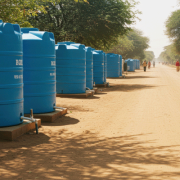
Matt Damon On What Inspired Him To Start His Safe Water For All Nonprofit

Damon spent time in a Zambian village with local families and was immediately astonished with the lack of access to clean water and toilets, he then began focusing on the global water crisis to get a grasp on just how severe the situation was around the world. 

spring break

FBI Issues Travel Warning as Spring Break Approaches: What You Need to Know

As spring break approaches, the FBI has issued an alert urging travelers, including students and families, to exercise increased caution while vacationing overseas.

Spring break significantly benefits local economies worldwide, bolstering revenues for hotels, restaurants, bars, and other businesses while also increasing seasonal employment. However, amid the festivities, travelers must remain alert to potential safety threats, such as crime, political instability, and ongoing conflicts.

In a recent statement, Akil Davis, FBI Assistant Director in Charge of the Los Angeles Field Office, warned that travelers should be aware of the risks while traveling abroad.

“Whether it’s families looking to escape the final throes of winter or a college student seeking a brief respite from the rigors of academic life, know that the risks are there. Maintain vigilance throughout your travels and be prepared to contact the nearest U.S. Embassy or Consulate should the need arise.”

The FBI’s warning follows the disappearance of University of Pittsburgh student Sudiksha Konanki during her visit to Punta Cana, a popular resort destination in the Dominican Republic.

With the spring break period extending through March and April, airports and airlines anticipate higher traffic this year. According to CBS News, the Transportation Security Administration (TSA) predicts approximately a 5% increase in passengers compared to last year’s travel season.

Embed from Getty Images

The FBI recommends that travelers maintain a heightened awareness of their surroundings for personal safety. Specific tips include setting up emergency points of contact for families to reference, utilizing only officially authorized taxis or shuttles, and closely observing behaviors that appear suspicious or intrusive.

“Beware of new acquaintances who probe for information about you or who attempt to get you involved in what could become a compromising situation.”

Additionally, the agency advises travelers to steer clear of activities that are “illegal, improper, or discreet” and to avoid situations involving sexual solicitations, which could result in room raids, illicit photographs, or extortion attempts. Traveling in groups, particularly at night, rather than alone, is strongly recommended to mitigate potential dangers.

The FBI also highlights the importance of consulting travel advisories issued by the U.S. State Department before departure. These advisories, classified into four levels, provide updated safety assessments of countries and regions based on crime rates, terrorism threats, civil disturbances, health risks, and natural disaster likelihood.

Level 1 indicates normal precautions, with the understanding that all international travel carries some inherent degree of risk. Level 2 suggests extra caution due to “heightened risks to safety and security.” Level 3 recommends reconsidering travel plans, and Level 4 strongly discourages travel to the location altogether.

Recent advisories have placed countries like Afghanistan, Belarus, North Korea, Russia, and Ukraine under “Level 4: Do Not Travel,” underscoring the severity of conditions in those nations.

Embed from Getty Images

Common international spring break destinations include Mexico, Jamaica, the Bahamas, Spain, and the Dominican Republic, each with varying safety ratings:

  • Mexico: Cancun (Quintana Roo) and Cabo San Lucas (Baja California Sur) are listed at Level 2 due to crime concerns. However, the advisory escalates to Level 3 for Puerto Vallarta (Jalisco) due to increased risks of kidnapping and crime.
  • Jamaica: Rated as Level 3, Jamaica faces widespread violent crime, including sexual assaults and armed robberies. Tourist areas generally experience lower crime rates but are not entirely exempt from serious incidents.
  • The Bahamas: Holds a Level 2 advisory, primarily due to crime concentrated in Nassau (New Providence) and Freeport (Grand Bahama). Violent crimes such as armed robberies and sexual assaults have been reported even in tourist zones.
  • Spain: Also at Level 2, Spain faces threats from civil unrest and terrorism. Demonstrations occur frequently, and officials caution travelers about potential terrorist activities targeting public places, including tourist attractions, transportation hubs, hotels, and cultural venues.
  • Dominican Republic: Classified at Level 2 due to ongoing issues with violent crime, including robberies, homicides, and sexual assaults. Tourist regions are now more secure due to enhanced policing and modernized emergency response systems.

An additional but frequently overlooked travel safety concern is carbon monoxide poisoning. Although not mentioned directly by the FBI, carbon monoxide poses a significant risk, causing over 400 fatalities annually in the United States alone, according to the Centers for Disease Control and Prevention (CDC). Recent incidents involving American tourists in Mexico and the Bahamas highlight the dangers of this invisible and odorless gas.

Experts recommend ensuring accommodations have functioning carbon monoxide detectors or bringing along portable detection devices. Immediate evacuation and seeking fresh air are crucial if alarms sound. Symptoms of carbon monoxide exposure can include headaches, dizziness, nausea, chest discomfort, and confusion, though not everyone experiences clear symptoms immediately.

Vietnam Coronavirus

 CDC Adds Vietnam to List Of Highest-Risk Travel Destinations 

The US Centers for Disease Control and Prevention (CDC) added Vietnam to it’s Level 4 risk category for travel this week. Level 4 is the highest-risk level when it comes to traveling during the Covid-19 pandemic. 

There are currently nearly 140 places within the Level 4 category of risk; which is more destinations than all other levels combined. In the beginning of 2022 about 80 places were on the list. 

The CDC places a location at “Level 4: Very High Covid-19 Risk” when more than 500 cases per 100,000 residents are registered within 28 days. 

Vietnam has become the only destination to be added to the list within recent weeks. Previously, the nation was listed at Level 3 for “high risk.” Global case numbers in general have been declining since peaking in late January, but experts are continuing to caution that the pandemic is nowhere near over. 

Embed from Getty Images

New Zealand has had relatively few Covid cases due to strict pandemic protocol restrictions. Recently, however, the nation has recorded record numbers of cases in the past week. The country remains at “high risk” on Level 3 after moving up from Level 2 last week. 

The CDC advises avoiding all travel to countries deemed Level 4. The CDC does not include the US in its list of advisories, but the nation is currently coded at Level 4. Mexico, Canada, France, Peru, Singapore, and Spain are some of the other countries that have remained at Level 4 for over a month. The United Kingdom has remained there since July 2021. 

The Level 3 “high risk” category applies to destinations that have had between 100 and 500 cases per 100,000 residents within 28 days. Comoros, Hong Kong, São Tomé and Príncipe were added to the category this week. 

Hong Kong went from Level 1 to Level 3 this week, it previously was on Level 1 since May 2021. Hong Kong is currently dealing with their worst Covid-19 outbreak since the start of the pandemic, and is planning on testing its entire population in March. 

Destinations at a Level 2 are considered “Covid-19 moderate,” meaning they have around 50 to 99 cases per 100,000 residents within 28 days. 

This week, 10 destinations moved down to Level 2, including Uganda, Ghana, Republic Of Congo, Montserrat, Rwanda, Togo, Lesotho, Côte d’Ivoire, Mali, and Liberia. 

Embed from Getty Images

To be considered “Level 1: Covid Low” a destination must have less than 50 cases per 100,000 residents over 28 days. Nigeria was the sole destination that moved to Level 1 this week. There are only 5 other locations considered Level 1, including China where the 2022 Winter Olympics were hosted. 

Finally, the CDC also has a risk level for “unknown” risk due to a lack of information and Covid data. These are typically smaller remote places, or places with ongoing warfare/civil unrest. 

Transmission rates are “one guidepost for travelers’ personal risk calculations,” according to CNN Medical Analyst Dr. Leana Wen.

“We are entering a phase in the pandemic where people need to make their own decisions based on their medical circumstances as well as their risk tolerance when it comes to contracting Covid-19,” Wen said.

“You should interpret Level 4 to mean this is a place with a lot of community transmission of Covid-19. So if you go, there is a higher chance that you could contract the coronavirus,” said Wen.

“Some people will decide the risk is too high for them, other people will say, ‘Because I am vaccinated and boosted, I am willing to take on that risk. So this really needs to be a personal decision that people weigh understanding that right now the CDC is classifying the different levels based on community transmission rates, and basically only that. They’re not taking into account individual circumstances,” Wen explained. 

You can review the CDC’s risk levels for any global destination on its travel recommendations page.

Covid-19 Immunity Passport

Covid-19 Passports May Be Key For Traveling In A Post-Pandemic World

Now that a multitude of companies are gearing up to distribute their Covid-19 vaccines in 2021, a lot of questions are being raised in regards to how we will navigate in a world during that transitional period where everyone’s waiting to be vaccinated.

Airport Security

How Covid-19 Has Changed The Way We Go Through Airport Security

The Covid-19 pandemic has truly changed the entire world and the multitude of industries that run it. One of the biggest industries that has been impacted internationally by the virus has been the travel/tourism industry. Obviously a virus that spreads through close contact in public spaces would disrupt the businesses that make their money from hundreds of strangers coming in close proximity with one another, however, now that the world has been enduring this pandemic for eight months, the industry has adjusted to better accommodate for the new normal we’re all living in. 

Specifically the Transportation Security Administration (TSA) in airports have taken on a whole list of health and safety procedure protocols to protect themselves and passengers from contracting the virus as they pass through airport security checkpoints. 

Embed from Getty Images

Obviously travelling seems like it should be out of the question for anyone in the middle of a global health crisis involving a virus that spreads easily, however, as America has proven if there’s an opportunity to do things normally, people are going to jump on that opportunity, especially when flights are the cheapest they’ve been in years. 

When travelers first enter the airport they’ll notice a difference in experience almost immediately. Individuals are prompted to scan their own boarding passes when they first enter the TSA area of the airport. They’re prompted to do this at every checkpoint throughout the airport, this way TSA workers don’t have to be handed thousands of passes during a given day and can reduce the risk of cross-contamination. 

In a pre-pandemic context, one of the biggest discrepancies all airport travelers could agree on was the limited amount of liquids you’re able to take with you on a plane. However, now that we’re living in a time where hand sanitizer is everyone’s best friend, airlines are allowing travelers to pack sanitizer in containers up to 12 ounces. The hand sanitizer just needs to be removed from the luggage so that it can pass through a separate X-ray screening; this is to ensure the liquid is actually sanitizer. 

Embed from Getty Images

Other liquids still must be less than 3.4 fluid ounces and passengers need to be adamant about checking to make sure all liquids and aerosols meet those requirements. If not, the passengers themselves will need to remove the item to prevent cross-contamination which will just take up even more time, so be extra careful when packing any liquids or aerosols that aren’t hand sanitizer. 

Since many individuals are opting not to buy any food or drinks at the airports, TSA is allowing for any meals or snacks that one wants to take through security to go through as long as it’s removed from the luggage and in a clear plastic bag placed in a separate tray. This small measure has already been thought to decrease the possibility of cross-contamination greatly. 

TSA agents have also been installing acrylic barriers in all major airports around the country. These barriers are specifically designed to prevent the spread of Covid-19 between travelers and TSA agents. They’re being placed at all TSA podiums, X-Ray areas, secondary search areas, and checked baggage drop-off locations. 

The TSA has also begun testing out self-service facial recognition technology that can immediately verify a passengers identity. The technology is currently being tested at the Ronald Reagan Washington National Airport where passengers are prompted to scan their own ID’s so that the machine can verify their identity and boarding information. If the technology proves to be successful in the coming weeks it will likely be implemented in all major airports throughout the country.

Stargazing

Some Of The Best Places To Stargaze Around The World 

Stargazing is one of the most popular and relaxing activities universally performed across the globe. There’s nothing like sitting in a large field of grass and looking up at the star-filled sky and contemplating just how small we all truly are. All around the world there are numerous locations where the universe looks close enough to touch based on how saturated the sky can get with stars. Here’s a list of some of the most widely-known destinations to view the night sky from:

The Atacama Desert, Chile: South America in general is known for its amazing stargazing. This desert located in the northern part of Chile is the driest place on the planet; besides the North and South Poles. It receives a couple millimeters of rain every year, however, the dry conditions mixed with the high altitude, minimal clouds, and near-zero pollution makes it perfect for viewing the night sky. The Tarantula Nebula, the Fornax Cluster of galaxies, the Southern Cross, and even the Large Magellanic Cloud are all visible from the desert. For this reason, locals refer to the desert as the best place in the world for looking at the stars. 

Embed from Getty Images

The Atacama Desert

Natural Bridges National Monument, Utah: This national monument is located in Lake Powell, Utah, and was the first ever certified International Dark Sky Park, which is an accolade given to various areas of the world by the International Dark Sky Association, whose main goal is to combat light and air pollution worldwide. This designation advertises itself as having some of the darkest and clearest skies in the US and in the world. The biggest attraction is the “river of light” that appears at night which is created by the Milky Way’s reflection as it rises over the Owachomo Bridge. The bridge forms what looks like a clean-cut window into the night sky that “frames” the millions of stars visible with the naked eye. Locals recommend camping out under the stars for the best experience. 

Iriomote-Ishigaki National Park, Japan: Japan is a country that’s known for it’s natural beauty. It’s cherry blossom trees and emphasis on nature in architecture make Japan one of the most beautiful countries in the world. It’s also one of the best places for stargazing, in the Iriomote-Ishigaki National Park especially, 84 out of the 88 constellations, that are recognized by the International Astronomical Union, are visible. The park is also an International Dark Sky Park.

Embed from Getty Images

Mauna Kea Observatory

Mauna Kea, Hawaii: The Mauna Kea summit on the Big Island is known as the most famous stargazing spot in Hawaii. The volcanic terrain and 13,800 foot high peak gives onlookers some of the most breathtaking views of the night sky imaginable. The Mauna Kea Observatory is located at the mountains peak, allowing for individuals to really look deeper into the night sky with it’s thirteen powerful telescopes. 

Pic du Midi, France: Pic du Midi is located in the French Pyrénées mountains and is famous for being the spot where NASA scientists take photos of the surface of the moon. If that isn’t any indication for how amazing the stargazing is here then I don’t know what is. Individuals can easily take a cable car from La Mongie to the mountains summit where an observatory is located for ideal viewing. 

La Fortuna, Costa Rica: This Costa Rican jungle may not seem like an ideal place for viewing the sky, especially considering tropical jungles are typically saturated in plant life making the sky nearly invisible, however, depending on the night, locals refer to this jungle as one of the few places where the Milky Way Galaxy becomes visible at night. The jungle is located right above the equator, which means during the dry season (December – April) visitors will have ample opportunity to view the stars.