Posts

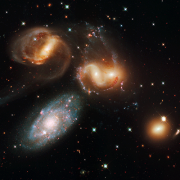
Stephans Quintet

Astronomers Identify Possible “Magma Ocean” Planet 35 Light Years Away

Astronomers studying a distant exoplanet say it may represent a previously unknown category of world—one dominated not by rock or water, but by molten lava.

The number of known exoplanets, or planets outside our solar system, has reached 6,000, according to NASA. The new research focuses on L98-59d, a planet orbiting a small red dwarf star roughly 35 light-years from Earth. The planet is about 1.6 times Earth’s size, placing it in a size range where scientists typically expect either rocky planets or ocean-covered “water worlds.” Yet new findings suggest it may instead be something entirely different.

Earlier observations using the James Webb Space Telescope revealed that L98-59d possesses an atmosphere unusually rich in sulfur. That chemical signature puzzled astronomers because neither rocky planets nor water worlds should be able to sustain such an atmosphere over the nearly 5 billion years the planet has existed.

To investigate, researchers at the University of Oxford ran advanced computer simulations tracing the planet’s evolution from shortly after its formation. The models suggest the world may contain a vast global magma ocean extending thousands of kilometers beneath its surface.

“Until now, astronomers would have placed a planet like this into one of two familiar categories, either a rocky ‘gas-dwarf’ with an atmosphere of hydrogen, or a water-rich world made of deep oceans and ice,” the University of Oxford said in a statement.

“These new findings reveal that L 98-59d fits neither description. Instead, it appears to belong to an entirely different class of planet containing heavy sulfur molecules.”

Embed from Getty Images

“You can only really explain this planet if it has this deep magma ocean inside of it,” said Dr. Harrison Nicholls, an astrophysicist at the university.

“The magma ocean efficiently stores the gases and keeps the gases protected from physical processes that would otherwise remove them.”

If the model is correct, L98-59d would be a world of extreme conditions. Scientists estimate that surface temperatures could reach 3,500°F (1,900°C). Tidal forces from neighboring planets may generate enormous waves across the molten surface, while the atmosphere, rich in hydrogen sulfide, would likely smell strongly of rotten eggs. “The whole thing really is in a mushy, molten state. It’s like molasses. It’s likely that this planet’s core would also be molten,” Nicholls said.

“We cannot yet quantify how rare this scenario is. However, given the results of our modeling, and also on the basis of well-justified physical processes which happen during planet formation, we believe that these magma ocean planets may represent a substantial fraction of the exoplanets in our galaxy.”

Although the discovery highlights the diversity of planetary systems beyond our own, researchers say the environment on L98-59d is unlikely to support life.

“If there are aliens out there that could live in lava, that would be amazing, but I don’t think it’s likely that it’s habitable. It’s nice to revel in the alienness of the planet itself.”

Studying exoplanets has long posed challenges for astronomers. Because these worlds are too distant to visit or directly photograph, scientists historically relied on indirect measurements, such as monitoring the slight dimming of a star when a planet passes in front of it, to estimate properties like size, density and temperature.

Embed from Getty Images

More recently, the James Webb Space Telescope has enabled analysis of planetary atmospheres by examining how starlight filters through them. These observations provided the initial clues that L98-59d might not fit neatly into existing categories of planets.

The possibility that molten planets could exist in significant numbers may also complicate how astronomers evaluate distant worlds for potential habitability.

“Some planets in the so-called habitable zone might not be very habitable at all, they might be these molten planets,” Nicholls said.

“While this molten planet is unlikely to support life, it reflects the wide diversity of the worlds which exist beyond the solar system. We may then ask, what other types of planets are waiting to be uncovered?”

Dr. Jo Barstow, a planetary scientist at the Open University who was involved in earlier Webb observations of L98-59d, said the new analysis offers a compelling explanation for the planet’s unusual characteristics.

“We talked about it possibly being an exoplanet that resembles Jupiter’s moon Io, with lots of volcanoes caused by tidal heating,” she said. “This work suggests it could be even more extreme.”

“What’s astonishing is that exoplanets are still delivering huge surprises decades after the field began,” said Dr. Sara Seager, an astrophysicist and planetary scientist at MIT, who wasn’t involved in the study. “We can look forward to more examples of this possible class of hydrogen-rich, sulfur-bearing atmosphere worlds.”

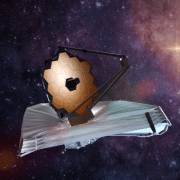
James Webb Space Telescope

James Webb Space Telescope Finds Lemon-Shaped Exoplanet That Defies Planet Formation Models

Astronomers studying data from the James Webb Space Telescope have identified one of the strangest exoplanets ever observed, an object so extreme that it’s forcing scientists to rethink how planets can form at all.

Known as PSR J2322-2650b, the exoplanet has roughly the mass of Jupiter but lives an impossibly fast and hostile life. It completes a full orbit around its star in just 7.8 Earth hours, skimming past at a distance of only one million miles or about 1 percent of the distance between the Earth and the Sun.

At that range, the planet is locked in a brutal gravitational tug-of-war that physically deforms it, stretching it into a long, oblong shape resembling a lemon, with an equatorial diameter 38 percent wider than its polar diameter. Earth, by comparison, is around 0.3 percent wider than from pole to pole.

“It’s the stretchiest planet that we’ve confirmed the stretchiness of,” lead author Michael Zhang, an exoplanet scientist at the University of Chicago, told The New York Times.

“This was an absolute surprise,” said co-author Peter Gao of the Carnegie Earth and Planets Laboratory in Washington.

“I remember after we got the data down, our collective reaction was ‘What the heck is this?’ It’s extremely different from what we expected.”

The study, published in The Astrophysical Journal Letters, suggests the object may not even fit comfortably into existing categories of planets or stars. That’s because PSR J2322-2650b doesn’t orbit a normal sun, but a pulsar, one of the most extreme objects in the universe.

Pulsars are rapidly spinning neutron stars, the ultra-dense remnants left behind after massive stars explode as supernovae. They pack the mass of the Sun into a sphere roughly the size of a city, producing gravity so intense that a teaspoon of neutron-star material would weigh trillions of pounds. As these stars spin, they emit narrow beams of radiation that sweep across space.

Embed from Getty Images

Crucially, this pulsar emits most of its energy in gamma rays, making it effectively invisible to Webb’s infrared instruments. That turns a typical exoplanet problem on its head. Instead of being drowned out by starlight, the planet can be studied almost in isolation, said Maya Beleznay, a physicist at Stanford University, in a NASA statement.

“This system is unique because we are able to view the planet illuminated by its host star, but not see the host star at all. So we get a really pristine spectrum. And we can study this system in more detail than normal exoplanets.”

What that spectrum revealed only deepened the mystery. The planet’s surface temperature reaches 3,700 degrees Fahrenheit, about four times hotter than Venus, the hottest planet in our solar system. Under those conditions, its atmosphere is dominated almost entirely by helium and carbon, while lacking hydrogen, oxygen, and nitrogen, an unprecedented combination for a planet.

Carbon usually bonds readily with elements like oxygen and nitrogen, which are common in planetary atmospheres, especially in gas giants. Their absence suggests something profoundly unusual about how this object formed.

The planet’s bizarre chemistry may also drive alien weather patterns. Researchers speculate that clouds of carbon soot or graphite drift through the atmosphere, and deeper inside the planet, these clouds may compress into solid diamond fragments.

Virtually every aspect of PSR J2322-2650b defies expectations. Only a handful of pulsars are known to host planets at all, and none like this, one that’s visibly stretched, chemically anomalous, and orbiting so close it’s being pulled apart.

One explanation is that the system is a variation of a “black widow binary,” a configuration in which a pulsar slowly strips material from a smaller companion until it’s nearly destroyed. However, black widow systems have only been observed between pulsars and other stars, not planets.

Embed from Getty Images

That opens the possibility that PSR J2322-2650b isn’t truly a planet at all, but the remains of something much larger.

“It would have lost 99.9 percent of its mass, and we just happened to catch it right at the very end,” said Gao.

“I hope we have a sibling to compare this object to. If it’s continuously losing mass, we had to be really lucky to see it in its last breath before it disappears.”

Still, even that scenario raises problems. The planet’s extreme carbon abundance doesn’t align neatly with known stellar processes, leaving researchers with more questions than answers.

The most tantalizing option, Zhang suggests, is that astronomers are seeing something entirely unprecedented. “We’re witnessing an ‘entirely new type of object that we don’t have a name for,'” Zhang said.

“Did this thing form like a normal planet? No, because the composition is entirely different. Did it form by stripping the outside of a star, like ‘normal’ black widow systems are formed? Probably not, because nuclear physics does not make pure carbon. It’s very hard to imagine how you get this extremely carbon-enriched composition. It seems to rule out every known formation mechanism.”

Co-author Roger Romani, of Stanford University and the Kavli Institute for Particle Astrophysics and Cosmology, looks forward to further studying the phenomenon.

“As the companion cools down, the mixture of carbon and oxygen in the interior starts to crystallize. Pure carbon crystals float to the top and get mixed into the helium, and that’s what we see. But then something has to happen to keep the oxygen and nitrogen away. And that’s where the mystery comes in. But it’s nice to not know everything. I’m looking forward to learning more about the weirdness of this atmosphere. It’s great to have a puzzle to go after.”

For now, PSR J2322-2650b remains a cosmic riddle of a lemon-shaped, diamond-clouded anomaly orbiting one of the universe’s most violent stars.


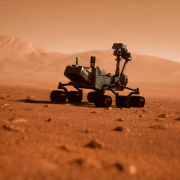
rover

Curiosity Rover Uncovers Ancient Carbon on Mars, Hinting at Lost Habitability

NASA’s Curiosity rover uncovered significant new data while ascending the rugged terrain of Mount Sharp within Mars’ vast Gale Crater, where it detected extensive carbon-rich deposits inside carbonate minerals. The discovery carries profound implications, suggesting the Red Planet may have once been capable of supporting life.

Carbonate minerals, which form when carbon dioxide interacts with water and rocks, serve as critical markers of historical environmental conditions. Scientists had already documented sparse carbonate occurrences on Mars through various exploration methods, including satellite observations, rover analyses, and meteorites originating from the planet that had tumbled toward Earth. Yet, Curiosity’s newest discoveries offer newfound clarity about these deposits.

The findings were published this week in the journal Science. “It tells us that the planet was habitable and that the models for habitability are correct,” Dr. Ben Tutolo, lead author and associate professor at the University of Calgary’s Department of Earth, Energy, and Environment, said in a statement. Tutolo is a participating scientist on the NASA Mars Science Laboratory Curiosity Rover team.

“The discovery of large carbon deposits in Gale Crater represents both a surprising and important breakthrough in our understanding of the geologic and atmospheric evolution of Mars. The abundance of highly soluble salts in these rocks and similar deposits mapped over much of Mars has been used as evidence of the ‘great drying’ of Mars during its dramatic shift from a warm and wet early Mars to its current cold and dry state.”

Embed from Getty Images

The carbonate minerals identified appear to have crystallized in environments characterized by extreme aridity, emerging from reactions between scarce Martian water and surface rocks followed by significant evaporation. These conditions suggest that Mars once boasted a thicker, warmer atmosphere abundant in carbon dioxide, sufficient to maintain liquid water on its surface. However, as Mars gradually lost its atmospheric density, gaseous carbon dioxide became permanently locked into rock formations.

One mineral, siderite, stands out due to its surprisingly high concentration, constituting approximately five to ten percent of the discovered deposits in three drill sites. The rover also detected iron oxyhydroxides within these carbonate deposits alongside soluble salts.

These minerals also suggest Mars once possessed a dynamic carbon cycle similar to Earth’s, in which carbon trapped in rocks could eventually return to the atmosphere, influencing the planet’s climate.

“The question looking forward is how much of this CO2 from the atmosphere was actually sequestered? Was that potentially a reason we began to lose habitability?”

Tutolo emphasized the significant impact of this discovery on our understanding of how the planet’s atmosphere changed over time. “Studying the collapse of Mars’ warm and wet early days also tells us that habitability is a very fragile thing,” Tutolo said.

Embed from Getty Images

“The broader implications are the planet was habitable up until this time, but then, as the [carbon dioxide] that had been warming the planet started to precipitate as siderite, it likely impacted Mars’ ability to stay warm.”

Curiosity’s findings intersect compellingly with ongoing climate initiatives. Tutolo is actively researching ways to mitigate climate change by converting industrial carbon dioxide emissions into stable, solid carbonate minerals, a method analogous to what likely occurred naturally on Mars.

“What we’re trying to do on Earth to fight climate change is something that nature may have already done on Mars. Learning about the mechanisms of making these minerals on Mars helps us to better understand how we can do it here.”

This new data highlights the delicate and fleeting aspects of planetary habitability, offering essential insights for our comprehension of the environmental futures of both Mars and Earth.

NASA has indicated that upcoming missions and further examination of additional sulfate-rich regions on Mars may validate these findings, contributing to a deeper understanding of the planet’s early history and the transformations it underwent as its atmosphere dissipated.

“The most remarkable thing about Earth is that it’s habitable, and it has been for at least four billion years. Something happened to Mars that didn’t happen to Earth.”

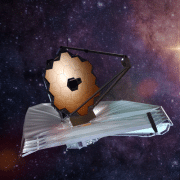
Webb Telescope

Webb Telescope Detects Potential Signs of Life on Distant Exoplanet

Scientists utilizing NASA’s James Webb Space Telescope (JWST) have captured what they describe as compelling indicators of potential life on an exoplanet beyond our solar system. The telescope detected gases in the atmosphere of exoplanet K2-18b that, on Earth, can only be produced by living organisms.

Specifically, the gases identified, dimethyl sulfide (DMS) and dimethyl disulfide (DMDS, are predominantly produced by marine phytoplankton, a form of algae. Although the findings are promising, scientists emphasize caution, highlighting that these gases represent potential biosignatures rather than direct evidence of extraterrestrial life.

“These are the first hints of a world that is possibly inhabited,” explained astrophysicist Nikku Madhusudhan from the University of Cambridge’s Institute of Astronomy at a press briefing on April 15. Madhusudhan was the lead author of the study, which was published in The Astrophysical Journal Letters.

“This is a transformational moment in the search for life beyond the solar system, where we have demonstrated that it is possible to detect biosignatures in potentially habitable planets with current facilities. We have entered the era of observational astrobiology.”

K2-18b is a sizable planet, approximately 8.6 times Earth’s mass and has a diameter about 2.6 times as large as our planet. It orbits its host star, a red dwarf smaller and cooler than our sun, in the “habitable zone,” where liquid water could potentially exist—a critical factor for life as we understand it.

Situated about 124 light-years away in the constellation Leo, K2-18b falls into a category scientists refer to as “Hycean” worlds, planets hypothesized to possess vast oceans conducive to microbial organisms beneath hydrogen-rich atmospheres.

Embed from Getty Images

Prior studies using Webb had already revealed the presence of methane and carbon dioxide in K2-18b’s atmosphere, marking the first identification of carbon-based molecules on an exoplanet within a habitable zone. “This is an independent line of evidence, using a different instrument than we did before and a different wavelength range of light, where there is no overlap with the previous observations,” Madhusudhan said. “The signal came through strong and clear.”

“The only scenario that currently explains all the data obtained so far from JWST, including the past and present observations, is one where K2-18b is a Hycean world teeming with life. However, we need to be open and continue exploring other scenarios.”

Madhusudhan clarified that while these environments suggest simple microorganisms, they do not yet indicate the existence of more complex or intelligent life forms.

Still, he described the findings as “potentially one of the biggest landmarks in the history of science,” stating, “I know this sounds grand, and it’s not my intention to make it sound grand, but there’s no other way to put it.”

DMS and DMDS were detected at atmospheric concentrations exceeding 10 parts per million by volume, much higher than those found naturally on Earth.

“For reference, this is thousands of times higher than their concentrations in the Earth’s atmosphere and cannot be explained without biological activity based on existing knowledge.”

However, the scientific community remains skeptical. Christopher Glein, principal scientist at the Southwest Research Institute’s Space Science Division in Texas, underscored the necessity of cautious optimism.

“The rich data from K2-18b make it a tantalizing world. These latest data are a valuable contribution to our understanding. Yet, we must be very careful to test the data as thoroughly as possible. I look forward to seeing additional, independent work on the data analysis starting as soon as next week.”

Embed from Getty Images

Astronomers determine the composition of exoplanet atmospheres using the transit method, analyzing starlight filtering through planetary atmospheres as the planet passes in front of its star. This technique allowed Webb to confirm the gases’ presence with a 99.7% confidence level, still leaving a slight possibility of 0.3% that the findings are a statistical anomaly.

Addressing the ultimate goal of exoplanet research, Madhusudhan deems discovering life on an Earth-like planet beyond our solar system as the “Holy Grail” of astronomy, noting humanity’s long-standing quest to answer whether we are alone in the universe.

“When you are seeing something like this, it’s like—this is a question humanity has been asking for thousands of years, and if you’re witnessing it for the first time, it is a shock to the system. And it takes a while to recover from that, from the enormity of it.”

Nevertheless, he emphasized the importance of rigorous validation, calling for repeated observations and further studies to rule out non-biological origins of these gases.

“First, we need to repeat the observations two to three times to make sure the signal we are seeing is robust and to increase the detection significance” to the level at which the odds of a statistical fluke are below roughly one in a million, Madhusudhan said.

“Additionally, further research is required to verify “whether or not there is another abiotic mechanism to make DMS or DMDS in a planetary atmosphere like that of K2-18b. Even though previous studies have suggested them [as] robust biosignatures even for K2-18b, we need to remain open and pursue other possibilities.”

For now, the discovery remains cautiously promising, marking an unprecedented step forward in our search for life among the stars.

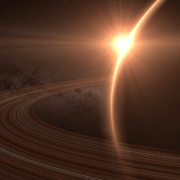
saturn

Astronomers Uncover Secret Ocean On One Of Saturn’s Smallest Moons 

Astronomers have uncovered increasing evidence that one of Saturn’s smallest moons, named Mimas, has a global ocean beneath its icy surface. This is a significant revelation in the overall search for water on other planets, as water is an essential building block for all life, further fueling the potential for discovering habitable worlds in deep space. 

Scientists used to think Mimas was just a big ice chunk before NASA went on their Cassini mission orbiting Saturn, and its 146 moons, from 2004 to 2017. 

Mimas was first discovered in 1789 by English astronomer William Herschel, and was first photographed in 1980 using the Voyager probes. Mimas is covered in craters, with the largest one being 80 miles across. 

Through the Cassini mission, astronomers found that the moon takes around 22 hours to orbit Saturn, and is about 115,000 miles from Saturn. Data also showed that Mimas’ rotation and orbital motion is triggered by the moon’s interior. 

Embed from Getty Images

According to reports, in 2014 European researchers determined that the core of Mimas is either rigid, elongated, rocky, or has a subsurface ocean causing its rotation and motion. Observatoire de Paris astronomer Dr. Valéry Lainey and his colleagues analyzed the orbital motion data to get a clearer conclusion, and their findings were published Wednesday in the journal Nature

Through this study, the team was able to determine that the moon’s spin and orbital motion didn’t match up with the theory that Mimas had a rocky core, and instead, the evolution of its orbit suggests an internal ocean that shaped its motion, Lainey explained. 

“This discovery adds Mimas to an exclusive club of moons with internal oceans, including Enceladus and Europa, but with a unique difference: its ocean is remarkably young, estimated to be only 5 (million) to 15 million years old,” said study co author Dr. Nick Cooper.

The team was able to determine the origin and age of Mimas’ ocean by analyzing how the moon responded to Saturn’s gravitational forces. 

“Internal heating must come from the tides raised by Saturn on Mimas. These tidal effects have induced friction inside the satellite, providing heat,” Lainey said. 

The study stated that they suspect the ocean is around 12 to 19 miles below the moon’s ice exterior. Astronomically speaking the ocean is very young, which means there wouldn’t be any outward signs of activity on the surface.

This discovery is a huge moment for science in general, as it could shift the ways in which astronomers think about moons in our solar system. 

Embed from Getty Images

“If Mimas hides a global ocean, this means that liquid water could lie almost anywhere. We already have serious candidates for global oceans (on moons such as) Callisto, Dione and Triton,” Lainey said. 

“The existence of a recently formed liquid water ocean makes Mimas a prime candidate for study, for researchers investigating the origin of life,” Cooper said.

“It may be time to observe other seemingly quiet moons across the solar system that could be hiding conditions that can support life,” the study authors said.

“Lainey and colleagues’ findings will motivate a thorough examination of mid-sized icy moons throughout the Solar System,” wrote Drs. Matija Ćuk and Alyssa Rose Rhoden in an article that accompanied the study.

Rhoden has also written research about a “stealth” ocean on Mimas.

“Basically, the difference between our 2022 paper and this new paper is that we found an ocean could not be ruled out by Mimas’ geology, whereas they are actually detecting the signature of the ocean within Mimas’ orbit. It is the strongest evidence we have, so far, that Mimas really does have an ocean today,” Rhoden said.

“Mimas certainly demonstrates that moons with old surfaces can be hiding young oceans, which is pretty exciting. I do think we can speculate as to moons having developed oceans much more recently than we often assume,” Rhoden said.

hubble

Astronomers Detect Water Vapor On Small Exoplanet In “Landmark Discovery”

Astronomers have utilized the Hubble Space Telescope to make a “landmark discovery” of water molecules on a small exoplanet located 97 light-years away from Earth, according to reports from CNN

The planet is scientifically named GJ 9827d, and is about twice Earth’s diameter, and according to a new report published last week in The Astrophysical Journal Letters, is the smallest exoplanet that has been found to have water vapor in its atmosphere. 

While the presence of water on any planet could be a sign of life, the astronomers involved in this research said it was unlikely that this planet has life on it due to its hot temperature that likely turns the water in the atmosphere to steam. 

Embed from Getty Images

“Water on a planet this small is a landmark discovery. It pushes closer than ever to characterizing truly Earth-like worlds,”  said study coauthor Laura Kreidberg, managing director of the atmospheric physics of exoplanets department at the Max Planck Institute for Astronomy in Heidelberg, Germany, in a statement.

The planet itself is reported to reach temperatures of 800 degrees Fahrenheit (427 degrees Celsius), hence the conclusion that it’s inhospitable. 

“This would be the first time that we can directly show through an atmospheric detection, that these planets with water-rich atmospheres can actually exist around other stars. This is an important step toward determining the prevalence and diversity of atmospheres on rocky planets,” said study coauthor Björn Benneke, professor at the University of Montreal’s Trottier Institute for Research on Exoplanets, in a statement

“Our observing program, led by principal investigator Ian Crossfield of (the University of Kansas) in Lawrence, Kansas, was designed specifically with the goal to not only detect the molecules in the planet’s atmosphere, but to actually look specifically for water vapor. Either result would be exciting, whether water vapor is dominant or just a tiny species in a hydrogen-dominant atmosphere,” said lead study author Pierre-Alexis Roy, a doctoral student at the University of Montreal’s Trottier Institute, in a statement

Embed from Getty Images

According to the study, astronomers have observed GJ 9827d during 11 transits within the past three years. 

“Until now, we had not been able to directly detect the atmosphere of such a small planet. And we’re slowly getting into this regime now. At some point, as we study smaller planets, there must be a transition where there’s no more hydrogen on these small worlds, and they have atmospheres more like Venus (which is dominated by carbon dioxide),” Benneke said. 

“Observing water is a gateway to finding other things. This Hubble discovery opens the door to future study of these types of planets by the James Webb Space Telescope. JWST can see much more with additional infrared observations, including carbon-bearing molecules like carbon monoxide, carbon dioxide, and methane. Once we get a total inventory of a planet’s elements, we can compare those to the star it orbits and understand how it was formed,” said study coauthor Thomas Greene, astrophysicist at NASA’s Ames Research Center in California’s Silicon Valley. 

“We can hardly wait to see what those data reveal. Hopefully, we can now settle the question of water worlds once and for all,” Kreidberg stated.

asteroid

NASA To Slam Probe Into Asteroid for Planetary Defense Test

On Sept. 26, NASA will slam a probe into an asteroid during its Double Asteroid Redirection Test mission. The mission is part of NASA’s larger planetary defense plan against any asteroids that may someday impact the Earth.

If an asteroid were to hurl toward Earth in the future, a probe like the one used in DART should be able to realign its trajectory or destroy it, neutralizing its threat.

One of the engineers orchestrating the mission acknowledges, “this is an amazing moment for our space program.”

“For the first time, we will move a celestial body intentionally in space, beyond Earth’s orbit! This test goes beyond international borders and really shows what we can accomplish if we all work together as one team and as one on Earth.”

NASA mapped the orbits of 30,000 nearby asteroids and determined that, as of right now, most of them are unlikely to collide with Earth or are so small that they would burn up in the atmosphere before any significant impact.

Embed from Getty Images

The last time an asteroid collided with Earth, it ended the age of dinosaurs some 66 million years ago. The 6-mile wide asteroid Chicxulub killed over 75% of the Earth’s species, triggering a mass extinction event. Earthquakes reverberated throughout the crust; wildfires spread in all directions from the asteroid’s impact, and mammoth tsunamis engulfed dry land.

NASA does not want to rule out that an asteroid may hit Earth in the future. The probe will impact an asteroid named Dimorphos, which orbits another asteroid named Didymos, nearly the Earth’s size. Its mission is to realign Dimorphos and change the duration of its orbit by 11 minutes.

The agency says this will determine if a strategy like DART would successfully prevent planetary threats posed by asteroids by gauging how asteroids respond to kinetic impact. The stakes of the test are low since it poses no threat to Earth, but the agency says the difficulty of the maneuver will remain the same.

Embed from Getty Images

During a news conference, Andrea Riley, a program executive at NASA, spoke on the importance of the DART test. The probe will only be able to detect Dimorphos an hour and a half before impact, making this an accurate test of its precision. Once the probe detects the asteroid, it will autonomously guide itself into a collision.

“If it misses, it still provides a lot of data. This is a test mission. This is why we test; we want to do it now rather than when there is an actual need.”

NASA will hold a televised briefing for the test at 6 p.m. on Sept. 26. NASA TV will then provide live coverage of the impact, predicted to be at 7:14 p.m. EDT the same day.

alien

A Top Scientist Believes That Alien Tech May Be Located In The Pacific Ocean

Astrophysicist Avi Loeb is on a mission to try and find some alien technology that he believes is lying on the bottom of the Pacific Ocean.

Astronomers Discover New Type Of ‘Freak Star’ Formed By Rare Stellar Event 

Astronomers have discovered a new type of “freak star” covered in helium-burning ashes, which is believed to have formed by a rare stellar merger event. 

A German team of experts were looking for “hot stars” in Arizona using a Large Binocular Telescope when they came across two stars with unusual properties. The stars are known as PG1654+322 and PG1528+025, and are about 10,000 and 25,000 light years away from Earth within our galaxy. 

Embed from Getty Images

The experts reported “while normal star surfaces are composed of hydrogen and helium, these newly-found stars are covered in great quantities of carbon and oxygen – the by-product of helium nuclear fusion. Astonishingly high abundances of both carbon and oxygen – each accounting for around 20 percent of surface composition for both stars.”

“Stars that are covered in this much carbon and oxygen usually have finished nuclear fusion reactions that take place at their core. However, temperatures and diameters of the two newly-discovered stars indicate that helium nuclei continue to fuse inside them – an unprecedented finding,” the experts reported. 

The research was conducted by a team of astronomers, led by Professor Klaus Werner of the University of Tübingen, and published in Monthly Notices of the Royal Astronomical Society

“We normally expect stars with the chemical surface composition of the stars discovered to have completed the helium fusion in their centers and to be in the final stages of becoming white dwarfs,” said Professor Werner. 

Embed from Getty Images

“These new stars are a severe challenge to our understanding of stellar evolution. Carbon and oxygen are normal in old stars that are fusing helium, but only in their cores. So it is extremely unusual to see them in large quantities at their surface.” 

“We believe that the stars discovered by our German colleagues were formed by a very rare type of merging between two white dwarfs,”said Miller Bertolami, author of a second companion paper by astronomers, also published in Monthly Notices of the Royal Astronomical Society

“White dwarfs are the remnants of larger stars that have exhausted their nuclear fuel, and are typically very small and dense,” he explained. 

There are currently no stellar evolutionary models that can fully explain how exactly these new stars were formed and why, which could create a whole new binary for scientists to work off of when it comes to new star discoveries. 

The two stars will continue to be monitored as a part of the larger-scale research the team is doing to track down short-lived, hot stars. This research should also help the team better understand what exactly these stars endured in order to evolve into what they are currently.

Galaxy

For The First Time Ever, Astronomers Were Able To Watch As A Distant Galaxy ‘Dies’ 

For the first time in history, astronomers were able to witness the previously unknown phenomenon of a galaxy’s life coming to an end. Galaxies die when the stars that live within them stop forming. 

Using the Atacama Large Millimeter/submillimeter Array of telescopes in Chile scientists were able to watch as a distant galaxy ejected half of the gas it uses to form stars. The galaxy is specifically known as ID 2299, and the light emitted from the stars within this galaxy took about nine billion years to reach Earth.

Based on this timing, astronomers determined that they’re currently witnessing cosmic events that occurred when the universe was only 4.5 billion years old; the universe is thought to be 14 billion years old for context. 

Embed from Getty Images

The galaxy is thought to be losing around 10,000 suns-worth of gas per year. This is significant because that gas is what’s needed for the galaxy to produce new stars. So far astronomers believe ID2299 has lost about 46% of its cold gas, however, the galaxy is still able to quickly form stars at rates greater than what we experience in our own Milky Way galaxy. 

Since ID2299 is still able to successfully produce stars, it’s likely that it won’t die for another few tens of millions of years. Annagrazia Puglisi, lead study researcher and postdoctoral research associate from Durham University in the UK and the Saclay Nuclear Research Center in France, spoke to the press after publishing the study in the journal of Nature Astronomy

“This is the first time we have observed a typical massive star-forming galaxy in the distant Universe about to ‘die’ because of a massive cold gas ejection.” 

Embed from Getty Images

According to Puglisi, it’s also possible that ID2299’s demise is the result of a collision with another galaxy. Astronomers observed a large stream of gas and stars that typically only forms when two galaxies come together in a collision, and normally these streams are too far and faint to be seen, however, the scientists ability to see this tail means that the galaxy was likely formed by some sort of collision. 

 If a collision is what is causing this galaxy’s demise, astronomers will need to reconsider existing theories regarding the life cycle of stars and their formation at the end of a galaxy’s “life.” Previous theories claimed that the winds created by star formations would combine with active black holes at the center of a galaxy, which would thus send out materials needed to form stars.

“Our study suggests that gas ejections can be produced by mergers and that winds and tidal tails can appear very similar. This might lead us to revise our understanding of how galaxies ‘die,’” said Emanuele Daddi, study coauthor and astronomer at the Saclay Nuclear Research Centre in France. 

Astronomers were actually working on a survey regarding cold gas in distant galaxies when they noticed the tidal tail of ID2299 and realized just what they were witnessing. Future observations of the galaxy will likely reveal more about the process of gas being ejected from galaxies and how it impacts star formation, but in the meantime, astronomers are celebrating the fact that they witnessed a cosmic event that they’ve only theorized about in the past.