Posts

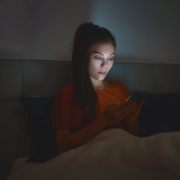
awake

Teenagers In America Are Getting Less Sleep Than Ever, According To New Study 

Teenagers living in the United States are sleeping less than ever before, according to a new study from the University of Minnesota School of Public Health. The findings were recently shared in publication Pediatrics, and showed a consistent decline in sleep across all age groups considered to be teenage. 

Rachel Widome, lead author on the study and professor at the university’s School of Public Health, said

“Some barriers to sleep faced by teens have existed across generations, such as the increased homework and extracurricular demands that come with high school, social pressures to stay up late with peers, and jobs.” 

Embed from Getty Images

“Other issues are new in recent years, such as increasingly ever-present screens and social media as well as recent society-wide stressors such as the pandemic, social unrest, or militarized policing.”

The study also showed demographic gaps in its sleep outcomes. For example, Black and Latino teenagers are becoming even less likely to get adequate sleep when compared to other groups, the same is shown for adolescents whose parents have lower levels of education. 

Older adolescents were seen to have the greatest impact. Sleep time was shown to steadily decline as teenagers got older with both sleep duration and the feeling of getting enough rest dropping significantly with age. 

Researchers in the study utilized data from Monitoring the Future, a long-running national survey that represents over 400,000 US students in grades eight, 10, and 12 over the span of 32 years (1991 to 2023). Participants involved responded to two main questions: how often they slept at least seven hours per night and how often they believed they were getting enough rest. 

Insufficient sleep is a major issue especially for growing teenagers. It’s attributed with daily exhaustion and inhibited functioning while also leading to much larger long-term issues like mental health problems, struggles in school, and chronic illnesses later in adulthood, reports show.

The main root cause that’s being identified is deep and growing feelings of social isolation and burnout. Aim Ideas Lab, a mental health research group that helps connect young people with proper resources, recently published student-led findings that showed about two-thirds of teenagers in California reported experiencing burnout and anxiety. 

Embed from Getty Images

The students also found that about a quarter of students believe only about two days out of the week do they find they have enough time to meet their basic needs like sleeping, eating, and taking care of their personal hygiene. 

Jolie Delja, the executive director of Aim Youth Mental Health, stated that the respondents “connected this directly to relentless academic pressure. They asked for time to slow down, and the chance to learn and practice coping skills like breathing and mindfulness during calm moments, not just crisis ones.”

“Schools and communities do not need to invent entirely new solutions. They need to give students more time and space for the people, activities, and coping tools that already help them manage stress, including getting more sleep.”

Past studies have also revealed that teenagers who do go to bed earlier and/or sleep longer than others tend to have sharper mental skills and do better in school. 

Widome explained that while there may not be one direct nationwide solution to this problem, there are plenty of structural approaches that could help a lot of young people so they can truly take care of themselves, including starting the school day later. 

“Earlier starts are in direct conflict with preset rhythms of adolescent circadian biology,” she said

“A nation of sleep-deprived adolescents is not inevitable. We should embrace a culture of sleep, where sleep is actually valued and where we commit to enacting policies and other interventions that promote healthy sleep for everyone.”

night owl

Being A ‘Night Person’ Could Be Bad For Your Heart

If you consider yourself more of a night owl, you may want to ensure you’re taking good care of your heart health. A large study has recently found that people who are more active late at night have poorer overall heart health when compared to the average person who goes to bed at a reasonable hour/gets the recommended amount of sleep every night. 

However, this doesn’t necessarily mean that those who tend to stay up late should be immediately frightened. Research fellow Sina Kianersi of Brigham and Women’s Hospital and Harvard Medical School, who led the study, said that “it’s not like night owls are doomed.” 

Embed from Getty Images

“The challenge is the mismatch between your internal clock and typical daily schedules that make it harder to follow heart-healthy behaviors.”

Kianersi actually considers himself to be “sort of a night owl,” according to AP, and described how he feels a “boost in [his] analytical thinking” after about 7 or 8 at night. 

Heart health is extremely important, and heart disease alone is the leading cause of death in the US. The American Heart Association has a list of eight key factors that every individual should adopt for having and maintaining a healthy heart. These factors include getting enough sleep and having a healthy diet. 

When it comes to individuals who are considered night owls specifically, the impact on the heart has more so to do with the internal body’s circadian rhythm, “our master biological clock.”

That clock follows a roughly 24-hour schedule that regulates when we’re sleepy, and also wide awake, while keeping our organ systems in sync. This regulation impacts our heart rate, blood pressure, stress hormones, and metabolism. 

“Everybody’s circadian rhythm is a little different. Prior research had suggested night owls might have more health problems, as well as risk factors like higher rates of smoking and less physical activity than people with more typical bedtimes,” Kianersi said to AP

Kianersi’s team tracked over 300,000 middle-age and older adults in the UK Biobank, which is a large health database that includes information regarding individual’s sleep-wake preferences. 

Embed from Getty Images

They found that around 8% of those people classified themselves as night owls, specifically meaning they’re more active both physically and mentally in the late afternoon or evening and are up past most people’s bedtime. Around 25% were early-birds and were more productive in the daylight hours and went to bed earlier. 

Over the course of 14 years, the night owls had a 16% higher risk of a first heart attack or stroke compared to the average population, the team found. 

The researchers reported their findings this week in the Journal of the American Heart Association. The report cited that especially in women night owls, there is an overall worse cardiovascular health based on meeting the heart association’s eight key factors. 

“It comes down to the problem of a night owl trying to live in a morning person’s world. They’re getting up early for work because that’s when their job starts but it may not align with their internal rhythm,” said Kristen Knutson of Northwestern University.

Knutson also stated that this impacts more than just sleep. One’s metabolism fluctuates throughout the day as the body produces insulin to turn food into energy, meaning it may be harder for a night owl to handle a high-calorie breakfast eaten earlier in the day. 

Kianersi said that even if you can’t get the ideal of at least seven hours of sleep a night, sticking to a regular bedtime and wake up time can help your body. 

“Focus on the basics, not perfection.” 

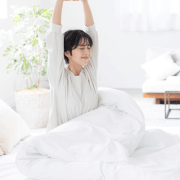
rested

New Study Shows That Our Diets Can Greatly Impact Our Sleep Patterns 

According to new research from Colombia University, ensuring that you have a healthy diet with the right nutrients can help you not only get to sleep, but also stay asleep and wake up feeling refreshed for the day.

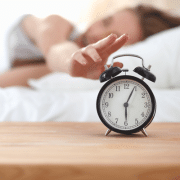
snooze

Study Finds Most People Snooze Their Alarms — But It Might Be Hurting, Not Helping

If your morning routine involves tapping “snooze” more than once before finally getting out of bed, you’re in good company. A new study analyzing sleep behavior across the globe reveals that snoozing alarms has become a surprisingly universal habit, one made easier and more frequent by the ubiquity of smartphones.

But while it may feel like those few extra minutes offer a gentle transition into the day, sleep scientists say it might be doing more harm than good.

Rebecca Robbins, Ph.D., a sleep researcher at Brigham and Women’s Hospital and assistant professor at Harvard Medical School, notes that while snoozing is incredibly common, it has rarely been studied in depth.

Now, new findings published May 19 in the journal Scientific Reports aim to fill in some of those gaps. Robbins, the lead author, and her colleagues analyzed snoozing behavior in a massive dataset drawn from more than 21,000 adults using the SleepCycle app. In total, researchers reviewed more than three million sleep sessions, making this one of the largest looks at the topic to date. “We attempted to quantify just how prevalent the use of snooze alarm is and what it means for our sleep,” she said.

Their findings? Over half of the sessions, around 56%, involved users snoozing their alarms. On average, people hit snooze two to three times, racking up around 11 minutes of additional time in bed. But among more committed snoozers, those who did so in more than 80% of their recorded sessions, snoozing lasted nearly twice as long, with an average of four snooze presses totaling about 20 extra minutes.

These “heavy snoozers,” which were around 45% of snoozers, were most likely to lean on the habit during the traditional workweek, with snoozing rates dropping slightly on weekends. That pattern suggests many people use snoozing as a coping mechanism for weekday obligations and early alarms.

Embed from Getty Images

According to Robbins, one major reason snoozing has become so ingrained in modern life is the smartphone itself. Unlike old-school alarm clocks, which often lived across the room and required a more deliberate effort to quiet, the phone’s snooze button is typically front and center, glowing inches from our face. It takes just one lazy tap, says Robbins, and suddenly, you’re drifting back to sleep.

But not all sleep is created equal. Robbins and her co-authors point out that the slivers of rest people get between alarms tend to be low in quality. “

“Some of the most vital stages of sleep take place right before we wake up. Hitting the snooze alarm will interrupt these crucial stages of sleep and typically only offer you some light sleep in between alarms.”

In fact, heavy snoozers in the study showed more erratic sleep behavior overall, hinting at potential links between snoozing and poor sleep hygiene. Research has shown that broken sleep can increase morning fatigue and worsen sleep inertia—the transitional state of mental fog that occurs after waking.

Though the question of whether snoozing is truly harmful remains open to further research, Robbins and other experts urge caution. A 2023 study in the Journal of Sleep Research suggested that snoozing might help some people wake up more gently and could even offer modest cognitive perks, but these results were self-reported and not conclusive.

The general consensus among sleep scientists is that snoozing probably isn’t the best way to start the day. Not only does it cut into deep sleep, but it also tends to leave people feeling less refreshed. As Robbins puts it, “Your sleep will be fragmented, leaving you without the additional benefits of added rest.”

Still, getting up with the first alarm isn’t always easy. Many people struggle with mornings, especially when dealing with inconsistent sleep schedules, high stress, or insufficient rest overall. Robbins emphasizes that sleep itself, not snoozing, is the foundation of better mornings. Most adults need at least seven hours a night. “The quality and quantity of our sleep powers our waking success,” says Robbins.

Embed from Getty Images

So what can people do instead of leaning on the snooze button? Robbins recommends setting your alarm for the latest possible time you can realistically wake up and then committing to getting up when it goes off.

“If you have to be at work at 8 and it takes you 30 minutes to get ready and 30 minutes to (commute), set your alarm for 7, no earlier.”

When the alarm rings, resist the urge to scroll through your phone, which may worsen feelings of anxiety. Instead, focus on physically waking up. Robbins suggests stretching in bed, reaching your arms overhead, flexing your feet, and practicing a few deep breaths to center yourself. “Then, take deep breaths and focus on one positive thing that will get you excited about the day and motivated,” says Robbins.

Exposure to natural light is also key. Sunlight helps suppress melatonin, the hormone that promotes sleep and resets your body clock for the day ahead. If you can’t step outside right away, standing by a window works too.

Don’t be surprised if you still feel groggy. That’s part of sleep inertia, and it’s normal. Robbins says it’s the reason why a lot of people rely on the snooze button, but for most people, that fog should clear within 15 to 60 minutes.

“One could wake up bright-eyed and bushy-tailed, but by and large, for all of us, there’s a bit of a transition. We’re not all going to wake up and feel perfect. It takes time to ease into the day.”

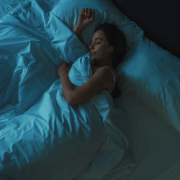
sleep

Study Shows Many Americans Can’t Sleep For More Than 6 Hours, Experts Offer Tips 

Getting a solid amount of sleep every night is an integral piece of living a happy and healthy life, both physically and mentally. When we don’t get enough sleep, we become more irritable, fatigued, and our body can’t properly function throughout the day, which can lead to a multitude of health issues. 

It’s recommended that adults get between 7-9 hours of sleep a night to remain healthy, however, many Americans claim that they can’t sleep for more than 6 hours. According to a poll from Gallup that was published last year, 53% of Americans reported getting between 6-7 hours of sleep a night, and 20% said they get 5 hours or less. 

Embed from Getty Images

Throughout the population surveyed, only about 36% of women and 48% of men said they got what’s considered a healthy amount of sleep daily. There’s a handful of reasons why one may not be getting enough sleep, however, there is hope for improvement. A group of experts recently gave their thoughts to Tom’s Guide on how you can help yourself get enough sleep to wake up feeling refreshed and healthy. 

“Waking up after 6 hours of sleep can be due to several factors and a combination of these factors,” says Dr. Leah Kaylor, a licensed clinical psychologist specializing in sleep and trauma. 

Stress, anxiety, and mental health issues in general have a major impact on our sleep. Dr. Kaylor stated that “stress, anxiety, or an overactive mind (your brain may be alert before your body is ready to be),” are key factors when it comes to the amount of sleep we get. 

“One of the most common [reasons] that I see as a sleep psychologist is untreated mental health conditions such as anxiety, depression, and trauma that are not addressed,” Dr. Kaylor stated.

Prioritizing your mental health is important in general, and if you find yourself not getting enough sleep because of the issues you’re struggling with, talking to a professional will help guide you in the right direction.

Experts also recommend creating a calming and consistent nighttime routine to help your body understand it’s ready for sleep. 

“Another huge problem is poor sleep hygiene, like inconsistent bedtimes and heavy meals before bed. Sleep hygiene can include environmental disruptions like light, noise, or temperature, as well as alcohol and caffeine,” Dr. Kaylor explained. 

“One of the most common reasons is changes in our internal clock as we get older. We naturally tend to go to bed a bit earlier and wake up earlier with age, and our sleep also becomes lighter,” Dr Pamela Walters, an MD and consultant psychiatrist.

“Another factor is your cortisol rhythm. Cortisol naturally starts to rise in the early hours, and in some people, that rise comes too soon and wakes them.”

Embed from Getty Images

Most adults need 7-9 hours of sleep every night. Naturopathic sleep expert and founder of Skilled Sleeper, Dr. Catherine Darley, states: “What’s most important is to know your personal sleep setpoint, or where you fall on that bell curve. The tails of the bell curve are 6 and 10 hours.”

“The key is how you feel during the day—if you’re alert, focused, and emotionally stable without needing naps or caffeine to function, you’re likely getting enough rest,” says Dr. Kaylor.

“Feeling sleepy and unfocused or irritable after six hours is a sign that you’re not getting enough restorative sleep.”

“Quality matters just as much as quantity when it comes to sleep so even if you’re in bed for six hours, if that sleep is light or interrupted, your brain and body won’t have time to go through all the essential stages of sleep.”

“If you’re routinely getting six hours or less and struggling with tiredness, your body is probably telling you it needs more rest,” she said. 

Looking at your diet can also help improve your sleep cycles. Caffeine stays in your system from 3-10 hours, so reducing your intake and ensuring you stop drinking it later in the day can help. The same goes for alcohol. While alcoholic beverages can sometimes help you feel sleepy, that impact doesn’t last. 

“Although alcohol can help us fall asleep at night, once it’s metabolized it can cause us to wake later in the night. Stop alcohol three hours before bed,” says Dr. Darley.

It’s important to reflect on the specific issues your finding within your sleep schedule, and to look at your daily routine 

snore

Sleep Scientists Say Sleeping Apart Due To Snoring Could Improve Relationships

New research shows that when couples move into separate rooms due to one, or both, individuals snoring, it can lead to the two being more well rested and happier, improving the overall relationship.

Study Finds Sleeping “Sweet Spot” Helps Older Adults Maintain Cognitive Performance

If your sleeping patterns are irregular, it might be time to make changes in favor of your health. According to a study published in the journal Brain, a sleeping “sweet spot” could help older adults to maintain their cognitive performance.

The study — which was conducted over multiple years — involved 100 participants who were tested for cognitive decline and early Alzheimer’s disease, whose sleep-wake activities were monitored for over four to six nights. Additionally, participants slept with an EEG device monitor on their foreheads.

Embed from Getty Images

As the Washington University School of Medicine noted, 88 of the 100 participants had no cognitive impairment, 11 were mildly impaired, and one had mild cognitive impairment. The average age of participants was 75.

The results found that those who slept five and a half hours to seven and a half hours retained brain function. Meanwhile, those who slept over or under the ideal time amount had their cognitive performance suffer. The results were also adjusted for factors such as age, sex, rapid-eye movement (REM) and education.

Associate professor of neurology and director of the Washington University Sleep Medicine Center Brendan Lucey, MD — who was also the lead author of the study — stated that it has been challenging connecting sleep and various stages of Alzheimer’s.

Even with this new data, Lucey said there are still questions left to be answered, such as how adults’ brain performances would respond if methods were implemented to ensure longer sleep for shorter sleepers.

“An unanswered question is if we can intervene to improve sleep, such as increasing sleep time for short sleepers by an hour or so, would that have a positive effect on their cognitive performance so they no longer decline? We need more longitudinal data to answer this question.”

Alzheimer’s can have severe affects on sleep patterns. Alzheimer’s Association states that patients spend 40% of the night awake — either laying restlessly, wandering around, or yelling — and often sleep for a decent portion of the day as a result. Sleep loss in Alzheimer’s patients can also speed up brain damage as well – which makes these findings so much more crucial towards preserving cognitive functionality.

Alzheimer’s isn’t the only disease that can harm the sleep of older adults. According to the National Institute on Aging (NIH), sleep apnea, insomnia, and movement issues such as REM sleep disorder or restless leg syndrome (RLS) can all be possible hinderances.

However, the NIH shows there are plenty of ways to help you get a better night’s sleep. Following a regular sleeping schedule is important for your body’s internal clock. Keeping your bedroom at comfortable temperatures while using low-lighting closer to your bedtime is also suggested.

Embed from Getty Images

Remember to not use screens — such as your TV, phone, or other devices — when it’s close to your bedtime, as the lights could affect your sleep. Thinking of consuming a certain beverage or meal as a night-time snack? That’s also a no-no – consuming soda, coffee, alcohol, and large servings could force you to stay awake due to the energy boosts they provide.

There are other factors to consider, as well. The quality and comfort of your pillows, mattresses, and blankets can greatly influence how much sleep you receive. If they end up causing discomfort, you’ll be twisting and turning for hours.

It’s also not just older adults that should have an ideal sleep time frame. The Sleep Foundation recommends that six to 13 year olds should have around nine to 11 hours of sleep, 14 to 17 year olds should have eight to 10 hours, and adults from 18 to 64 should have eight to nine hours.

While trying to find that sweet spot may be challenging, the end goal of better brain behavior and overall health makes the effort more than worth it.

Health Food

Healthy Lifestyle Choices To Boost Your Immune System

Coronavirus is causing a lot of panic among individuals worldwide. While it is of the utmost importance that you contact your health provider anytime you feel like you may be showing symptoms, there are things you can be doing in your everyday life to make sure your immune system is running to the best of its ability. 

Besides the recommended social distancing and working from home policies that our governments are implementing, positive immune responses to our lifestyle choices can be essential to staying healthy. First and foremost, making sure that you’re getting enough sleep every night is always one of the most important things you can do for your health. Without sufficient sleep, your body makes fewer proteins called cytokines. According to a study performed by the Sleep Foundation, cytokines target infections and inflammation within our bodies, they’re also produced and released during our sleep cycles. 

Embed from Getty Images

One of the other most important aspects of our lives that greatly affects our immune systems is our diet. Excessive amounts of sugars and fats can cause gut imbalances that result in autoimmune problems and digestive issues. Ensuring that you are eating a good amount of probiotics daily will also guarantee that your gut has more good bacteria in it than bod. The bacteria in your gut is responsible for breaking down and destroying any foreign bodies that don’t belong in your digestive system. 

Speaking of digesting and diet, intermittent fasting has been taking over the world as of late, and it actually can help reset your immune systems. 

“Fasting for three days (having nothing but water) could essentially reset the immune system. Holding off on eating for at least 16-18 hours after your last meal allows your body’s attention to become “focused on the current immune cells, recycling them and getting rid of the damaged cells. This means that during the fast, your body is running lean and mean with its white blood cells,” said Dr. Valter Longo of the University of Southern California.

It’s important to note that any sort of fasting does also pose major risks, and it should only be done if you’re already healthy. 

Embed from Getty Images

Mental health can also take its toll on our bodies immune responses, especially in terms of stress. During a worldwide pandemic where there’s constant updates on the severity of our planet’s situation, it can be easy to get overwhelmed. Make sure you’re taking time everyday to disconnect from the digital world and do something productive that doesn’t involve electronics, such as cooking, cleaning, organizing your photo collection, etc. 

Stress has also been proven to cause inflammatory responses within the body, which can leave you more vulnerable for catching any sort of illness. Mindful practices such as meditation, yoga, and positive affirmations all greatly reduce stress and allow you to focus on your breathing and ability to remain present. 

Stress also depletes your bodies natural production and absorption of the vitamins we intake daily, so consider taking some supplements to help further boost your immune responses. Vitamins C, B, and D, as well as zinc all greatly support your immune system and prevent infections and inflammatory responses within the body. Taking these daily gives your body the extra kick it needs to remain healthy. 

Pay attention to the news enough so you know what’s going on and what new law policies are being passed for the time being, but be sure to disconnect from it all and take a minute to just be with yourself. Eat healthy, get plenty of vitamins, and of course, keep yourself as hydrated as possible before settling in for a night of peaceful sleep.

Woman Waking up from good night sleep

The Key To A Better Night’s Sleep Is A Healthy Lifestyle

Sleeping is one of the most important things we can do for our health. Our bodies need rest in order to recharge and replenish our body’s natural systems so that they’re performing to the best of their ability. Many of us have certain sleep issues, whether it be having a hard time falling asleep, staying asleep, or trouble waking up in the morning, whatever it may be, there’s certain changes you can make to your everyday routine that can help improve your nightly slumbers, and get you the eight hours you need to feel great in the morning. 

One of the simplest solutions for improving sleep is ensuring that you’re in a dark environment. Dark rooms obviously support better sleep as there’s less sensory stimulation. Light exposure interferes with our bodies natural sleep cycle and circadian rhythms; which is a fancy term that refers to when your body tells you to wake up and when to fall asleep. 

Embed from Getty Images

Investing in blackout curtains is the easiest solution if your sleeping situation involves a room with a window that’s facing the sun at any given point in the morning or evening. Heavy and thick curtains not only block out the intense natural lighting of the outside world, but also encourages a more relaxed sleeping environment in general. Dark colored curtains will typically always do the trick, however, if a lighter color would better fit your rooms aesthetic, there are plenty of online options of light colored curtains with thick enough linings to darken any space. 

If you’ve done any research regarding sleep or insomnia, you’ve definitely heard about blue light emissions and their negative effects on our bodies ability to fall asleep. Electronic devices typically always have a “blue light” undertone that has been proven to disrupt our circadian rhythms specifically when we’re going to bed; as many of us like to mindlessly scroll through social media before falling asleep. 

This blue light suppresses the production of melatonin in our brains, which is the chemical that tells the rest of our body when it’s time for bed.  Some phones have a “night mode” setting that turns your screen a more amber hue to combat that harsh blue emission, and there are numerous screen-protector like products that do the same, however, the best thing you can do to promote a more solid night of sleep, is to avoid electronics at all cost at least an hour before going to bed. This can be tough for a lot of us who have developed a nighttime routine that involves some entertainment on our devices, but the only way to ensure you’re body will keep producing melatonin at a normal rate, and keep you rested throughout the night, is to unplug it all and read a book instead before bed. 

Embed from Getty Images

What you eat and drink throughout a day also has a heavy effect on your natural sleep cycle. Depending on when you go to bed, you should stop eating at 8 pm the latest. The later in the night you eat, the more your body will have to digest while you’re resting. This is an issue because our bodies digest at a much slower metabolic rate when we’re sleeping, which can either lead to an unpleasant middle-of-the-night bathroom trip, or an overall feeling of grogginess in the morning. 

Following a healthy meal plan that avoids processed foods and sugars will also keep your energy levels in a more natural and stable state, so when it comes time to unwind, your body will have no problem doing so because it received all the necessary nutrients it needed throughout the day. 

Finally, along the same lines as a healthy diet, getting regular exercise will improve how well you stay asleep throughout the entire night. Even just 10 minutes of activity a day can show positive results. So many of us get trapped in the 9-5 bubble of sitting at a desk all day and then going home and just sitting on the couch to unwind. When you keep up with an active exercise schedule, you’re lowering your risk for certain sleep conditions such as sleep apnea. 

Regardless of what issues you have when it comes time to turn the lights out, keeping up with healthy lifestyle habits will always help improve the way your body functions, regardless of if you’re conscious or not.

Woman Waking Up Refreshed

How To Improve Sleep When You’re A Frequent Traveler

Traveling for short-periods of time can often ruin our sleep schedules. Whether it be for business, a wedding, research, etc. travelling distant places for short periods of time can have detrimental effects to the way we sleep, and therefore how our bodies function during a given day. So what can you do to ensure that your mini weekend trips won’t hinder your overall sleep patterns? 

First off, there’s something in the business world known as the “two-day rule” which basically states if you are expecting to be away from home for less than 48 hours total, stick to your normal nightly routine. Even if you’re going somewhere with a different time zone, your body will typically take two full days to adjust and change its schedule to a seemingly “normal” level, so if you just go about your evenings as per usual, and in sync with your native time zone, your body will have less of a struggle adjusting once you return home. 

Embed from Getty Images

So if you can, try to ask for accommodations in whatever obligations you have at your destination so that you can be back in bed at the same time you normally are. When you keep both your physical and mental state in tune with its regular habits, you’ won’t have as much of a need to adjust your sleep schedule when away for short periods of time. 

Make sure you’re packing all of your sleep necessities. Nothing causes more unnecessary stress than when you’re getting ready for bed only to realize that you forgot your toothbrush and face wash at home. Before you go on any sort of trip, it’s necessary to make a checklist of all the things that you need to bring with you. This especially includes all toiletry items that have become staples in your morning and night routines.  

Recreating your sleep environment from home in a hotel room can be extremely tricky, however, having all the necessary elements there will make it a lot easier. In addition to your normal face washing, teeth brushing, and whatever else you do during your routine, add in some extra flare to make yourself especially comfortable. Apply a face mask, throw on a “chill vibes” playlist from Spotify or Youtube, and order some dessert. 

Embed from Getty Images

Another way to create a more positive and relaxed sleep setting for yourself is to avoid any and all screens an hour before going to bed. This is especially important if your short trip is business related. Close out of your emails, silence your texts, and draw yourself a bath. The blue light that’s emitted from all screens has been proven to have negative effects on how easily we are able to fall asleep, and how long we stay asleep. 

On the opposite end, certain apps on your phone can actually help aid sleep, but don’t require you to stare at the screen in order to do so. Apps like Headspace and Calm are literally designed to offer guided meditations and peaceful tunes to send you into a peaceful slumber. 

Finally, do some preliminary work before you leave home in the first place. The night before your travels, make sure you’re getting a full eight hours of sleep and eating a healthy breakfast in the morning when you wake up. Avoid caffeine for as long as you can, while it may feel great in the moment, as most of us know it can cause us to lag in the middle of the day, so wait until you’ve eaten and had at least one cup of water first. 

By sticking to a schedule, maintaining healthy night time and morning habits, and listening to your body’s needs, you’ll be able to travel around for as long as you need and as often as you need without any of the additional stresses of readjusting once your home.