Posts

google

Google Is Buying Spirit Airlines’ Data for $10 Million to Train AI

Spirit Airlines’ planes may be grounded for good, but years of data generated by the bankrupt carrier could soon have a second life inside Google’s artificial intelligence models.

Google has agreed to pay $10 million for a trove of Spirit’s corporate data, according to a deal disclosed in bankruptcy court late Monday. Judge Sean Lane is expected to rule on the proposed sale at a hearing Wednesday.

The purchase covers a wide range of information accumulated through the airline’s operations, including emails and other internal communications, spreadsheets, customer transactions, booking and frequent flyer records, and human resources information involving employees.

Spirit’s bankruptcy filing says the material has been stripped of information that could identify individuals.

A Google spokesperson said in a statement to CNN that it will not receive any personal information as part of the purchase.

“We acquired part of an enterprise dataset from Spirit Airlines, which can be helpful in improving our products and AI models.”

Embed from Getty Images

That means anyone who flew Spirit, worked for the airline or communicated with people there could have contributed in some form to the enormous collection of business information Google is buying, though the company is also claiming personally identifying details will not be included.

The data drew interest from more than one artificial intelligence company. Mercor.io, an AI company, submitted the second-highest bid at $7.5 million before Google prevailed with its $10 million offer.

The competition for Spirit’s records comes as artificial intelligence plays a growing role in the airline industry. Numerous carriers have said they are increasingly using AI to set fares, improve scheduling and make other parts of their operations more efficient.

Spirit’s data became available under circumstances that are relatively rare in the airline business.

The discount carrier halted all operations in May and has spent the months since selling what remains of the company through the bankruptcy process. Much of what is being liquidated is what might be expected from a defunct airline — planes, equipment and real estate — but its years of accumulated information also proved valuable enough to attract multimillion-dollar bids from technology companies.

Embed from Getty Images

Usually, a major airline’s bankruptcy ends differently.

Failing carriers are often acquired by another airline, with their aircraft, operations and corporate records absorbed into the buyer’s existing business. Their data consequently changes hands as part of the larger acquisition rather than being auctioned off as a standalone asset.

Spirit did not find such a buyer.

Instead, it became the first significant U.S. airline in about 25 years to be forced to stop flying altogether rather than being purchased and folded into another carrier.

That unusual collapse has allowed pieces of the former airline to be sold separately to buyers with little connection to commercial aviation—including, in Google’s case, a company interested in using Spirit’s anonymized business records to help improve AI.

plane

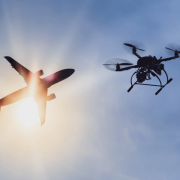
JetBlue Pilot Reports Drone Strike Near Kennedy Airport Days After Newark Drone Sighting

A JetBlue flight approaching Kennedy International Airport on Monday morning landed safely after its pilot reported that a drone had struck the plane, according to the Federal Aviation Administration.

The flight, a red-eye from Las Vegas, was several miles from landing at around 7:15 a.m. when the reported collision occurred. The aircraft was flying at about 3,000 feet at the time, according to the pilot’s account. No injuries were reported.

JetBlue said the plane landed without incident and that passengers left the aircraft normally after arrival. The airline later removed the plane from service for inspection but said it found no damage or evidence of a collision.

The F.A.A. and the F.B.I. are investigating the reported drone strike. In a statement, the F.B.I. asked anyone with information about unsafe drone flights to report it by calling 1-800-CALL-FBI.

Later Monday, a helicopter pilot reported a separate close call near Kennedy Airport, telling air traffic controllers that a large remote-controlled plane had nearly struck his aircraft near Floyd Bennett Field.

“Just almost ran into a gigantic RC airplane right over there at Floyd Bennett,” the pilot said, according to the report. “A big one, at 500 feet.”

The F.A.A. said it was aware of the helicopter pilot’s report and had notified local authorities, though the agency said it was not investigating that matter at the time.

Embed from Getty Images

The reports came less than three days after a United Airlines crew spotted a drone while descending into Newark Liberty International Airport, another recent close call involving unmanned aircraft in the New York area.

That encounter happened Friday evening, when a United flight arriving from Key West International Airport in Florida was approaching Newark Liberty around 5:20 p.m., F.A.A. officials said. The Boeing 737 was carrying more than 100 passengers and five crew members.

The crew landed safely, and passengers disembarked without issue, the airline said. The F.A.A. had also said it would investigate that encounter.

Drone activity near airports is a recurring concern for federal aviation officials. The F.A.A. receives more than 100 reports each month of drones seen near airports and warns that flying drones near planes, helicopters, and airports is both dangerous and illegal.

The agency also launched a public safety campaign this month to inform drone operators about the risks of flying unmanned aircraft in restricted or unsafe airspace.

“Drone operators should avoid flying near airports because it is difficult for manned aircraft to see and avoid a drone while flying. Remember that drone operators must avoid manned aircraft and are responsible for any safety hazard their drone creates in an airport environment.”

Embed from Getty Images

ABC News contributor and aviation expert John Nance said the danger is not limited to a direct collision. Because drones are generally not equipped with transponders, he said, pilots and controllers cannot reliably track them unless they are spotted visually.

“The fact is that people are still not following the rules and all it takes is one to end up wrecking an engine or impacting a cockpit,” Nance said.

Nance said the lack of onboard detection equipment makes it especially important for drone operators to avoid airports and flight paths.

“Drones simply do not carry transponders. It has to do with the weight and the amount of equipment that you put on board. But the fact is, that makes it even more important that nobody operates one in the wrong place, close to an airport, especially at 3,000 feet.”

Interfering with the operation of an aircraft is a federal crime, and penalties can reach up to $100,000. The F.A.A. encourages people who witness unsafe drone activity near airports to report it.

Drones are generally permitted to fly up to 400 feet above ground level outside restricted airspace, far below the altitude reported in the JetBlue incident.

air canada

Canadian Pilot Accused of Captaining 900 Flights Without Required Airline License

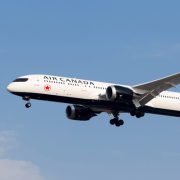
A former Air Canada pilot who authorities say flew Boeing passenger jets for nearly 17 years without the required captain’s license is now facing criminal charges, Canadian police announced Tuesday.

Geoffrey Wall, a 59-year-old resident of Barrie, Ontario, was arrested June 1 following an investigation into what police described as years of falsified credentials. Investigators allege Wall captained more than 900 domestic and international flights between 2009 and 2025, carrying tens of thousands of passengers, despite never obtaining the proper Airline Transport Pilot License for Aeroplanes, or ATPL-A, required for the role.

“This investigation and the details surrounding it read like a movie script,” Peel Regional Police Deputy Chief Milinovich said during a news conference in Ontario. “(Wall) rose to the position of pilot in command where for almost 17 years they flew Boeing 767s, 777, and 787s,” while earning nearly $3 million Canadian dollars, or more than $2 million U.S. dollars, in salary.

The case has drawn comparisons to the 2002 film “Catch Me If You Can,” in which a teenager successfully talks his way into flying for Pan Am. But police said Wall’s situation was not a matter of having no aviation background at all.

He was licensed to fly commercial planes during his 27-year career with Air Canada, investigators said. According to authorities, the issue was that he did not have the additional ATPL-A credential required after he was promoted to captain in 2009.

Embed from Getty Images

“This is very similar to a doctor that is licensed to practice family medicine but is doing brain surgery in their office. There’s additional requirements and regulations to professional designations that exist for a reason. We believe the accused misrepresented his qualifications to both his employer and the regulator.”

Authorities said the alleged scheme came to light in 2025, when a routine review of Wall’s credentials uncovered “anomalies… within the pilot license documentation.” Air Canada then notified regulators, investigators said.

Wall retired in 2025 before the regulatory and criminal probe began. The investigation, dubbed “Project Icarus,” was launched in January.

Police said investigators later executed a search warrant and obtained additional judicial authorizations, which they allege uncovered evidence that Wall had deceived both Air Canada and Transport Canada regarding his qualifications.

Authorities also allege that Wall filed a false police report, claiming that pilot licensing documents had been stolen.

Peel Regional Police Chief Nishan Duraiappah described the case as an extraordinarily rare occurrence, telling local media that he believed the situation was unprecedented in its scope.

Embed from Getty Images

Air Canada said Wall was a licensed commercial pilot and stressed that he had repeatedly demonstrated the ability to operate large aircraft safely.

The pilot was removed from active duty after the licensing issue was discovered and is no longer employed by Air Canada. The carrier also said in a statement on Monday that it conducted a review of its pilot roster and found no other comparable licensing concerns.

“Safety was not compromised by this incident because all pilots at Air Canada undergo mandatory recurrent training every six months to validate their flying competency, including a flight check with a certified Transport Canada check-pilot every 12 months. However, appropriate licensing is an essential layer of the airline industry’s multi-layered approach to safety, so Air Canada takes this matter with utmost seriousness.”

Wall was fined by Transport Canada and is facing seven criminal charges, including fraud over $5,000, two counts of uttering forged documents and three counts of possession of a counterfeit mark. He is expected to appear in court on June 29, 2026.

Canadian Transport Minister Steve MacKinnon said federal officials would review the circumstances surrounding the case and determine whether any changes to oversight procedures are needed, while arguing the discovery of the issue demonstrated that existing safeguards ultimately worked.

travel

US Travel Association Predicts Busy Summer Travel Season, Predicts Complications

The US Travel Association is predicting that summer 2023 will be a massive travel season, with demands as strong as they were pre-pandemic.

Woman Traveler in Thailand

Travel Experts Claim Tourism Will Be More Personalized Post-Coronavirus

According to hotel, aviation, and tourism experts, the future of travel in a post-coronavirus world is going to be all about “hyper-personalization” and luxury.  International borders have already begun to reopen which has already given travellers an insight into what the industry is going to look like when it comes to travelling in this new age of living. 

Mr and Mrs Smith’s Founder and Chief Creative Officer James Lohan recently spoke with the media about travelling in a post-Covid world and claims that privacy and personalization will be on the top of every businesses list. Hotels that are already reopening to the public obviously are needing to take major precautions for both staff and guest safety. Lohan believes that guests will begin to notice more options to design their own stay when planning future vacations. 

Embed from Getty Images

“Customers will be asked how they want to be looked after. Do you want your bags carried or would you rather have no contact with the staff? Would you like to have your turn-down every night or not? Do you want your room made up every day or not?”

The goal is comfort, and while many individuals are likely to opt out of travelling until a coronavirus vaccine becomes a reality, there are others who will be forced into beginning work again soon and will likely need to travel. Individuals who need to self-quarantine for other reasons will likely take advantage of hotel/rental reopenings for the summer and beyond as well. 

Lohan also predicts that serving hours for meals in hotel restaurants will likely expand to allow less individuals to be present in one space at a time. Ordering food will also become more digitized in more of a room service type of format. Minimizing face-to-face contact between staff and guests will also be top priority for everyone’s safety. 

Embed from Getty Images

Hotels located in major metropolitan areas are projected to struggle the most at attracting guests to come back after lockdown. For one, many individuals will likely be anxious to enter any major city in the US by the time this pandemic ends. On the other hand, many individuals who do want to get back into the city may also avoid it due to the fact that they know everyone else will avoid it. The going out culture in cities is what makes vacationing in one so exciting, so without the travelers there to fill the streets, many would rather keep their trips simple. 

The biggest change that Lohan and other experts are projecting to occur is a decrease in how often the average individual travels, but an increase in how lavish they vacation when they do. Tourists will likely want to make travel something special, based on the fact that it’s something we’re all being denied at the moment. 

The reality is also over 40 million Americans lost their jobs within the past three months, so the market of individuals who can afford to travel is going to become much smaller for the US. However, this also means that once the economy recovers and jobs are created, individuals will likely want to wait and save for the perfect luxury trip to really make their time away from home worth it in the future. 

It won’t matter how the travel industry looks in a post-coronavirus world, however, if we don’t actually get to a place where Covid-19 is no longer an issue. Continue to take every health and safety precaution you can and listen to your healthcare professionals so that hopefully one day soon you’ll be booking a flight again to your favorite Caribbean island. 

King Air 200

South African Pilot, Refilwe Ledwaba, Is Looking To Change The Face Of Aviation

“This is my favorite aircraft. It’s called a King Air 200. I’ve got approximately 100 hours of flying on this aircraft. I absolutely love it, it just performs,” Refilwe Ledwaba said as she stood next to the hanger of the King Air 200 at the Wonderboom Airport in South Africa.   

Ledwaba has made a major impact in South Africa through her advocacy for women’s rights, especially for their right to start careers in traditionally male-dominated fields, such as piloting. Ledwaba herself is both a helicopter and a fixed-wing pilot as well as a flight instructor for all prospective pilots in South Africa. 

Her other accomplishments include being a goalkeeper for the Bill and Melinda Gates Foundation, which basically means Ledwaba could choose a specific group/charity to advocate and raise awareness for. For Ledwaba, that has become the Girls Fly Program in Africa. She also was the first black woman to be a police service pilot in South Africa.

Embed from Getty Images

“For a long time, I was the only black female that was holding the highest license for helicopters, but being the first for me is not important. The important thing is the 20th person, the 30th person, then we can start talking,” she said.

Ledwaba’s philosophy here couldn’t have come at a more relevant time. Reports claim that less than 10% of the world’s pilots, aviation maintenance technicians and airline executives are women, Ledwaba is ready to multiply that number five times over and she’s starting in Africa. As previously stated Ledwaba is involved with the Girls Fly Program in Africa (GFPA), but she’s not involved in the traditional sense of the word, she actually runs the entire foundation. 

GFPA’s main goal is to introduce girls in elementary, middle, and high school to STEM subjects; science, technology, engineering, and math. When Ledwaba was a child, she was raised by just her mother, who also had to raise six other kids. Her mother always instilled a hard work ethic in Ledwaba, and made it clear to her from a young age that the possibilities are limitless when it comes to what she wants to do with her life. 

Embed from Getty Images

Initially, Ledwaba claimed her mother inspired her to work hard to become a doctor, however, when she was in school she got a job as a flight attendant to help pay for her education. From that moment on she was fascinated by all things aviation, so much so that she began taking private flying lessons, which has led to her career today.

As the world develops and continues to industrialize, more careers are going to require a degree in STEM, so Ledwaba’s goal is to introduce these subjects to girls at a young age to spark an interest early on. More often than not, girls are steered away from focusing on STEM subjects in terms of specialized studies, and Ledwaba is gearing up to change that. 

“I’m working to diversify the face of women in the aviation industry by being accessible, being available, and being visible. I want a future where a small child can just wake up like, ‘I’m going to do that one day,’ and not have doubts.” 

She’s already held multiple aviation/space camp programs through GFPA in South Africa, Cameroon, and Kenya. Ledwaba also emphasizes on the GFPA website that while their focus is on empowering young girls, they also reach out to young boys as well to join their school outreach programs and camps. While the main goal is equality amongst the sexes in STEM careers, Ledwaba is just as invested in young people of all demographics gaining an equal opportunity to succeed if they want it. So far, the GFPA and Ledwaba’s work has helped over 100,000 young girls and boys through their multiple STEM programs.

Air New Zealand

Air New Zealand Wins ‘Airline Of The Year’ For The Sixth Time

Air New Zealand has officially been named “Airline of the Year” by AirlineRatings.com, which is an Australian travel safety and review website that ranks the world’s top airports every year. Air New Zealand is no stranger to holding this title, as it’s long been praised as one of the nicest and safest airlines internationally. It also has held the “Airline of the Year” five other times; this year was a bit of a shock, however, as Singapore Airlines was looking to grab the honor for 2020, since they won the award last year, but at the last minute New Zealand snatched the crown from under them. 

The title was given to New Zealand this year in part because of their “record breaking performance as an airport” and “environmental leadership” compared to other airports sustainability efforts, according to the official statement

Embed from Getty Images

“In our analysis, Air New Zealand came out number one in most of our audit criteria, which is an outstanding performance when it’s up against carriers with more resources and scale on this same list of best airlines for 2020. Air New Zealand’s commitment to excellence in all facets of its business starts at the top with outstanding governance and one of the best executive teams in aviation through to a workforce that is delivering consistently to the airline’s strategy and customer promise,” said AirlineRatings.com Editor-in-Chief Geoffrey Thomas in a press release.

According to the same press release, the AirlineRatings.com Airline Excellence Awards are the most coveted titles in terms of aviation travel honors. The website is run by a total of seven editors and has employee’s that combined have over 200 years in the airline industry experience. The release states that the staff reviews every airline and bases their rankings and awards on 12 key criteria. The criteria includes overall passenger reviews/experiences, relationship amongst staff, age of the airline’s fleet, total company profitability, investment ratings and product offers. 

Representatives from the website have stated that Air New Zealand winning the title for a total of six times now is only a further testament to how hard the staff works and communicates with its passengers. The airport has over 12,500 employees, and every department has received stellar reviews on their perspective duties throughout the years. The award is a testament to department to department communication, something that has caused many other airports to dwindle in quality. 

Embed from Getty Images

The top five best Airlines named by the website are (from 1 to 5) Air New Zealand, Singapore Airlines, All Nippon Airways, Qantas, and Cathay Pacific Airways. In total the website annually ranks the “top 20” airlines every year, all based on the same criteria discussed above. 

In addition AirlineRelations.com gives credit to other airlines based on more specific award titles; although “Airline of the Year” is equivalent to the “Album of the Year” title at the Grammy’s. Singapore Airlines was not only ranked number two for best airlines, but also took the First Class Award for their extensive and quality first class suite packages. 

Australia’s Qantas won Best Domestic Airline Service and the coveted Best Lounges. “Qantas is a consistent winner across many categories in our list of best airlines 2020, 2019, and more. Its customer approval rating is at an all-time high, and it continues to innovate with lie-flat beds being added to its A380s. The judges were unanimous on the airline’s lounges which are exceptional and its domestic airline product, particularly on transcontinental A330 flights, is a standout,” said Thomas

Other awards distributed included “Best Catering” and “Best Business Class” both of which were won by Qatar Airways. Virgin Airlines Australia won an award for “Best Economy Class” seating and Cebu Pacific won the “Most Improved Airline” award. Emirites also held a top ten spot for best airlines, and won awards for “Best Long-Haul Flights” and “Best In-Flight Entertainment.”

Airplane Flying

Data Is Fueling Changes in Aviation Engineering

Airline passengers are easy to upset, often rightly bemoaning delays and disruptions. But for the operator, with a plane on the tarmac grounded by mechanical failure, the frustration is even more intense.

The Federal Aviation Administration estimates this inertia equates to an eye-watering loss of at least $150 per minute.

With optimal reliability and an uptime vital just to break even, squeezing every drop of efficiency from an aircraft’s assets has become critical to the sector’s future health. Forecasts, from aviation consultancy Cavok, predict global sectors spending on maintenance, repair and overhaul will hit $100 billion by 2021, with smarter analysis of aircraft data playing a central role.

In turn, engine and airframe manufacturers are incorporating predictive models in their offerings to airlines, which will not only help identify faults and component failures, but also pre-empt issues before they become more serious.

“Predictive technology is great at finding a needle in a haystack and helping engineers pinpoint the areas they need to focus on. With experienced aircraft engineers proving scarce and many now retiring, these solutions are set to become even more vital in gathering and utilising all this invaluable knowledge and information,” says Torsten Welte, global vice-president for aerospace and defence at enterprise software company SAP.

Embed from Getty Images

Mr Welte traces the genesis of this traction to the power-by-the-hour approach for engine maintenance, which Rolls-Royce pioneered in commercial aviation in the 1980s.

“When Rolls-Royce innovated the model with performance-based contracts that charge customers per flying hour of the engine, it became a case of ‘we must keep the engine running or we won’t make any money’,” he says.

“This changed the dynamics in the aviation industry between manufacturer and operator, and drove a different behaviour from the former that was now far more focused on getting the most out of their resources at all times.”

The exponential rise in data has continued to fuel momentum. IBM figures reveal that an average aircraft generates between 500 to 1,000 gigabytes of data. Data analytic platforms such as SAP HANA tap into this business intelligence to monitor fuel speed, torque and pressure with internal predictive algorithms making recommendations in real-time so parts can be sourced and engineers reassigned even while the plane is airborne, and it doesn’t stop there. The technology is also able to tackle the information silos which have traditionally undermined the effective sharing of key intelligence across the aviation ecosystem.

Mr Welte says: “In some countries, due to local ownership rights, performance data is owned by the pilot rather than the airline, which means they have to get permission to access it. Elsewhere, a manufacturer does not necessarily have access to maintenance data which is often owned by the airlines’ own maintenance systems, so it’s all very disjointed.”

Embed from Getty Images

Another process undergoing significant transformation is the traditionally complex task of tail planning; in essence, assigning the most appropriate aircraft to a flight route. For example, if an aircraft has an issue that adversely affects fuel burn, it will be allocated to the shortest flight.

Typically, an airline would spend three to four hours working on a plan which can be subject to 150 changes daily. Until recently, the process had barely evolved from the handwritten schedules of the mid-1980s, with many airlines still transferring the information manually into spreadsheets comprising a dozen pages.

Dubai-based airline Emirates is one of the big names now automating the process, having adopted software vendor IFS Aviation and Defence’s predictive technology.

“Previously, the plans were devised based on the judgment of someone with perhaps 10 to 20 years’ experience, but our technology means we can tap into historical data that goes back 40 years, all in a matter of minutes,” says IFS business development head Espen Olsen.

“Maintenance history, fuel consumption, climate, forecast – all these characteristics are put into the algorithm to calculate the best option, which means reduced risk, increased fuel efficiency, and improved fleet utilisation and maintenance planning.”

Mr Olsen believes the Middle East is driving this market: “They see an issue and do something about it without over-analysing the problem, and they are definitely ahead of Europe when it comes to using this technology. One manufacturer does something visionary and everyone follows.”

More broadly, he is seeing a lot of interest from oil and gas companies inspired by the latest innovation in aerospace and defence. “There has been so much money in this market in the past, they didn’t have to consider how they could become more efficient,” says Mr Olsen. “Yet since the downturn, they are now far more focused on extending the life of equipment and how, as a service provider to the industry, they can commit to a 10-year contract on a fixed basis and still make money. Increasingly, predictive analytics has the answers.”