Posts

heat

Extreme Heatwave In Europe Is ‘A Brutal Reminder’ Of Climate Crisis, UN Chief States 

The United Nations climate chief recently stated that the extreme early heat events taking over parts of western Europe have become a “brutal reminder of the spiraling impacts of the climate crisis.” This month, both France and the United Kingdom set new temperature records on two consecutive days. 

Simon Stiell is the executive secretary of the UN Framework Convention on Climate Change, and this week he said that the “main culprit” of the climate crisis is humanity’s burning of oil, coal, and gas. 

Embed from Getty Images

“The science is clear that human-induced climate change is making these heatwaves more frequent and extreme.”

France, Spain, and the UK have been reaching temperatures that are, on average, only seen in July and/or August.  

“Protecting human lives, businesses and economies from extreme heat and the many other soaring costs of climate change is core business for every nation, and it starts with kicking the fossil fuel addiction much faster.”

Other reports have shown that the war in the Middle East has greatly impacted the “soaring costs” of fossil fuels, and led to a need to move to cleaner sources of energy. Stiell also pointed out that India has experienced nearly 110 degrees Fahrenheit conditions which have led to deaths from heatstroke. 

The UK’s Met Office stated that Kew Gardens in London recorded a temperature of 92.2 degrees Fahrenheit, breaking the record for highest temperature in May, which was set the day before. The readings also surpassed a previous record of 91.04 degrees Fahrenheit which was set in 1922, and again in 1944. 

France experienced local highs of 102.2 degrees Fahrenheit on Wednesday, and recorded their hottest day in May ever on Tuesday when the national heat index, an average of 30 readings around the nation, hit 76.64 degrees Fahrenheit, according to reports from the Guardian

Météo-France, the national weather service, stated that a “heat dome,” which causes heat to be held in place by a high-pressure weather front, was producing temperatures up to 55.4 degrees higher than what is usual for this time of year. 

17 out of 96 of France’s administrative departments, including Paris, were placed on an orange high temperature alert for Thursday, the second highest level. This alert level requires the nation’s population to be “very vigilant and take precautions.” Another 29 were placed on the more moderate yellow warning. 

Embed from Getty Images

Scientists have stated that as the world continues to warm, extreme heat events that are typically exclusive to the peak of summer are becoming both more frequent and intense, and are happening earlier and later into the year. 

Peter Thorne, the director of climate research at Maynooth University in Ireland, said: “We know beyond a shadow of a doubt that events such as this have been made more likely and more severe due to climate change arising from our emissions of heat-trapping greenhouse gases.”

“Nevertheless, many of the records being set, particularly in the UK and France, are mind-bogglingly crazy.”

This week, French authorities reported at least seven deaths that were directly and indirectly connected to the high temperatures. Five of these deaths were drownings, as many people were seeking out swimming spots to cool off. Authorities in Britain stated that four teenagers have also drowned in England since Sunday. 

Spain is reporting temperatures could hit 104 degrees Fahrenheit this week. These reports led to the Basque Country being placed on an orange weather alert.

Aemet, Spain’s state meteorological office, said that temperatures typically experienced in July have already been recorded across the country. Rubén del Campo, a spokesperson for Aemet, said that the heat was “more characteristic of the dog days, the hottest period of the year.”

“Both this episode and the atmospheric pattern that’s causing it are part and parcel of climate change and of what’s been observed in recent years.” 

women

Afghan Women Lose Final Access to Education as Taliban Shuts Down Internet

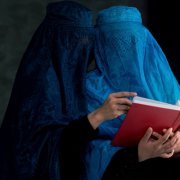
When the Taliban announced a nationwide internet shutdown this week, Afghans across the country watched their final connection to the outside world vanish. For many, especially women and girls already excluded from schools and universities, the blackout marked the collapse of their last hope for an education.

Fahima Noori (name changed for safety) told the BBC she once envisioned a future as a lawyer or midwife. She had studied both law and midwifery and even worked in a mental health clinic before the Taliban regained control in 2021.

Since then, her opportunities have narrowed with each new restriction. Girls were banned from classrooms after age 12, women were pushed out of most jobs, and recently, even books written by female authors were stripped from universities.

“I recently enrolled in an online university [and] I had hoped to finish my studies and find an online job. Our last hope was online learning. Now [even] that dream has been destroyed.”

For weeks, internet users in Afghanistan braced for the worst. Fibre-optic lines had already been severed in several provinces, officially to “prevent immorality.” By Tuesday, watchdog group Netblocks confirmed what many feared: a “total internet blackout.”

Flights from Kabul were disrupted, satellite TV signals faltered, and international news outlets reported losing contact with their offices inside the country. Local businesses and daily life came to a standstill.

“The cut in access has left Afghanistan almost completely cut off from the outside world, and risks inflicting significant harm on the Afghan people, including by threatening economic stability and exacerbating one of the world’s worst humanitarian crises,” the UN mission in Afghanistan (UNAMA) said in a statement.

Embed from Getty Images

“Such a ban has immediate and far-reaching consequences, including severely impacting the functioning of critical banking and financial systems, further increasing the isolation of women and girls, limiting access to emergency services and medical care, disrupting the aviation sector, and limiting access to remittances for dependent families. The current blackout also constitutes a further restriction on access to information and freedom of expression in Afghanistan.”

Anas, a money changer in Takhar province, said his work has been slashed by 90%. “Yesterday, my brother, who is also my business partner, tried to send an email to a client. He couldn’t get it through,” he said.

“The night before, we heard the Taliban had cut internet access in Mazar, and my eldest daughter came to me with tears in her eyes and said she feared the same would happen here. Their last opportunity to study is now gone.”

Before the shutdown, the BBC spoke with students whose lives had already been reshaped by earlier restrictions. Shakiba, from northern Takhar, had once pursued midwifery. When that program was banned, she turned to online classes.

“We want to study. We want to be educated. We want to be able to help people in our future. When I heard that the internet had been cut, the world felt dark to me.”

For Fahima and her sisters in eastern Afghanistan, the feeling is much the same.

“My two sisters [and I] were studying online. We used to stay updated on news and technology through the internet, but now we cannot keep up or learn new skills. We dreamed of finishing our education and helping our father financially, but now… we all sit at home doing nothing.”

It’s not only students who have lost their lifeline. Zabi, an English instructor, says dozens of his pupils were in the middle of IELTS exams when the internet collapsed. IELTS is a standardized English test. There are no IELTS centers, he explained. Zabi, who once worked as a journalist in Pakistan, had shifted to online teaching when physical institutes were restricted.

Embed from Getty Images

“I had men and women in my classes, up to 70 or 80 students at a time. My students were happy, and our lessons went smoothly. They were all preparing for the IELTS, and all their learning depended on the internet. The research, the practice tests, the official exams, everything. Two days ago, about 45 of my students were in the middle of an exam when the internet was cut off. They had been preparing for it for months, but they missed the opportunity. It was heartbreaking for them and for me as their teacher.”

Now his students are calling him, asking how to handle the situation.

“They keep calling me asking, ‘Teacher, what should we do?’ For the boys, there are still some English centers open, but for my female students, this was their last chance. And now even that is gone.”

Even before the blackout, many Afghans struggled to afford mobile data, their only alternative when fibre lines were cut. A 100GB plan costs roughly $50 a month—untenable in a country where the average annual income was just over $300 in 2024, according to the UNDP.

Shared Wi-Fi had been far cheaper, but now even that option is no longer available. Zabi says he may be forced to leave the country. If the internet is not restored, he has no way to make a living.

The internet shutdown follows a steady tightening of rules since the Taliban’s return to power. Earlier this month, authorities banned subjects like human rights and sexual harassment from universities. Roughly 140 books by female authors, including science texts such as “Safety in the Chemical Laboratory,” were pulled from curricula as “anti-Sharia and Taliban policies.”

Officials continue to insist that women’s rights are respected within the Taliban’s interpretation of Afghan culture and Islamic law. But for students, parents, and teachers alike, the reality feels far different.

As Anas put it, “Their last opportunity to study is now gone. Seeing my children so helpless… [that was] the hardest for me. Only God knows what will happen to them and to me.”

Spain Confirms It Will Boycott Eurovision 2026 If Israel Participates 

Spain has become the latest country to announce that they will not be participating in next year’s Eurovision song contest if Israel participates. The head of Spain’s broadcaster, RTVE, stated that “the genocide currently taking place makes it impossible for us to look the other way.”

Spain is the first of the “big five” Eurovision contestants to make this declaration. The “big five” refers to the nations that contribute the most money to the song contest event; the other four countries are France, Germany, the United Kingdom, and Italy. 

Embed from Getty Images

Slovenia, Ireland, and the Netherlands have also made the choice to not participate should Israel compete. The vote for Spain was held the same day as a UN commission of inquiry concluded that Israel was committing genocide in Gaza. 

José Pablo López, president of RTVE, said that the broadcasters that make up the European Broadcasting Union (EBU), which runs the contest, should no longer remain silent about the situation occurring in Gaza. 

“As joint organizers of the Eurovision song contest, we share a collective responsibility,” he said. 

“While Israel has regularly participated in the competition, the current events and the genocide currently taking place make it impossible for us to look the other way.”

“It is not accurate to claim that Eurovision is merely an apolitical music festival. We are all aware that the contest carries significant political implications. The Israeli government is equally aware of this fact and leverages the event on the international stage,” he added. 

Israel denied that it’s committing genocide in in Gaza, and its ambassador to the UN, Daniel Meron, said the report made by the UN commission of inquiry was “scandalous and fake,” the Guardian reports.

The EBU opened up a consultation process back in July with the 37 broadcasters who took part in Eurovision last year to discuss and debate Israel’s participation in the 2026 contest. Typically broadcasters have to inform the EBU about their participation by October, however, this year the deadline has been extended to December.  

López stated that RTVE is hoping Spain’s “visible, meaningful stand” would be taken seriously and properly received by other EBU members, and lead to a decision to be made sooner rather than later. 

“Our hope is that a decision can be reached well before December, as the EBU must be aware of the serious damage being done to the Eurovision song contest, which will mark its 70th anniversary in 2026,” he stated

“Therefore, we hope this decision will be made earlier and that the EBU won’t be subjected to the stress of a last-minute vote in London in December. We believe that, for the good of the festival and the values ​​it has championed since its inception, this matter must be resolved before the scheduled assembly.”

Embed from Getty Images

Eurovision is one of the biggest television events in the world, garnering over 160 million viewers this year. 2026’s contest will take place in Vienna in May. 

Russia was banned from the contest after its invasion of Ukraine in 2022 while Israel has been able to compete over the past two years despite the multitude of international concerns.

RTV, Slovenia’s public broadcaster, was the first to announce that they wouldn’t participate in Eurovision, followed by RTÉ in Ireland, and then Avrotros in the Netherlands. 

Avrotros stated: 

“The broadcaster also expresses deep concern about the serious erosion of press freedom: the deliberate exclusion of independent international reporting and the many casualties among journalists.”

Iceland’s public service broadcaster, RÚV also said they “reserved the right to withdraw” from Eurovision after claiming they were considering their position in the competition. 

Director of culture and factual content at Finnish public broadcaster, Yle, Johanna Törn-Mangs, said: 

“The humanitarian situation in Gaza is tragic, and we sincerely hope for an end to the suffering as soon as possible. Israel’s participation in Eurovision has been a significant topic of discussion in Finland and we have been consistently informing the EBU about the conversations happening here.”

“The EBU is therefore well aware of the public discussion in Finland. At Yle, we have received – and continue to receive – weekly feedback on this issue, both supporting and opposing Israel’s continued participation in the Eurovision song contest.”

The director of Eurovision, Martin Green, recently spoke about their recognition of the concerns regarding Israel’s participation in the contest. 

“We understand the concerns and deeply held views around the ongoing conflict in the Middle East. We are still consulting with all EBU members to gather views on how we manage participation and geopolitical tensions around the Eurovision song contest … It is up to each member to decide if they want to take part in the contest and we would respect any decision broadcasters make.”

cop30

Brazil Issues Urgent Call For Countries To Submit Climate Plans Ahead Of COP30

The 2025 United Nations Climate Change Conference, also known as Conference of Parties and most commonly referred to as COP30, will be taking place in Belém, Brazil from November 10th to the 21st. 

Brazil has officially issued an urgent call for all countries to come forward with strong national plans on climate to meet a key deadline in September, according to reports. So far, only 28 countries have submitted carbon-cutting proposals to the UN, with some of the biggest contributors to greenhouse gas emissions not yet submitting their plans; including China and the EU. 

Embed from Getty Images

Brazil has issued a summons to all governments to place their submissions before a key meeting on September 25th in New York. The UN needs all national plans, which are known as nationally determined contributions (NDCs), in order to compile a “synthesis report” to show how far off track the world is on limiting global heating to 1.5 degrees celsius above preindustrial levels, the Guardian writes

André Corrêa do Lago, the veteran Brazilian diplomat who will preside over Cop30, wrote to governments this week telling them that they need to submit their NDCs, and if they don’t, the work will be far more substantial at COP30. 

“Far from representing mere climate targets for 2035, our NDCs represent the vision of our shared future,” he wrote

“They are vehicles of cooperation, enabling us to realise this vision together. If the image shown by NDCs turns out disappointing, it is our collective responsibility to convert it into a picture that will ensure a livable planet, protect all economies, and improve living standards and life opportunities for all peoples, for all generations.”

Brazil has been highly motivated when it comes to COP30 and climate change in general. Last week, Lula da Silva, Brazil’s president, had a long call with China’s Xi Jinping regarding climate specifically. 

Embed from Getty Images

Do Lago stated that they “are quite convinced that China will publish an ambitious NDC in time for the synthesis report. We are very confident that China is taking this exercise very seriously.”

Issues throughout other major nations have created a multitude of issues regarding COP30. US president Donald Trump has withdrawn from the Paris climate Agreement, and Vladimir Putin’s war in the Ukraine has caused a major slew of issues for fossil fuel issues. 

Brazil itself has also been dealing with issues, specifically the summit in Belém, a small city at the mouth of the Amazon River. Developing nations and civil society groups have become anxious regarding the lack of hotels and other accommodations, inflation, and airport capacity and security for the summit. 

Brazil is also emphasizing what will be on the agenda for COP30. NDCs are a major part of global climate action, however, they were not initially set to be the focus of COP30’s agenda. 

Many nations, however, have made it a point to emphasize the importance of discussing the NDCs and the impacts that they will have to fulfilling the Paris agreement. 

“Some of the issues that the public in general expect more discussion on at Cop were not included in the agenda,” Do Lago stated

“So what we want to do is make sure we are dealing with these issues that are considered important by stakeholders. There is a huge debate about trust in these negotiations, and I firmly believe that transparency is essential.”

The Future Of Flying: No More Boarding Passes Or Checking In 

The International Civil Aviation Organization within the United Nations is working to overhaul the flying industry by getting rid of boarding passes and the need to check-in for flights.

Tourism Returns To Pre-Pandemic Highs With More Than 1.4 Billion People Traveling Last Year 

The UN’s World Tourism Organization (UNWTO) has released its annual year-in-review data for 2024, revealing that the tourism industry around the world has returned to pre-pandemic levels. 

The report stated that around 1.4 billion traveled internationally last year. The exact number of individuals makes up 99% of the amount of travelers from 2019, the year before the Covid-19 pandemic impacted the world and isolated everyone. 

Embed from Getty Images

For 2024, that amount of traveling led to $1.9 trillion being spent within the tourism industry. On average, that means each traveler spent more than $1,000 during their trips. 

More specifically, Europe was the most-visited continent with 747 million people traveling there in 2024, according to the UNWTO. 

France ended up being the world’s most-visited nation in 2024 with about 100 million visitors, according to France’s own figures from their tourism board. Spain was close behind them with about 98 million tourists last year. 

“2024 was an exceptional year for French tourism, promising prospects for 2025!” Atout France, the country’s national tourism marketing department, said in a statement.

Embed from Getty Images

The 2024 Summer Olympics was a major reason for these high numbers, as well as the re-opening of the Notre Dame cathedral in Paris, and the 80th anniversary of the D-Day landings in Normandy. 

The UNWTO reports that around 316 million people traveled to Asia and the Pacific last year, 213 million went to the Americas, 95 million to the Middle East, and 74 million to Africa. 

In the Middle East, Qatar saw a 137% increase in tourism, which many are crediting to the nation’s investments in infrastructure. Additionally, Qatar Airways was named the world’s best airline in 2024.

Based on this report, global tourism isn’t just returning to previous pre-pandemic levels, it’s actually exceeding them.

The UNWTO’s panel of experts cautioned that “balancing growth and sustainability will be critical in 2025 [and advised] the discovery of lesser-known destinations.”

UN Warns World Leaders Global Situation Is ‘Unsustainable’ At Annual Meeting 

United Nations Secretary-General António Guterres has warned world leaders this Tuesday, at the annual UN meeting, that inequality is creating an “unsustainable world.”

medicine

Fifth Of Medicines In Africa Could Be Substandard Or Fake, New Research Says 

A fifth of medicines in Africa could be substandard or fake, according to a major research project from Bahir Dar University in Ethiopia.

The research was published in the National Library of Medicine, analyzing 27 studies which found that of the 7,508 medicine samples included in the study, 1,639 failed at least one quality test, confirming that they are either substandard or falsified, according to reports from the Guardian

“If patients are getting medicines that are substandard or outright fake, it can result in their treatment failing or even preventable deaths,” said Claudia Martínez, the head of research at the Access to Medicine Foundation, an Amsterdam-based non-profit group.

Embed from Getty Images

The United Nations Office on Drugs and Crime published estimates last year that showed these falsified and substandard medicines have caused around 500,000 deaths a year in sub-Saharan Africa. 

“‘Substandard medicines’ refer to those that are authorized but do not meet quality standards, whereas ‘falsified medicines’ are those that deliberately misrepresent their identity, composition or source,” explained Tharanika Anhillan for the Guardian. 

Antibiotics and antimalarial products were among the most falsified medicines in Africa, according to a spokesperson from the World Health Organization. 

These antibiotics could contain incorrect dosages or the wrong active ingredients, which leads to ineffective recovery and survival of resistant strains. 

Martínez said “several factors contributed to the problem, which left patients without access to essential medicines.

“Pharma supply chains in many low- and middle-income countries are often complex, inefficient and fragmented; the region relies heavily on a limited number of suppliers for essential medicines, and many countries face significant challenges in procuring products in time and effectively policing the quality of products in the market,” she said. 

Embed from Getty Images

Sean Cavany, a mathematical modeler at the University of Oxford’s Centre for Tropical Medicine and Global Health, said: “There is a potential for bias in these types of reviews, for instance surveys which didn’t find any substandard and falsified medicines may not get published, and some of the surveys are not random, so it may be that they have specifically selected samples for this.”

“Also, substandard medicines and falsified medicines will differ greatly over time between countries and between medicines, so producing an average across all of these different factors has the potential to be misleading.”

Martínez said “immediate action was needed to address the problem by governments, national authorities, regulators and pharmaceutical companies manufacturing and selling the products. 

We need to strengthen supply chains across the continent by enhancing infrastructure, improving logistics and implementing better surveillance-monitoring systems.

But there is also a lot that pharma companies can do by reporting any cases of substandard or falsified medical products to national health authorities and the WHO rapid alert system promptly and contributing to capacity building.”

A WHO spokesperson said: “Recent incidents of contaminated oral liquid medicines have demonstrated that we need a concerted multi-stakeholder approach to prevent, detect and respond to substandard and falsified products.

“Increasing the public awareness of the scope, scale and potential harm that these products cause is a key activity in this.”

Nations Around The World Trying To Reach Agreement To Reduce Plastic Waste 

According to an official from the United Nations, 170 countries are currently negotiating a deal for a global treaty that would cut plastic waste, while environmentalists are weary of the plastic industry’s ability to change for the health of our planet.

Aid Groups In Afghanistan Struggle With Recovery Efforts After Massive Earthquake Kills More Than 2,000

International aid groups in Afghanistan are struggling to allocate resources and recovery efforts after the nation was hit with a massive earthquake that has left more than 2,000 people dead and many more injured.