Posts

roundup

Supreme Court Sides With Bayer in Roundup Cancer Warning Case

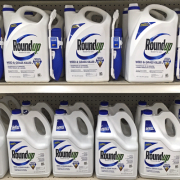
A Supreme Court ruling in Bayer’s favor on Thursday could reshape thousands of pending claims from people who say they developed cancer after using Roundup, the widely used weedkiller originally made by Monsanto.

The 7-to-2 decision overturned a $1.25 million jury award for John Durnell, a St. Louis gardener who said decades of exposure to Roundup caused him to develop non-Hodgkin lymphoma, a type of blood cancer. Durnell had argued that the company failed to adequately warn consumers about the product’s risks.

At the center of the case was a narrower legal question with potentially broad consequences of whether state-law failure-to-warn claims can move forward when the Environmental Protection Agency has allowed Roundup to be sold without a cancer warning.

Writing for the majority, Justice Brett M. Kavanaugh said the Missouri lawsuit would “require a cancer warning on Roundup’s label,” putting it at odds with the label approved under federal pesticide law. Because that state-law requirement would conflict with the federal label overseen by the E.P.A., he wrote, the claim was “expressly pre-empted” by federal law.

Kavanaugh also pointed to the pesticide law’s requirement for national consistency in labeling, writing that the Federal Insecticide, Fungicide and Rodenticide Act requires “uniformity” and bars states from imposing pesticide-labeling rules that go beyond or differ from federal requirements.

The decision is a major victory for Bayer, the German pharmaceutical and chemical company that acquired Monsanto in 2018 and inherited a sprawling wave of Roundup litigation. Thousands of similar lawsuits are still pending in state and federal courts, and Thursday’s ruling could make those claims harder to pursue.

Bayer said the decision should sharply narrow the litigation that has followed Roundup for nearly a decade, arguing that the ruling should lead courts to dismiss current warning-based claims and prevent similar failure-to-warn claims from being brought in the future. The ruling also appeared to reassure investors, with Bayer’s shares jumping sharply after the decision.

Bayer has argued that because the E.P.A. has not required a cancer warning for Roundup, the company should not face state-level lawsuits claiming it had a duty to add one. The company has maintained that the federal agency’s position should override lawsuits brought by Durnell and other plaintiffs under state law.

Government lawyers under the Trump administration backed Bayer’s position, reversing the Biden administration’s stance. They argued that once the E.P.A. determined Roundup could be sold without a cancer warning, Bayer was required to follow that labeling decision. If the company had changed the label on its own, they said, it would have violated the Federal Insecticide, Fungicide and Rodenticide Act.

That shift by the Trump administration drew sharp criticism from some supporters of the Make America Healthy Again movement, whose activists had broadly aligned with President Trump’s 2024 campaign. For them, the administration’s support for Bayer marked a break from promises to challenge corporate influence over health and food policy.

Embed from Getty Images

The backlash was sharpened by Robert F. Kennedy Jr.’s role, now the Secretary of Health and Human Services and a key figure for many MAHA supporters. Before joining the administration, Kennedy had been involved in litigation against Monsanto and helped win a similar case in 2018 for a man who claimed the company failed to warn consumers about glyphosate’s cancer risks.

Zen Honeycutt, founder of Moms Across America and an advocate in the MAHA movement, called the ruling “worse than treason” and said it represented a betrayal of what Trump had pledged to the movement. “It really is chemical warfare on the American people,” she said.

Alex Clark, a prominent MAHA supporter and Trump ally, also criticized the administration’s role in the case.

“Today, the Supreme Court made it impossible for people who develop cancer after using Roundup to sue Bayer for failing to warn them about the potential cancer risk. The Trump administration URGED and PLEADED the Court to reach this result to protect a FOREIGN chemical company—and it did at the expense of Americans. What happened to America First? For an administration that promised to take on corporate capture and Make America Healthy Again, this is a STUNNING betrayal. Farmers, families, and cancer patients currently in litigation with Bayer will never forget this.”

Vani Hari, the food activist and prominent MAHA voice known as “the Food Babe,” also condemned the outcome. “It’s really sickening,” she said, adding that glyphosate, Roundup’s active ingredient, “becomes now the midterm issue.”

Roundup has been sold since Monsanto developed it in the 1970s and remains one of the world’s most commonly used herbicides. Its active chemical, glyphosate, is absorbed by plants and moves into their roots, where it blocks an enzyme they need to grow.

Concerns about glyphosate have fueled one of the largest waves of product-liability litigation in U.S. history. Plaintiffs have pointed to evidence in laboratory animals, along with more limited evidence involving humans, that has suggested a possible link between glyphosate and cancer. In 2015, the World Health Organization’s International Agency for Research on Cancer classified the chemical as “probably carcinogenic to humans.”

The E.P.A., however, has reached a different conclusion in its own reviews. In February 2020, the agency said that “there are no risks of concern to human health when glyphosate is used in accordance with its current label” and that glyphosate was “unlikely” to cause cancer in humans.

Those findings were later withdrawn after a court challenge, and the agency’s review of glyphosate’s safety remains ongoing.

Embed from Getty Images

Kelly Ryerson, a MAHA advocate who posts online as “Glyphosate Girl,” cast the ruling as a political breach by the administration.

“Today’s SCOTUS ruling is historic. Never in history has an administration so blatantly and willingly sold out our fertility, vitality, and health to corporate interests. It is unforgivable. We will make sure all voters know exactly how this domestic chemical attack happened.”

In 2023, a jury in the Circuit Court of the City of St. Louis ruled in Durnell’s favor and awarded him $1.25 million. Bayer appealed, and the case ultimately reached the Supreme Court.

Before the case reached the high court, a Missouri appeals court had upheld the judgment in Durnell’s favor. The Supreme Court reversed that ruling and sent the case back to the lower courts for further proceedings consistent with its decision.

The justices’ ruling split the court in an unusual way. Justice Ketanji Brown Jackson, a liberal, dissented alongside Justice Neil M. Gorsuch, a conservative. In her dissent, Justice Jackson said the majority had read the federal pesticide law too broadly, leaving Durnell “without a remedy for the significant harms he has suffered.”

Jackson also said the majority had broken from what she described as the near-unanimous approach of other state and federal courts that had rejected Bayer’s preemption argument. In her view, Durnell’s claim did not impose a separate state labeling requirement but instead mirrored FIFRA’s own ban on misbranded pesticides.

Bayer praised the outcome. Brian Leake, a company spokesman, said in a statement that the decision was “good for science, farmers, and industries that depend on regulatory clarity for innovation.”

Environmental advocates, however, said the ruling would make it easier for chemical manufacturers to avoid accountability when federal labeling decisions fail to capture potential dangers.

Earthjustice, a nonprofit environmental law organization, called the decision “deeply troubling.” Patti Goldman, a lawyer for the group, said the ruling “allows Monsanto and other chemical companies to avoid responsibility when their labels leave people unprotected from serious harm.”

mifepristone

Supreme Court Restores Access To Abortion Pill Through Telehealth, Mail, And Pharmacies 

This week, the Supreme Court restored broad access to the abortion pill mifepristone, blocking a lower-court ruling that initially threatened to remove one of the main ways abortions are provided across the US, according to reports from AP

Justice Samuel Alito signed the order to temporarily allow women seeking abortions access to the pill at pharmacies or through the mail without needing an in-person visit to their doctor. These practices have been permitted for several years until a federal appeals court imposed new restrictions last week. 

Embed from Getty Images

The order will remain in effect for another week while both sides work to respond and the higher courts take a deeper look into the issue. 

AP reported that a majority of abortions in the US are provided through medications. Democratic-led states have laws that work to give legal protection to individuals who prescribe the drugs via telehealth to patients in states that have abortion bans in place. 

These prescriptions have also cushioned the major impact of abortion bans in mainly Republican-led states after the 2022 Supreme Court ruling to overturn Roe v. Wade. “One recent report suggested that in the 13 states where abortion is banned at all stages of pregnancy, more women obtained abortions with pills prescribed by telehealth last year than by traveling to other states,” Mark Sherman and Geoff Mulvihill wrote for AP

Typically, mifepristone is taken with a second drug misoprostol for abortions. According to the FDA label on mifepristone, the combination completes a full medical abortion 97.4% of the time. 

Sometimes misoprostol can be used on its own to terminate pregnancy. Some studies placed its solo effectiveness at around 80% or higher. 

In certain countries where mifepristone is banned or unavailable, misoprostol is often used alone. 

Embed from Getty Images

Misoprostol has never been formally approved by the FDA for abortion while mifepristone has been. 

Dr. Angel Foster, founder of The Massachusetts Abortion Access Project, said her organization “was prepared to send misoprostol only on Monday afternoon but was able to switch back to the two-drug combination.”

“Regardless of what happens with this regulatory issue, we and other groups will continue to provide high-quality abortion care to patients in all 50 states,” she said.

Foster said that her organization spent the weekend guiding different groups of patients: individuals who were sent mifepristone but have yet to receive it, and those who had been approved for the drugs but had not been paid or sent them. 

“We have a little bit more time to navigate this new landscape with the stay,” said Julie Burkhart, the founder of Wellspring Health Access, a Wyoming abortion clinic.

Elizabeth Ling, associate director of legal services at If/When/How, an organization that provides legal guidance for individuals considering abortion, said that “wherever the legal battle goes next, there’s one thing women need to understand: ‘The outcome is not going to make it a crime for people to access care.’”

“Monday’s ruling is a temporary procedural step that leaves unresolved the very real concerns about the safety of these drugs and the decision under the Biden administration’s FDA to recklessly remove longstanding safeguards,” Carol Tobias, president of National Right to Life, said.

supreme court

Supreme Court Declines Calls To Overturn Landmark Same-Sex Marriage Ruling

On Monday, the US Supreme Court declined calls to overturn their landmark precedent that recognized the constitutional right to same-sex marriage. This announcement has thrown out an appeal from Kim Davis, former Kentucky county clerk. 

Davis is facing hundreds of thousands of dollars in damages and legal fees for refusing to issue marriage licenses to same-sex couples after the court made the decision in Obergefell v. Hodges. 

Embed from Getty Images

“Today, love won again,” said Kelley Robinson, president of the Human Rights Campaign.

“When public officials take an oath to serve their communities, that promise extends to everyone – including LGBTQ+ people. The Supreme Court made clear today that refusing to respect the constitutional rights of others does not come without consequences.”

LGBTQ+ advocates are celebrating after fears that the conservative court would be revisiting the gay marriage decision after they overturned Roe v. Wade three years ago, which gave the constitutional right to abortion.  

Mat Staver, the founder and chairman of Liberty Counsel, the legal group that represented Davis, stated that the former clerk is now going to face “crippling monetary damages.”

Justice Anthony Kennedy was the key swing vote who authored the Obergefell decision in 2015. Although he retired in 2018, his words regarding love, family, and liberty became just as historic as the decision. 

“No union is more profound than marriage, for it embodies the highest ideals of love, fidelity, devotion, sacrifice and family,” Kennedy wrote

“In forming a marital union, two people become something greater than they once were.”

Embed from Getty Images

Back when that decision was made, Davis was the clerk of Rowan County in Kentucky. She continued to withhold marriage licenses to same-sex couples citing her religious objections. She was then sued by multiple couples in the county and a jury ordered her to pay $360,000 in damages and legal fees. 

Davis was also placed in jail for several days after a federal court found that she violated a court order to issue licenses. 

While a majority of the coverage on Davis’ appeal was focused on her request to overturn Obergefell, a large part of her case was actually appealing the damages verdict against her, as the former clerk argues that the First Amendment’s religious protections should’ve protected her. The 6th US Circuit Court of Appeals rejected that argument. 

Veteran civil rights attorney at GLAD Law who argued for the Obergefell case, Mary Bonauto, praised the court’s fast rejection of Davis’ appeal. 

“The only thing that has changed since Obergefell was decided is that people across the country have seen how marriage equality provides protection for families and children, and that protection strengthens communities, the economy and our society,” Bonauto said

“Today millions of Americans can breathe a sigh of relief for their families, current or hoped for, because all families deserve equal rights under the law.”

congress

Major Corporations Stay Silent as Supreme Court Weighs Trump’s Tariffs

America’s largest companies have gone quiet as one of the most consequential economic showdowns of the decade hits the Supreme Court. The battle over Donald Trump’s global tariffs isn’t being led by Wall Street or Silicon Valley. It’s being waged by small businesses, the kind that can’t afford to wait out the uncertainty or absorb the hit of another presidential trade gambit.

The Supreme Court will hear arguments on Wednesday on whether Trump’s “Liberation Day” tariffs and his unilateral duties on goods from China, Mexico, and Canada violate presidential authority.

In their case, businesses like a family-run toymaker from Illinois, a wine importer from New York, and a scattering of other modest firms say they have been suffocating under unpredictable import duties. Victor Owen Schwartz, founder of the wine and spirits importer V.O.S. Selections, told CNN he felt compelled to speak up.

“I was shocked that those with much more power and money did not step up. So when I was afforded the opportunity to speak for small American businesses, I took it.”

President Trump invoked a 1970s emergency statute, the International Emergency Economic Powers Act (IEEPA), to reshape global trade in the name of tackling trade imbalances and fentanyl trafficking. While the law allows a president to “regulate importation” in emergencies, it never explicitly mentions tariffs, and that omission is now at the heart of the fight.

The plaintiffs argue the tariffs have driven up costs and created crippling uncertainty. “It’s an asphyxiating tax,” said Rick Woldenberg, CEO of Learning Resources, one of the lead plaintiffs.

Embed from Getty Images

“I’m not targeting Mr. Trump because I’m not a politician. I’m a taxpayer who’s been hit with an unlawful tax.”

Despite the far reach of the case, America’s corporate heavyweights are mostly staying out of it. That silence, experts say, likely stems from a fear of political retaliation.

“The federal government has immense leverage and immense power and can upend your business with a tweet or a tax investigation,” said Georgetown Law professor Gregory Shaffer.

“I think there’s a sense that companies wanted to be more careful with this administration.”

It wouldn’t have been the first time big business has weighed in on controversial legal fights. In recent years, dozens of corporations, including Apple, Walmart, General Electric, and Intel, have filed friend-of-the-court briefs on social or economic issues. But this time, there’s no such chorus.

“Anyone who wants to speak out against this is going to be in the pain cave,” said Cassie Abel, founder and CEO of women’s outdoor brand Wild Rye. Abel, who joined an amicus brief opposing the tariffs, said the fear of blowback from Trump’s camp is real, especially after large retailers faced his public ire for linking tariff costs to price hikes.

Trump’s legal team insists the IEEPA gives him wide latitude to impose tariffs, even if the term isn’t spelled out. The administration’s top appellate lawyer, Solicitor General D. John Sauer, warned that striking down the tariffs could have “catastrophic consequences” for the economy.

Embed from Getty Images

“Plaintiffs would unwind trade arrangements worth trillions of dollars, as President Trump has leveraged the IEEPA tariffs into negotiated framework deals with major trading partners—including the European Union, the United Kingdom, Japan, South Korea, and now China—that address underlying causes of the declared emergencies.”

Some major companies have found quieter ways to protect themselves by securing exemptions or rerouting supply chains to minimize damage. Others, like Apple and Home Depot, have not commented on why they’ve stayed on the sidelines this time.

Trade lawyer Gregory Husisian said many large corporations are calculating whether joining the case would add anything new to the arguments already made by smaller players. If you don’t have a fresh legal angle, he said, “What do you really gain by being the person who sticks your neck out?”

The Chamber of Commerce and several other industry groups have broken ranks to file briefs urging the court to undo the tariffs. They’re joined by nearly three dozen former federal judges, national security officials, and smaller trade groups who say the emergency powers law was never meant to let a president unilaterally reshape global trade.

For the plaintiffs, the case has become symbolic, as small businesses face off not just against Washington but also against the silence of their larger counterparts.

Meanwhile, Trump has avoided directly attacking the companies behind the lawsuit, perhaps wary of alienating the small-business community, which enjoys bipartisan sympathy. Whether that restraint lasts may depend on how the court rules.

social

Brazil’s Supreme Court Agrees To Hold Social Media Companies Liable For Unethical And Illegal User Content 

Brazil’s Supreme Court justices have set a new standard, with a majority of them all agreeing to hold social media companies accountable for illegal and unethical postings by their users. This move was made during a time where social media is so vast that there’s a large population of users that are able to get away with posting illegal content without being punished. 

Embed from Getty Images

The court made a ruling on two different cases in order to reach this understanding. The rise in reports from social media companies containing posts that involve fraud, violence among underage individuals, and child pornography.

Critics are claiming that this move could infringe on users freedom of speech, which is one of the biggest reasons that social media platforms struggle when it comes to censoring or removing content and reporting users. 

To combat the freedom of speech argument, the court has moved to hold the companies as a whole liable for the content, rather than just the individual poster. According to AP, Gilmar Mended became the sixth of the court’s 11 justices to vote for companies such as Meta, X, and Microsoft to be sued and pay fines for illegal content. 

While the voting is still ongoing, having a basic majority is all that’s needed for the overall measure to pass. 

Embed from Getty Images

Justice André Mendonça has been the only dissenting voice so far, stating that “free speech on social media is key for the publication of information that holds powerful public institutions to account, including governments, political elites and digital platforms.”

Justice Flávio Dino cited recent cases in which school shootings in Brazil were simulated on social media and read out posts from a user who stated he was “happy watching families of dead children weeping, bleeding, dying.” 

“I think social media has not made humanity closer to what it has produced in best fashion,” he said.

This proposal can become law once the voting is finalized, however, Brazil’s Congress could pass a law to reverse the measure. Current legislation in Brazil says that social media companies can only be held liable if they do not remove content after a court order.

“Platforms need to be pro-active in regulating content. They need to adopt certain precautions that are not compatible with simply waiting for a judge to eventually issue a decision ordering the removal of that content,” said Alvaro Palma de Jorge, a law professor at the Rio-based Getulio Vargas Foundation.

harvard

Harvard Sues Trump Administration as 100+ University Leaders Condemn Federal Overreach

Harvard University’s lawsuit against the Trump administration marks the beginning of an intense legal battle over issues of academic freedom, federal oversight, and the future of American higher education. The high-stakes dispute is expected to continue for years and may ultimately be settled by the Supreme Court.

The prestigious institution has accused the administration of unlawfully freezing federal funds as part of a broader effort to pressure universities into complying with politically motivated demands.

In March, Harvard first received notice that it was under federal investigation for allegedly failing to “curb or combat” antisemitism on campus. Shortly afterward, the Trump administration sent over a list of demands and ordered immediate cooperation from Harvard in exchange for its continued financial relationship with the federal government.

Similar demands were sent to Columbia University, which made changes to meet the demands, conceding to the administration. Harvard’s public rebuke led the administration to freeze $2.2 billion in funding, followed by threats to rescind Harvard’s tax-exempt status and block the school’s ability to host international students.

Harvard’s lawsuit, filed in Boston federal court, challenges the administration’s claim that withholding funds is necessary to combat antisemitism.

“The Government has not—and cannot—identify any rational connection between antisemitism concerns and the medical, scientific, technological, and other research it has frozen that aims to save American lives, foster American success, preserve American security, and maintain America’s position as a global leader in innovation.”

Harvard asserts that the administration’s moves threaten the university’s academic independence and constitutional rights, characterizing them as part of a “pressure campaign” designed to exert control over the university.

Embed from Getty Images

The demands included ending diversity, equity, and inclusion programs, banning masks at protests, shifting to merit-based hiring, and diminishing faculty power deemed “more committed to activism than scholarship.”

Harvard President Alan Garber described these demands as “unprecedented,” emphasizing that the university “will not surrender its independence or relinquish its constitutional rights.”

“The administration’s prescription goes beyond the power of the federal government. It violates Harvard’s First Amendment rights and exceeds the statutory limits of the government’s authority under Title VI. And it threatens our values as a private institution devoted to the pursuit, production, and dissemination of knowledge. No government—regardless of which party is in power—should dictate what private universities can teach, whom they can admit and hire, and which areas of study and inquiry they can pursue.”

Jewish organizations, including the Anti-Defamation League and Harvard’s chapter of the Hillel student organization, have criticized the administration’s heavy-handed approach.

“Shuttering apolitical, life-saving research; targeting the university’s tax-exempt status; and threatening all student visas…is neither focused nor measured, and stands to substantially harm the very Jewish students and scholars it purports to protect,” the Hillel student organization posted on social media.

This lawsuit represents more than a financial issue; Garber argues the administration’s actions place the “standing of American higher education” at stake. Garber joined over 100 university leaders and presidents, including those from Princeton, Penn, Brown, MIT, Cornell and Tufts, in signing a statement condemning the “unprecedented government overreach and political interference” endangering academic institutions.

“The price of abridging the defining freedoms of American higher education will be paid by our students and our society. On behalf of our current and future students and all who work at and benefit from our institutions, we call for constructive engagement that improves our institutions and serves our republic.”

Education Secretary Linda McMahon defended the administration’s actions on CNBC. She emphasized that the federal government’s goal was to ensure campus safety and promote “viewpoint diversity,” a point that Harvard contests as masking political motivations.

Embed from Getty Images

“I made it very clear that these are not First Amendment infractions. This is civil rights. This is making sure that students on all campuses can come and learn and be safe…and that is why we have had these funds either withheld or frozen during this period of time of negotiation.”

Harvard’s substantial $53 billion endowment, primarily earmarked for specific uses like financial aid and faculty support, may temporarily offset federal cuts. However, the university warns that sustained funding disruptions could severely impact its research and educational programs, ultimately forcing Harvard to reduce its graduate admissions and research staff significantly.

Additionally, federal agencies like the National Institutes of Health, which provided $488 million of Harvard’s $686 million research budget for fiscal year 2024, have begun withdrawing funds from universities maintaining diversity programs. Garber warned that such sweeping cuts would significantly delay critical research in medicine, public health, and technology, harming patients and weakening America’s global standing in innovation.

The lawsuit asserts that the financial freeze’s impact extends beyond Harvard’s campus, potentially slowing job creation, limiting intellectual property development, and hindering scientific advances nationwide. As the lawsuit underscores, “Harvard is one of Massachusetts’ largest employers,” indicating that the funding freeze could ripple through the broader economy.

“The consequences of the government’s overreach will be severe and long-lasting,” Garber said in a statement, which also shared a link to the university’s complaint.

“Research that the government has put in jeopardy includes efforts to improve the prospects of children who survive cancer, to understand at the molecular level how cancer spreads throughout the body, to predict the spread of infectious disease outbreaks, and to ease the pain of soldiers wounded on the battlefield. As opportunities to reduce the risk of multiple sclerosis, Alzheimer’s disease, and Parkinson’s disease are on the horizon, the government is slamming on the brakes. The victims will be future patients and their loved ones who will suffer the heartbreak of illnesses that might have been prevented or treated more effectively. Indiscriminately slashing medical, scientific, and technological research undermines the nation’s ability to save American lives, foster American success, and maintain America’s position as a global leader in innovation.”

ice

SCOTUS: Federal Government Must Act to Return Man Mistakenly Deported to El Salvador

The Supreme Court has mandated the Trump administration act swiftly to return a Maryland man who was mistakenly deported to El Salvador back to the United States. In a 9-0 ruling, the justices sustained a lower court’s directive to retrieve Kilmar Abrego Garcia, adding that a judge in the case may have exceeded her authority.

tiktok

Supreme Court Upholds TikTok Ban, Set to Start on Sunday

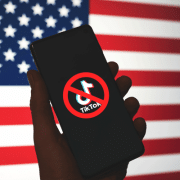
The popular social media platform TikTok could face a nationwide ban as early as this Sunday. On Friday, the Supreme Court turned down an appeal from TikTok’s owners, affirming a lower court’s ruling in favor of the federal ban on the app and stirring a whirlwind of speculation and concern among its millions of users.

Amid Multiple Protests, Israeli Lawmakers Move To Vote On Weakening Supreme Court

Israeli lawmakers are gearing up to vote on the government’s overall plan to weaken the nation’s court system, despite nearly six months of protests from citizens, and waves of urgent warnings from the White House.

ncaa

More Plaintiffs Join Lawsuit v. NCAA Claiming Student Athletes Deserve Pay

Former Villanova University football player Ralph “Trey” Johnson sued the N.C.A.A. in November 2019, claiming that college athletes should be considered employees at the schools they play for under the Fair Labor Standards Act.

The case has grown since then, with several former athletes joining as plaintiffs and seeking to form a class-action lawsuit.

This case is one of many blows the N.C.A.A. has taken to its current model of the relationship between athletes, their schools and the N.C.A.A.

In a statement, Johnson said that the lawsuit was “not about being paid hundreds of thousands of dollars.” The case was also not restricted to a few select athletes with endorsement deals.

“We are simply asking the N.C.A.A. to pay its student-athletes the basic minimum wage as required by federal law. They pay the students who tear the tickets and sell popcorn at our games. The least that the N.C.A.A. can do for those who bring so much money to the N.C.A.A. and its schools would be to pay them the minimum wage.”

Embed from Getty Images

In June 2021, the Supreme Court passed a unanimous decision in the case N.C.A.A. v. Alston to uphold a lower court’s ruling that the N.C.A.A. restrictions on “education-related benefits” for college athletes violated antitrust laws. These benefits included scholarships for graduate school, payment for academic tutoring and paid post-eligibility internships.

Though the Supreme Court case did not debate the issue of compensation, it was one of the first major blows to the N.C.A.A.’s status quo. Over the last two years, several states have passed legislation that challenged the N.C.A.A.’s rules prohibiting athletes from profiting off their NIL—name, image and likeness. Congress in both parties have proposed new legislation that would grant student athletes long-term medical care and a portion of the revenue they generate.

Embed from Getty Images

The National Labor Relations Board’s General Counsel, Jennifer Abruzzo, released a memo stating that she considered college athletes employees under federal law. The memo states that Abruzzo would consider referring to the “employees as mere student-athletes,” violating the Fair Labor Standards Act. It was a sign that the N.L.R.B. would be willing to pursue claims against colleges, conferences and the N.C.A.A. on behalf of the students.

“The broad language of Section 2(3) of the Act, the policies underlying the N.L.R.A., Board law, and the common lawfully support the conclusion that certain Players at Academic Institutions are statutory employees, who have the right to act collectively to improve their terms and conditions of employment.”

The case is currently in the Third Circuit Court of Appeals. If the case is ruled in favor of the athletes, it will counter the Seventh and Ninth circuit’s rulings. The conflicting rulings would increase the likelihood that the Supreme Court would step in to make a final decision.

In 2021, the N.C.A.A. made $1.15 billion in revenue and distributed the bulk of it to its 1,200 member schools.