Posts

Axolotls

Could Axolotls Hold the Key to Regrowing Human Limbs? Scientists Say We’re Getting Closer

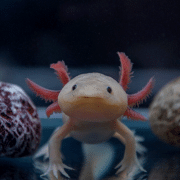
When an axolotl—a small, wide-eyed salamander with feathery gills sprouting from its head—loses a limb, it doesn’t panic. It simply waits. In a matter of weeks, that missing arm or leg regrows, fully formed and fully functional, as if nothing ever happened. This natural superpower has long fascinated scientists who wonder: could humans ever do the same?

museum

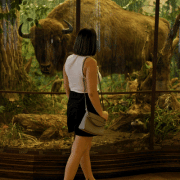
Museum Of Zoology In Cambridge Is Utilizing Artificial Intelligence To Give Animals A Voice 

A month-long project at Cambridge University’s Museum of Zoology will utilize artificial intelligence to give deceased animals, extinct and common, the ability to share their life stories and experiences of the afterlife. 

According to reports, the museum will feature more than a dozen exhibits including ones of an American cockroach, dodo, red panda, and skeleton parts of a whale fin, all of which will be able to “speak” to visitors. 

Embed from Getty Images

The models of the various species will each have their own personalities and accents to reflect the regions they’re from and their known personalities in the wild. Visitors can converse will the models through voice or text on their phones. One of the major goals of this is to emphasize the crisis of dwindling biodiversity in our world. 

“Museums are using AI in a lot of different ways, but we think this is the first application where we’re speaking from the object’s point of view,” said Jack Ashby, the museum’s assistant director. 

“Part of the experiment is to see whether, by giving these animals their own voices, people think differently about them. Can we change the public perception of a cockroach by giving it a voice?”

Nature Perspectives is the name of the company behind the exhibit. Their overall goal as an organization is to build AI models that will help connect humans to the natural world more, especially now that the Earth is really feeling the impact of climate change.

Embed from Getty Images

When it came to bringing the collection together, each exhibit was equipped with AI that was given specific details on where the specific species lives, its natural environment, and how it arrived in the collection. Additional information is also provided, according to the Guardian

The exhibits will also motif their language and tone based on the age of the visitor interacting with it. Each can communicate in over 20 languages as well. 

Ashby is hoping “visitors will learn more than can fit on the labels that accompany the specimens.”

“When you talk to these animals, they really come across as personalities, it’s a very strange experience,” Ashby said.

 “I started by asking things like ‘where did you live?’ and ‘how did you die?’, but ended up with far more human questions.”

The exhibit officially opened this week and will be within the museum for the next month, or until November 15th. To learn more about it, visit their website!

bear

Romania To Reduce Brown Bear Population After Hiker Is Mauled To Death 

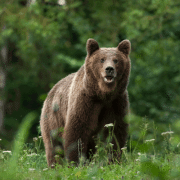
Romania’s parliament has approved the culling, reduction of a wild animal population by selective slaughter, of around 500 brown bears this year. The decision was made in an effort to control the “overpopulation” of the protected species after a hiker was mauled to death.

Dr. Dena Lodato Veterinarian

Compassion & Innovation in Veterinary Medicine | Dr. Dena Lodato

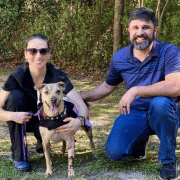
In a world where our furry friends are not just pets but valued family members, the role of a veterinarian transcends simple medical care. It demands a blend of expertise, empathy, and a commitment to continuous learning and innovation. As a veterinary surgeon, Dr. Dena Lodato, DVM, embodies this role to its fullest, merging traditional veterinary practices with cutting-edge treatments to provide comprehensive care for her patients.

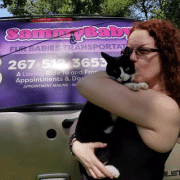
Gretchen Samuels SammyBaby Fur Babies Transportation

Transforming Pet Care with Heart and Innovation | Gretchen Samuels

In the heart of a community where pets are not just animals but family members, Gretchen Samuels stands out as an innovator in pet care, transforming the very nature of how we interact with and care for our animal companions through her unique and comprehensive range of services. Gretchen’s business, Sammybaby Fur Babies Transportation, is not just another pet care service; it’s a one-stop solution for every imaginable pet need, infused with love and personal touch.

parrot

Parrots Taught to Video Call Other Parrots Formed Lasting Friendships, Researchers Say

Can technology ease the emotional burden of captivity? A new study suggests it just might for parrots. Scientists from Northeastern University, the University of Glasgow, and MIT designed a video calling system for parrots to “chat” with other parrots via smartphones and tablets. Over time, the birds developed a preference for specific companions, repeatedly dialing their chosen feathered friends.

The United States is home to 20 million pet birds, and scientists are trying to find a way to help them connect from afar. Video calling opens up a new realm of interaction for these intelligent creatures, bridging distances and reducing social isolation in a way that was previously unimaginable.

Parrots are highly sociable creatures, flocking together in their natural habitats in groups of anywhere between a few to several hundred birds. However, these birds are typically kept as solo pets in households or other forms of captivity. Due to their high intelligence, parrots can become distressed and even pluck their feathers if they’re not provided with adequate attention and mental stimulation.

The 15 volunteers who completed the experiment were recruited from Parrot Kindergarten—a training platform that helps owners deepen their relationship with their birds and “better meet their needs for mental enrichment and challenge.”

Parrot owners spent the first two weeks of the study training their birds to ring a bell and touch the image of another parrot displayed on a tablet screen to initiate a video call. There were a total of 212 video calls placed by parrots. The owners then turned off the calls after five minutes or once their parrots lost interest.

Phase two of the experiment involved an “open call” period during which the participating parrots could call any other parrot in the study at any time. In total, the parrots made 147 calls to other birds, providing over 1,000 hours of footage for researchers to analyze and study.

Embed from Getty Images

The study’s authors, Rébecca Kleinberger, an assistant professor at Northeastern University; Jennifer Cunha, a parrot behaviorist and researcher at Northeastern; and Ilyena Hirskyj-Douglas, an assistant professor at the University of Glasgow, reported that the parrots usually stayed on their calls for the maximum time they were permitted. The birds also appeared to understand that there was a real “fellow bird” on the other side of the screen.

Some parrots even taught their companions new skills, such as flying, foraging and different vocalizations. “She came alive during the calls,” one pet parent said about their bird.

“I was quite surprised at the range of different behaviors,” Hirskyj-Douglas told the Guardian.

“Some would sing, some would play around and go upside down, others would want to show another bird their toys.”

The birds also formed clear preferences. Cunha’s Goffin’s cockatoo named Ellie became friends with an African Grey parrot named Cookie. “It’s been over a year, and they still talk,” Cunha told Northeastern Global News. They seemed to be making vocalizations that mirror “Hello, I’m here” in parrot-speak.

The birds formed lasting bonds, as measured by the frequency with which a bird chose to call another bird. The most socially active parrots, who initiated the most calls, also received the most calls, pointing to a “reciprocal dynamic similar to human socialization.”

Embed from Getty Images

Some parrots were even reported to have developed attachments to the human caretakers of their virtual friends.

Despite the promising results, the authors caution parrot owners against launching impromptu FaceTime chats on their birds’ behalf. In the study, experts monitored the parrots they were working with, ending calls at the first sign of stress, aggression, disinterest, or discomfort. Researchers warn that “unmediated interactions could lead to fear, even violence, and property damage.”

“We were really careful about training the birds’ caregivers thoroughly to ensure that they could offer an appropriate level of support to empower their parrots but also help them avoid any negative experiences. As soon as the birds showed any signs of distraction or discomfort, the calls were stopped.”

Kleinberger notes how parrots were only recently domesticated for a generation or two, unlike dogs, cats, and horses. “We’re not saying you can make them as happy as they would be in the wild,” she says. “We’re trying to serve those who are already [in captivity].”

Many parrots can’t be physically close to other birds for a variety of reasons. For example, certain captive breeds are prone to disease. Despite having hardly ever seen another macaw in their lives, two ailing, elderly male macaws that were brought together in the study developed a strong attachment, dancing and singing energetically through the screen and exclaiming, “Hi! Come here! Hello!” anytime one of them left the frame of the video.

Their brains are still wired for wild social structures, and as the research shows, parrots don’t easily outgrow the need for connection. Speaking about Cookie and Ellie, Hirskyj-Douglas says she found their bond particularly moving. Their ongoing friendship stands as a testament to the emotional lives of animals and to the possibilities of technology that connects rather than isolates. Turns out, birds of a feather really do FaceTime together.

“It really speaks to how cognitively complex these birds are and how much ability they have to express themselves. It was really beautiful, those two birds, for me.”

frog

How David Attenborough’s Camera Crew Capture’s Wildlife

David Attenborogh’s nature documentaries are some of the most creative and engaging programs that educate the masses about climate change, our natural world, and the beautiful species that occupy it. In a new documentary called West Isles, camera crew members spent three years at home filming domestic life, and now, they’ve revealed the amazing ways in which they’re able to take some of their detailed shots.

dog

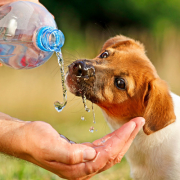
How To Help Your Pets And Wildlife Stay Cool During The Final Month Of Summer 

Rising temperatures around the world are impacting pets and wildlife greatly this year. Pet owners are doing everything they can to keep their furry friends cool and safe for the remainder of the summer, but it’s important to think about the wildlife animals that are also enduring this heat. 

The Royal Society for the Protection of Birds (RSPB) is a wildlife conservatory based in the UK, which is currently experiencing heat waves and droughts due to the heat this summer. An RSPB spokesperson recently discussed the best tips for keeping pets and wildlife safe throughout the rest of this summer.

Embed from Getty Images

Many water sources throughout the world have begun to dry up due to extreme temperatures, causing multiple species of wildlife to become dehydrated. 

“A garden pond, no matter what size, benefits wildlife all year long, but is especially necessary in the heat. But even a shallow dish of water will help,” the spokesperson explained

“Some animals and birds will want to bathe and cool down, others just to drink, so keep it topped up with clean water and refreshed daily. Add pebbles or some kind of ramp around the edge of any water source to help the smallest creatures climb in and out.”

Dry conditions also cause a lot of vital food sources to become scarce, so the RSPB recommends putting out small quantities of food for wildlife. 

Embed from Getty Images

“Putting out fruit and seeds will help, in small quantities but often, to avoid it spoiling. A bowl of dog or cat food (not fish-based) at night will help small animals. It’s essential to keep anything clean that you’re putting out – whether it’s a feeder or an upturned bin lid of water, as diseases can spread rapidly with different animals using them and in the heat.” 

“We  advise giving bird feeders a clean once a week with soapy water and emptying bird baths daily,” the spokesperson continued. 

If you have the garden space, let plants and trees grow as much as possible to provide multiple shade options for wildlife and your pets. 

“Shade is great for us, for our pets and certainly for our wildlife. A log pile will help lots of creatures to find a cool corner, from tiny woodlice to frogs and toads, as will longer grass. Avoid pruning and tidying up areas where leaves and branches are providing more shade,” the spokesperson explained. 

For your pets at home, make sure you’re consistently providing fresh water. Ice cubes are a great “summer treat” for dogs as well. 

If you happen to find a wild bird or mammal that seems to be in distress due to the heat, contact your local wildlife rehabilitation center for the best possible care.

cat

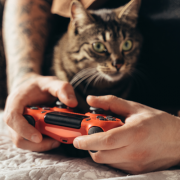
How The “Stray” Video Game Is Bringing Benefits To Real Life Felines

A new feline-centered video game has not only made waves in the gaming community but has helped to contribute towards real-life rescue cats.

Small Pets Are At Risk Of Heatstroke As Temperatures Rise

If you’re a small animal owner, it’s important to remember as we transition into warmer seasons in the coming months that your furry friends are at risk of heat stroke, depending on where you live, their setups, and how easy it is for them to cool down. Animals like rabbits, guinea pigs, hamsters, ferrets, chinchillas, and others need to be protected from extremely hot and humid environments.

Researchers have said that there needs to be an increase in public awareness of heatstroke, and the risks that different animals have to experiencing it. Climate change is making it even harder for small animals to remain cool during the summer months. 

Embed from Getty Images

The most common symptoms that researchers found across every species include abnormal breathing, lethargy, collapsing, and stomach issues like diarrhea. Caged animals like rabbits, guinea pigs, and ferrets are at risk of heatstroke because of their confinement in their cage set ups. Make sure you have the largest and safest set up for your small animals and allow them to get free time every day to stretch. 

Dr Anne Carter, a researcher at Nottingham Trent University, said: “There is a misconception that heatstroke in pets only relates to dogs in hot cars and we need to do more to raise awareness of risk factors not only for dogs but in the wider pet population.”

“Owners of small animals such as rabbits, ferrets and guinea pigs may need to review their pet’s housing and take steps to keep their pets cool in the warmer months to reduce the risk of heatstroke.”

If you have a flat-faced rabbit, typically lop-ears have flatter faces, it’s important to know that they are more susceptible to heatstroke.

Embed from Getty Images

Emily Hall, a researcher and vet, said: “Heat-related illness can affect all pets and is likely to become more common as global temperatures rise. Our findings highlight the need for better public awareness of heatstroke and the risk to all animals.”

“The fact that brachycephalic [flat-faced] dogs and rabbits were overrepresented in our study suggests that owners of these animals should be particularly vigilant during hot weather.”

The data from the study observed a relatively small number of pet patients, so the researchers made it clear in their findings that the overall figures for heat stroke among small animals, dogs, and cats is likely much higher than any reported numbers. 

Lack of awareness from the owner can be the biggest cause of death from heatstroke. In general, when you commit yourself to an animal, no matter how big or small, it’s important to do the proper research and make sure you’re doing everything you can to keep them comfortable and healthy throughout the warmer months.